What it cost an early-medieval civilisation to put a single book on the road to Rome: a flock of cattle, several years of scribal labour, the grain to feed sixty monks for the duration, and the life of one of its most accomplished men. Eight centuries later a person publishes an essay on a laptop, pays nothing, and reaches more readers in an afternoon than the Codex has been read in thirteen hundred years.
Internet History Sourcebooks: Medieval Sourcebook
Home | Ancient History Sourcebook | Medieval Sourcebook | Modern History Sourcebook | Byzantine Studies Page Other History Sourcebooks: African | East Asian | Indian | Islamic | Jewish | Lesbian and Gay | Science | Women's | Global
Thousands of AI-written, edited or ‘polished’ books are being sold – an eerie echo of Orwell’s ‘novel-writing machines’
In ‘1984,’ George Orwell envisaged a world in which books were a mass-produced commodity no different from ‘jam and bootlaces.’

The Unbelievable Scale of AI’s Pirated-Books Problem
Meta pirated millions of books to train its AI. Search through them here.

What is Money, Anyway?
Editor’s Note: This topic is now comprehensively covered in my book, Broken Money. Money is a surprisingly complex subject. People spend their lives seeking money, and in some ways it seems so straightforward, and yet what humanity has defined as money has changed significantly over the centuries. How could something so simple and so universal, […]

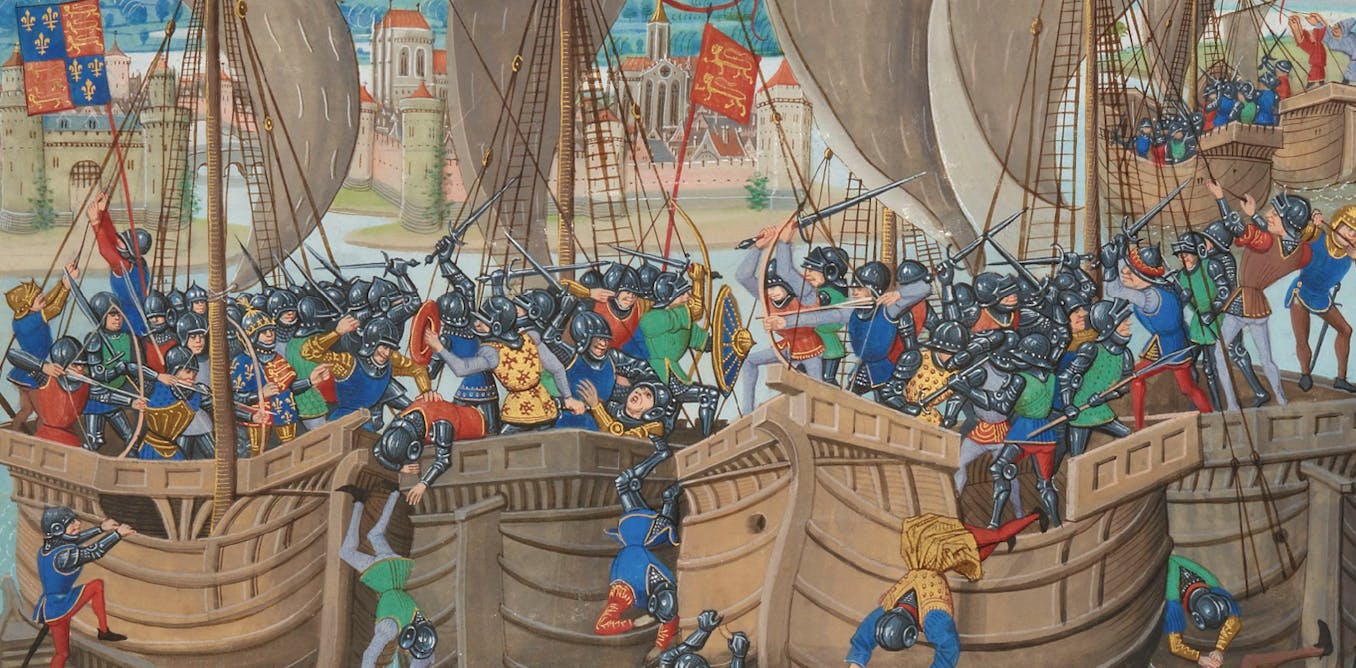
We built a database of 290,000 English medieval soldiers – here’s what it reveals
We created the database in order to challenge assumptions about the lack of professionalism of everyday soldiers.
Revenge of the Dilettantes
Book club and AI adventures, age of bespokeness, study groups, new rules of engagement

Revenge of the Dilettantes
Book club and AI adventures, age of bespokeness, study groups, new rules of engagement
Collections: Pre-Modern Armies for Worldbuilders, Part III: Paying For It
This is the third part (I, IIa, IIb, III) of our honestly-who-knows-how-many part series laying out some general guidelines for how pre-modern armies are recruited, raised, equipped and paid. In th…

Our Duty - shepherds in the future - sneptech writings
walking the path of acceleration means sticking together
#784: The absurdity of the apocalypse
Plus: repayment avoidance, the death of “hello,” and a Cinderella story for the algorithmic era

Writing books isn't a good idea
Could the creator economy provide a better one?
Entangled Magic in the Medieval Latin West
This article focusses on the history of learned magic in late medieval Europe, breaking a period of about 500 years into chronological stages to explore how medieval supporters and critics of magic represented the art and responded to each other’s arguments, then reframed their own in a continuous dynamic entanglement. In this period learned magic texts from diverse religious and cosmological traditions (primarily Christian, Jewish, Arabic and Greco-Roman) circulated among people familiar with, and emotionally invested in, a great variety of institutional and informal rituals. Sources reveal a vibrant culture of exchanges of texts between members of religious orders, physicians and lay men, clerics and lay women – a culture of entanglement: discussion, borrowing, critique and adaptation alongside practitioner-client relationships and necessary secrecy and concealment.