

The powerful, user-friendly Python platform for analyzing binaries. Decompilation, symbolic execution, and more in one scriptable toolkit.
Triton: A dynamic binary analysis library
Triton: A dynamic binary analysis library
Frida • A world-class dynamic instrumentation toolkit
Observe and reprogram running programs on Windows, macOS, GNU/Linux, iOS, watchOS, tvOS, Android, FreeBSD, and QNX
Relyze - Interactive x86, x64, ARM32 and ARM64 software reverse engineering
Relyze lets you disassemble, decompile and binary diff native code software.
SciPy 1.0: fundamental algorithms for scientific computing in Python
SciPy is an open-source scientific computing library for the Python programming language. Since its initial release in 2001, SciPy has become a de facto standard for leveraging scientific algorithms in Python, with over 600 unique code contributors, thousands of dependent packages, over 100,000 dependent repositories and millions of downloads per year. In this work, we provide an overview of the capabilities and development practices of SciPy 1.0 and highlight some recent technical developments.

LIEF - Library to Instrument Executable Formats
LIEF is a cross-platform C++, Python, and Rust library to parse, analyze, modify, assemble, disassemble, and rewrite ELF, PE, Mach-O, and other executable formats.
Using Claude to reduce the attack surface of code
Automated attack surface analysis and reduction can meaningfully improve the security of deployed software in the near term. In this post, we preview data we’ve collected from applying attack surface reduction techniques to large open-source codebases using Claude.

marimo | a next-generation Python notebook
A reactive notebook for Python — run reproducible experiments, execute as a script, deploy as an app, and version with git.
marimo | a next-generation Python notebook
A reactive notebook for Python — run reproducible experiments, execute as a script, deploy as an app, and version with git.
hugsy/gef
GEF (GDB Enhanced Features) - a modern experience for GDB with advanced debugging capabilities for exploit devs & reverse engineers on Linux
Array programming with NumPy
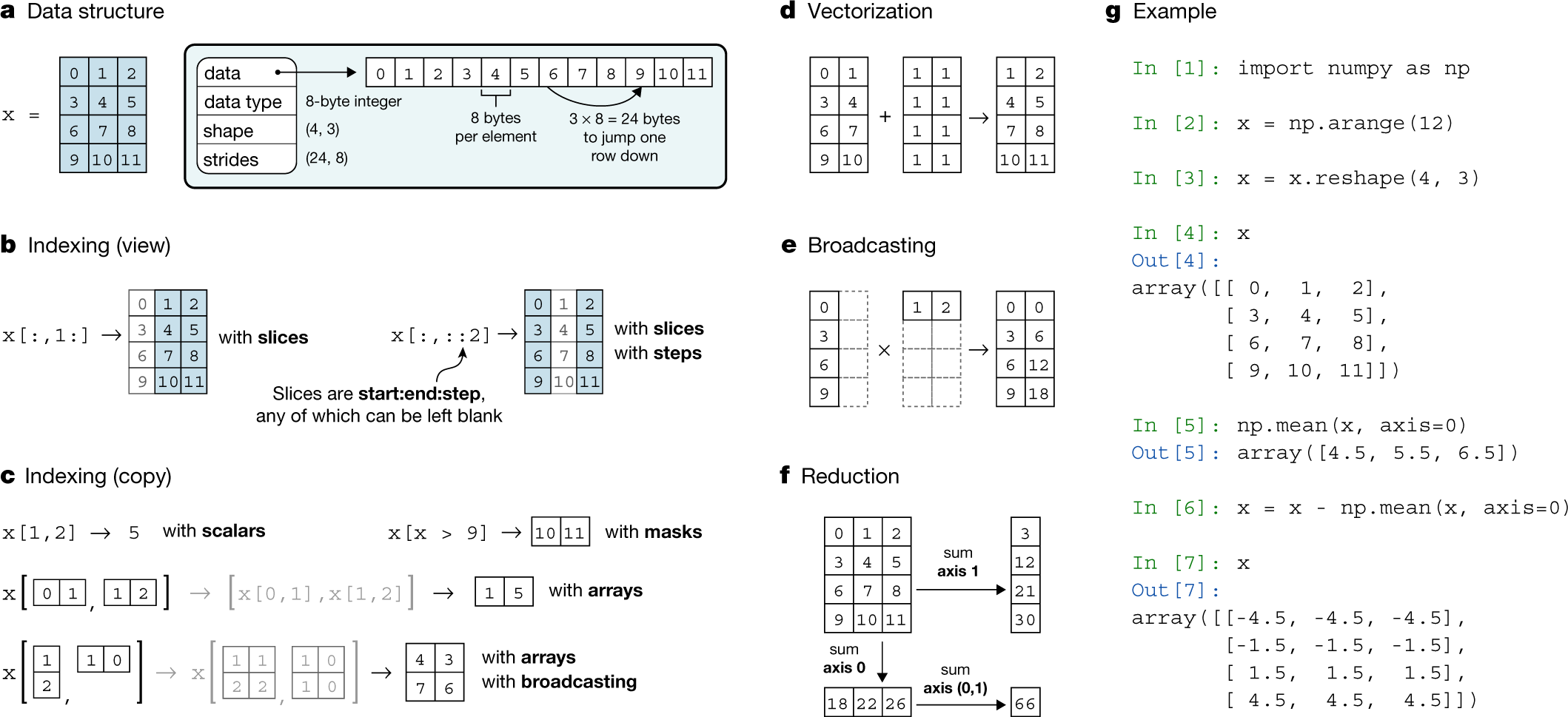
Array programming provides a powerful, compact and expressive syntax for accessing, manipulating and operating on data in vectors, matrices and higher-dimensional arrays. NumPy is the primary array programming library for the Python language. It has an essential role in research analysis pipelines in fields as diverse as physics, chemistry, astronomy, geoscience, biology, psychology, materials science, engineering, finance and economics. For example, in astronomy, NumPy was an important part of the software stack used in the discovery of gravitational waves1 and in the first imaging of a black hole2. Here we review how a few fundamental array concepts lead to a simple and powerful programming paradigm for organizing, exploring and analysing scientific data. NumPy is the foundation upon which the scientific Python ecosystem is constructed. It is so pervasive that several projects, targeting audiences with specialized needs, have developed their own NumPy-like interfaces and array objects. Owing to its central position in the ecosystem, NumPy increasingly acts as an interoperability layer between such array computation libraries and, together with its application programming interface (API), provides a flexible framework to support the next decade of scientific and industrial analysis.
MirrorCode: A benchmark for real-world software projects