

On a lost effect from the analog film era.
Annihilation & The Horrors of Change
1. REFLECTION Movies are not puzzles. I feel like I argue this all the time, but it sure doesn’t stop people from the pursuit. And it seemed like within mere hours people were arguing furious…

Plasma Effect
The classic plasma effect is a staple of demoscene history. Using sinusoidal functions and color gradients, it creates mesmerizing organic patterns that flow and pulse across the screen.

A side-by-side comparison of the new “unrestored” 2001 with a restored Blu-ray version
This summer for the 50th anniversary of the film, Warner Bros. is releasing a 70mm print of 2001: A Space Odyssey made from the original camera negative. Christ

Meta Ray-Ban glasses make it easy to film (and harass) strangers
We regret to inform you that the pickup artists have discovered Meta Ray-Bans.

Don't you mean extinct?
In 1993, Jurassic Park came out and revolutionized the use of CGI in films[1]. To the public the experience was magic. But for some of the people in the movie industry, it was a rude awakening.
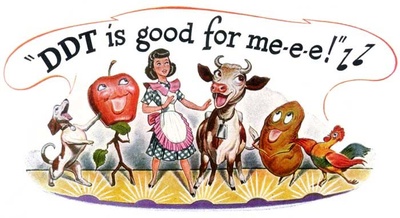
What Were We Thinking? The Top 10 Most Dangerous Ads
Often the criticism of vintage ads focuses on their inherent sexism, racism, or other displays of social prejudices, which we find laughable today, despit...

Artem vs. Predator
I'm not sure what it was. Might have been the Predator movies, might have been something else. Heat vision. The ability to see heat was something I wanted for…

Enlarging a Negative for Contact Printing: The Analog Process » Shoot It With Film
Have you ever tried to enlarge a film negative? We'll walk you step-by-step through the process of enlarging a negative using only analog techniques...

The Sunshine Recorder
I went into this video not knowing anything about how a mid-19th century sunshine recorder might work and was genuinely delighted by the reveal. If you’d li

The Relation of Environment to Anti-Environment
The ground rules, the pervasive structure, the overall pattern eludes perception except in so far as there is an anti-environment or a counter-situation constructed to provide a means of direct attention. Paradoxically, the ten percent of the typical situation that Drucker designates as the area of effective cause and as the area of opportunity, this small factor is the environment. The new TV environment is an electric circuit that takes as its content the earlier environment, the photograph and the movie in particular. Thus to put the artefacts from such a culture into a museum or anti-environment is an act of nullification rather than of revelation. To create an anti-environment for such electric technology would seem to require a technological extension of consciousness itself. The structural features of environment and anti-environment appear in the age-old clash between professionalism and amateurism, whether in sport or in studi.

How To Remove Remjet: An Update
Welcome to my blog about all things film photography. We'll talk about books, cameras, film stock, etc. If it's film it's game.

Gazing through a lens, I invent as much as I reveal | Psyche Turning Points
For years I watched people through cameras and screens, filling in the blanks and calling it truth
» Half-Life The Digital Antiquarian
Around twenty years ago, people would have laughed if you told them that videogames would end up at the Smithsonian, but the Half-Life team really did want to make games that were more than just throwaway toys. The rule against cinematics — which made our jobs much harder and also ended up leaving a lot of my favorite work out of the game — was a kind of ideological stake in the ground: we really did want the game and the story to be the same thing. It was far from flawless, but it was really trying to push the boundaries of a young medium.
VR is the opposite of cinema – Ken's Blog
I was on a panel this evening about the future evolution of VR. At one point I made the argument that people who try to “make their film in VR” are getting it very wrong. In fact, I argued, VR is essentially the very opposite of cinema.
This style of light doesn't really appear in animation anymore. You know it when you see it -- it's bright, hot and almost dangerous. Our new issue explores the tricks behind it, and how one artist has revived the look for the digital age: animationobsessive.substack.com/p/dangerous-light
