


Animikii empowers Indigenous communities with culturally informed technology solutions like Niiwin—our groundbreaking tool for Indigenous data sovereignty and community empowerment.
Indigenous Data Sovereignty (DDN3-A11)
This article explores Indigenous data sovereignty, identifies some of the data-related challenges faced by Indigenous Peoples and highlights the work done to overcome these challenges.

Indigenous Knowledges and Data Governance Protocol — Indigenous Innovation Initiative
Between March 2020 and March 2021, the Indigenous Innovation Initiative co-created the Indigenous Knowledges and Data Governance Protocol with the community, to guide how we collect and use Indigenous Knowledges and Data. Click on the image below to learn more about this Protocol. Since then, t

Indigitalization: Indigenous Computing Theory - Jon Corbett
Solidarity Syllabus: Indigenous Peoples, Rematriation, and Resisting AI Data Centers — Solidarity Is
For this Solidarity Syllabus, we are learning alongside Indigenous organizers, leaders, and communities whose work offers important solidarity lessons and invitations for how we might understand land, water, sovereignty, and resistance to data centers. Indigenous Peoples Day is observed

Awana Digital • Co-developing Technology for Social Justice
Awana Digital works in solidarity with Indigenous peoples to use technology to defend their rights and fight climate change.
The Shared Patterns of Indigenous Culture, Permaculture and Digital Commons | David Bollier
Rarely have I read an essay that knits together some very different commons with such wisdom and depth. Joline Blais' 2006 essay, “Indigenous Domain: Pilgrims, Permaculture and Perl,” is a wonderfully insightful analysis that reveals the underlying unity and logic of commons principles. Her piece appeared in Intelligent Agent (vol. 6, no. 2), published by the Inter-Society for the Electronic Arts.
Treating data like land — data sovereignty in the AI age - ICT
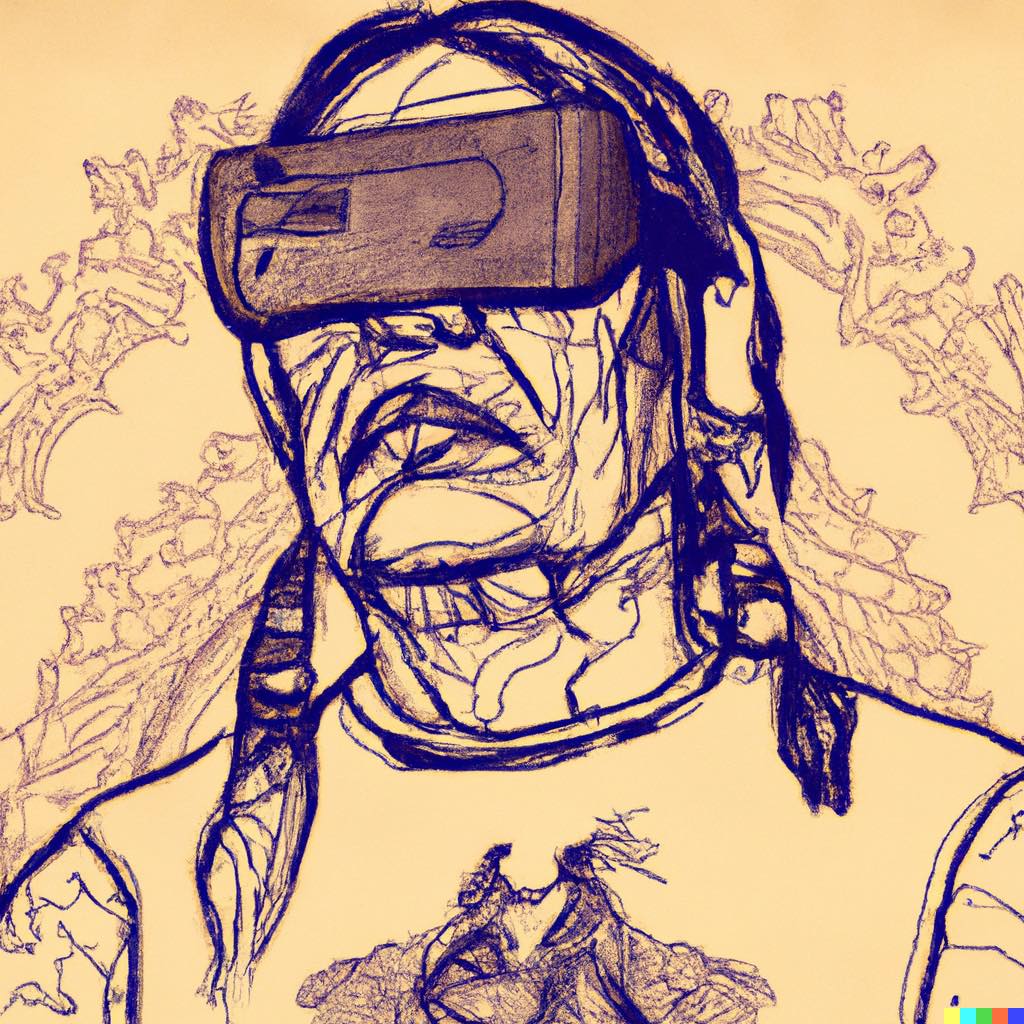
Artificial intelligence front and center at North America’s largest Indigenous tech conference
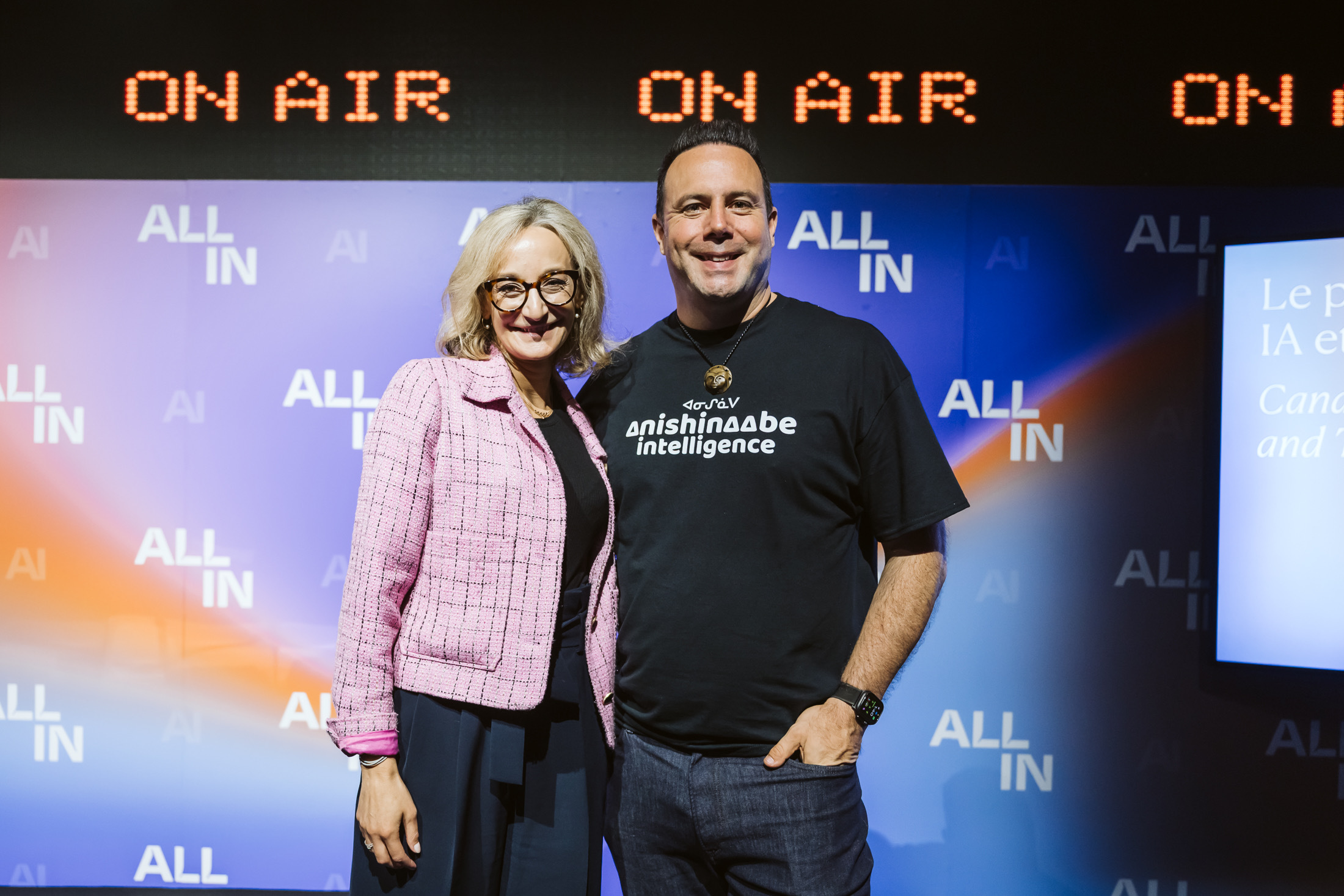
CEIMIA and Animikii Indigenous Technology announce a first-of-its-kind partnership with Sandy Bay Ojibway First Nation - Ceimia
CEIMIA is a Montreal-based international centre of expertise dedicated to the responsible development and adoption of artificial intelligence. As a neutral broker and a key player in the Global Partnership on AI (GPAI), CEIMIA works with governments, civil society, and the private sector to develop and disseminate practical tools that foster ethical AI for the benefit of all citizens.
Preventing AI extractivism: the case for braiding indigenous data justice with ABS for stronger AI data governance
Artificial-intelligence systems are rapidly reproducing colonial extractivism by harvesting Indigenous linguistic, biometric, geospatial, and ecological data without consent, compensation, or accountability. Biotechnology offers a blueprint for curbing such practices: the Convention on Biological Diversity and its Nagoya Protocol obligate users of genetic resources to obtain Prior Informed Consent, negotiate Mutually Agreed Terms, and share benefits fairly. No comparable framework restrains the digital appropriation that underpins many AI products. Consequently, corporations and states monetize Indigenous knowledge systems under the banners of “open data” and “scientific neutrality,” eroding rights affirmed in the United Nations Declaration on the Rights of Indigenous Peoples (UNDRIP). In response to this rising risk of AI extractivism, we make the case for a binding, sui generis ABS protocol for AI data governance. First, through a series of case studies we demonstrate that AI extraction mirrors the colonial and biopiracy controversies that originally triggered Access‑and‑Benefit‑Sharing (ABS) rules in biotechnology. Second, we translate those rules into a digital register by braiding two Indigenous data‑governance frameworks—OCAP® (Ownership, Control, Access, Possession) and the CARE Principles (Collective Benefit, Authority to Control, Responsibility, Ethics)—inside the ABS triad of consent, terms, and benefit‑sharing. The resulting model grounds technical safeguards in relational accountability and Indigenous legal orders. Such an instrument would compel transparent negotiations with Indigenous rights‑holders, assign enforceable authority over data across the AI lifecycle, and require equitable redistribution of the economic value generated by models trained on Indigenous data. Embedding ABS principles into AI governance offers a decolonial pathway that centers Indigenous epistemologies, promotes ethical foresight, and transforms AI from a vehicle of digital colonialism into a space for algorithmic justice.

Data Refusal from Below: A Framework for Understanding, Evaluating, and Envisioning Refusal as Design
Amidst calls for public accountability over large data-driven systems, feminist and indigenous scholars have developed refusal as a practice that challenges the authority of data collectors. However, because data affect so many aspects of daily life, it can be hard to see seemingly different refusal strategies as part of the same repertoire. Furthermore, conversations about refusal often happen from the standpoint of designers and policymakers rather than the people and communities most affected by data collection. In this article, we introduce a framework for data refusal from below —writing from the standpoint of people who refuse, rather than the institutions that seek their compliance. Because refusers work to reshape socio-technical systems, we argue that refusal is an act of design and that design-based frameworks and methods can contribute to refusal. We characterize refusal strategies across four constituent facets common to all refusal, whatever strategies are used: autonomy , or how refusal accounts for individual and collective interests; time , or whether refusal reacts to past harm or proactively prevents future harm; power , or the extent to which refusal makes change possible; and cost , or whether or not refusal can reduce or redistribute penalties experienced by refusers. We illustrate each facet by drawing on cases of people and collectives that have refused data systems. Together, the four facets of our framework are designed to help scholars and activists describe, evaluate, and imagine new forms of refusal.

Abundant intelligences: placing AI within Indigenous knowledge frameworks
The current trajectory of artificial intelligence development suffers from fundamental epistemological shortcomings, resulting in the systematic operationalization of bias against non-white, non-male, and non-Western peoples. We argue that these failings are, in part, the result of certain Western rationalist epistemologies that exclude many ways of knowing about the world, and therefore they cannot provide a sufficient foundation on which to adequately, robustly, and humanely conceptualize intelligence. We present a new research agenda, Abundant Intelligences, an Indigenous-led, Indigenous-majority international, interdisciplinary research program that imagines anew how to conceptualize and design artificial intelligence (AI) based on Indigenous knowledge (IK) systems. Abundant Intelligences draws on the rich plurality of Indigenous knowledge systems, bringing together diverse sets of thought, culture, and protocol together. We show IK systems provide one way to rebuild AI’s epistemological foundations and transform these tools’ current role in reinforcing colonial practices of exclusion, extraction, manipulation, and eradication into engines of abundance that enable us to care better for ourselves, our communities, and our world. Our proposition is to fully engage with AI to explore how different conceptions of intelligence could be embodied in these technologies. In this paper, we present the tenets of the research program in detail, account for our methodological approach, describe the impact and limitations, and conclude on a discussion of the implications of the program.
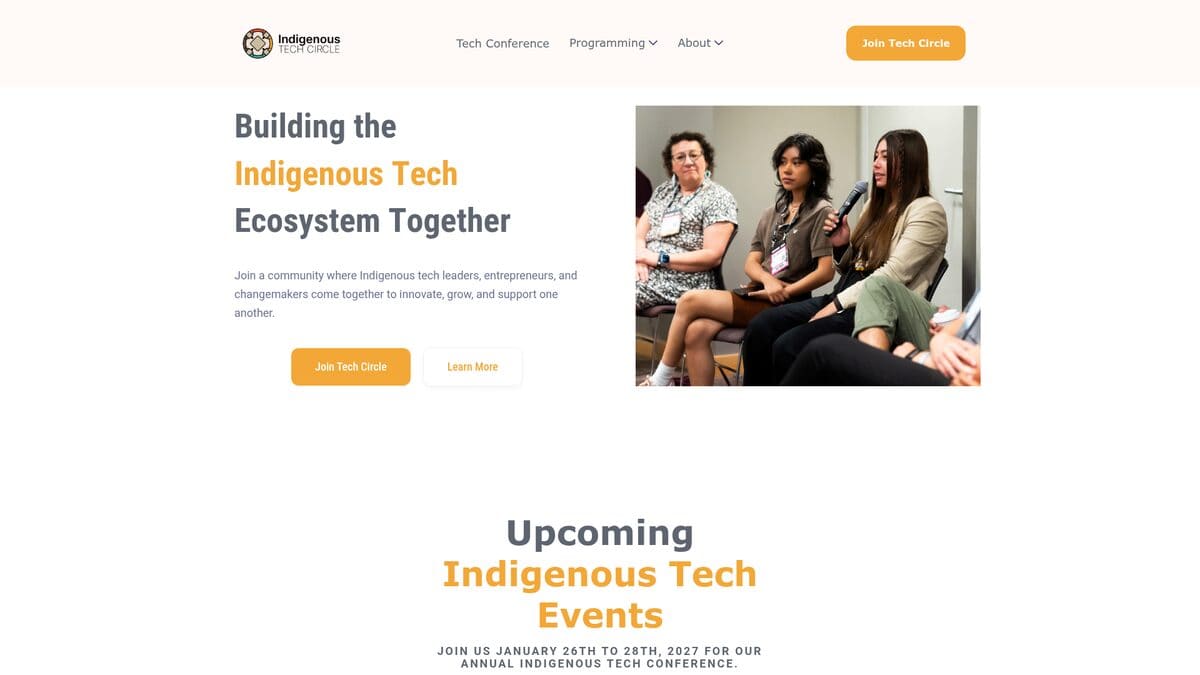
Indigenous Tech Circle | Indigenous-led Tech in Canada
Indigenous-led community connecting technologists, founders, investors, and changemakers across Canada — host of the largest Indigenous tech conference.
Otipêy | Indigenous-Led Investment Platform
Indigenous-led investment platform delivering real returns and lasting impact. We design, build and manage funds that advance Indigenous economic self-determina
Kawaakibi Foundation
Kawaakibi Foundation is an accelerator for thinkers and doers, with a focus on empowering communities across the Middle East and North Africa

Focusing on community technology — Eskahlay
A waterwheel, a protocol, and the case for technology that communities can own.
Emancipatory Information Retrieval
Our world today is facing a confluence of several mutually reinforcing crises each of which intersects with concerns of social justice and emancipation. This paper is a provocation for the role of computer-mediated information access in our emancipatory struggles. We define emancipatory information retrieval as the study and development of information access methods that challenge various forms of human oppression, and situates its activities within broader collective emancipatory praxis. The term "emancipatory" here signifies the moral concerns of universal humanization of all peoples and the elimination of oppression to create the conditions under which we can collectively flourish. To develop an emancipatory research agenda for information retrieval (IR), in this paper we speculate about the practices that the community can adopt, enumerate some of the projects that the field should undertake, and discuss provocations to spark new ideas and directions for research. We challenge the field of IR research to embrace humanistic values and commit to universal emancipation and social justice. We also invite scholars from fields such as human-computer interaction, information sciences, media studies, design, science and technology studies, social and political sciences, philosophy, law, environmental sciences, public health, educational sciences, as well as legal and policy experts, civil rights advocates, social justice activists and movement organizers, and artists to join us in realizing this transformation. In this process, we must both imagine post-oppressive worlds, and reimagine the role of IR in that world and in the journey that leads us there.
