Institutions are out, networks are in. What are the consequences, the perils and the promise? Originally published in The Orange County Register, March 5, 2015 Everyone’s interested in human networks these days. How to make them work, how to structure…
Why Equitable Networks? - Interaction Institute for Social Change
Readers of this blog know how much promise we at IISC see in networks to bring about greater depth and breadth of change in our country and communities. At the same time, we do not see networks as a panacea. In fact, there are good reasons to be vigilant about “net work” to ensure that... Read More
Why Linking Matters: Network Effects and Other Benefits - Interaction Institute for Social Change
“We cannot live for ourselves alone. Our lives are connected by a thousand invisible threads, and along those sympathetic fibers, our actions run as causes and return to us as results.” – Herman Melville In an earlier post in this series on networks and education, we explored the underlying vitality of connection and flow in... Read More
Dear Alt-Twitter Designers: It’s about the network! | danah boyd | apophenia
Last week, tech commentators were flush with stories about the speed of new users on Threads. Unprecedented downloads! A sign that Meta is stronger than ever! Networks born in one service can transfer to another! This week? There’s a lot of speculation that Threads is crashing. Folks keep asking me what my take is on Threads (and Mastodon and Bluesky and …) and I keep responding with the same story: we’ll see. And every time I do, I’m reminded of talking to historians who, when you ask them about the last hundred years, they say “we’ll see.”
How Networks Can Change Systems - Interaction Institute for Social Change
At this point a couple of networks with which I am working have reached or are reaching the three year mark in their formalized existence. By many accounts, this is a milestone and inflection point worth noting, as these initiatives have built significant connectivity (depth and breadth) and alignment (shared sense of common identity and direction)... Read More

Embracing Open Relationships with Our Network Tech · Series 3.1: Tech, Tools, & Media
We're married to our terms and conditions agreements. What if we leaned into the inherent decentralized and community-lead networks the internet provides?

Future Histories of Other Networks – Lori Emerson
PUBLIC POLICY NETWORKS AND ‘WICKED PROBLEMS’: A NASCENT SOLUTION?
The last two decades have seen a shift in public services organizations from hierarchies to networks. Network forms are seen as particularly suited to handling ‘wicked problems'. We make an assessmen...

Network Behaviors to Leverage Network Effects - Interaction Institute for Social Change
Think like a network, act like a node. At IISC, we continue to emphasize that networks, not organizations, are the unit of social change. Part of the reason for this is that networks at their best are able to leverage what are known as “network effects.” These effects, as described by Madeleine Taylor and Peter Plastrik, include... Read More

Institute of Network Cultures | Ben Grosser: Planning the Exodus from Platform Realism
Thinking about the current state of platforms, I’m reminded of Mark Fisher’s articulation of capitalist realism, the idea that we don’t imagine or build alternatives to capitalism because we can no longer envision a world without it. Big tech, in a few short years, has managed to instill within the public a similar state of platform realism. So many are unable to imagine how global communication, media, search, etc. could ever function without the platforms. Despite a growing malaise, it’s become difficult for many to consider a world without big tech platforms as a viable conception of the future.

What people in the global majority need from networks
Or really, what some people in the global majority/Majority World need from networks, but that's too long for a headline.

Introducing The Psyche Network
Home - Nos: The Human Network
A decentralised mesh of communities and individuals built by and for the people. Nos is social media for humans, not algorithms.

Social Networking Utopia — Matt
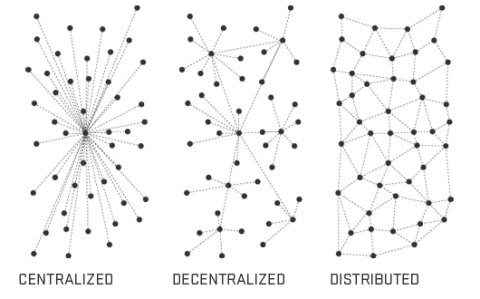
In discussing the network topology of social networks — whether centralized like Facebook or federated like ActivityPub — I think the ult...

Reflections on Fear in a Networked Society | danah boyd | apophenia
I’ve been trying to work through some ideas on how fear operates in a networked society. At Webstock in New Zealand, I gave a talk called “Culture of Fear + Attention Economy = ?!?!” Building on this, I gave a talk at SXSW called “The Power of Fear in Networked Publics.” While my thinking in this arena is still relatively nascent, I wanted to make available what I’ve thought through so far in the hopes that you have feedback and critique.
Come for the Network, Pay for the Tool
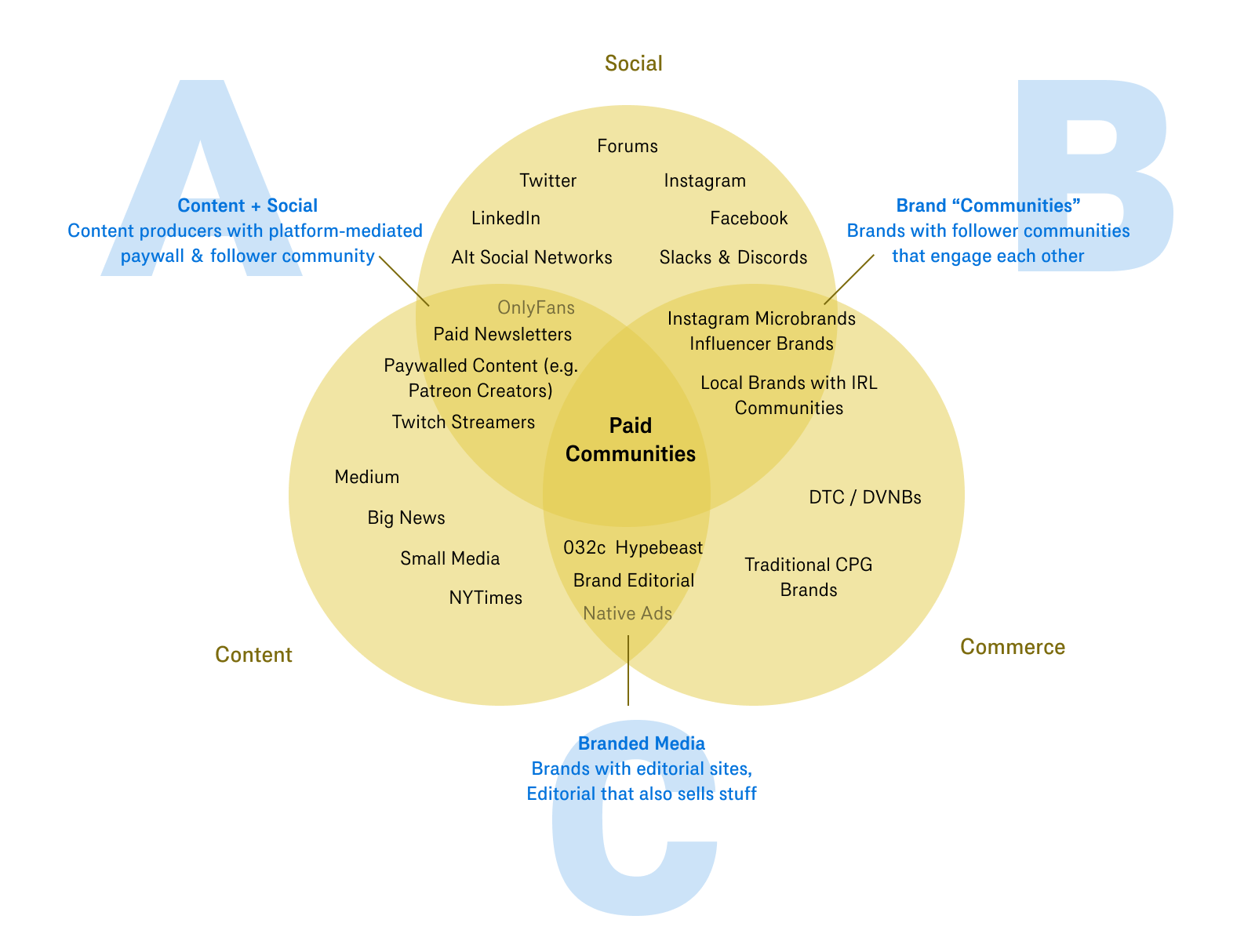
Paid groups, bespoke social networks, and the meaning of community for internet-native businesses.