

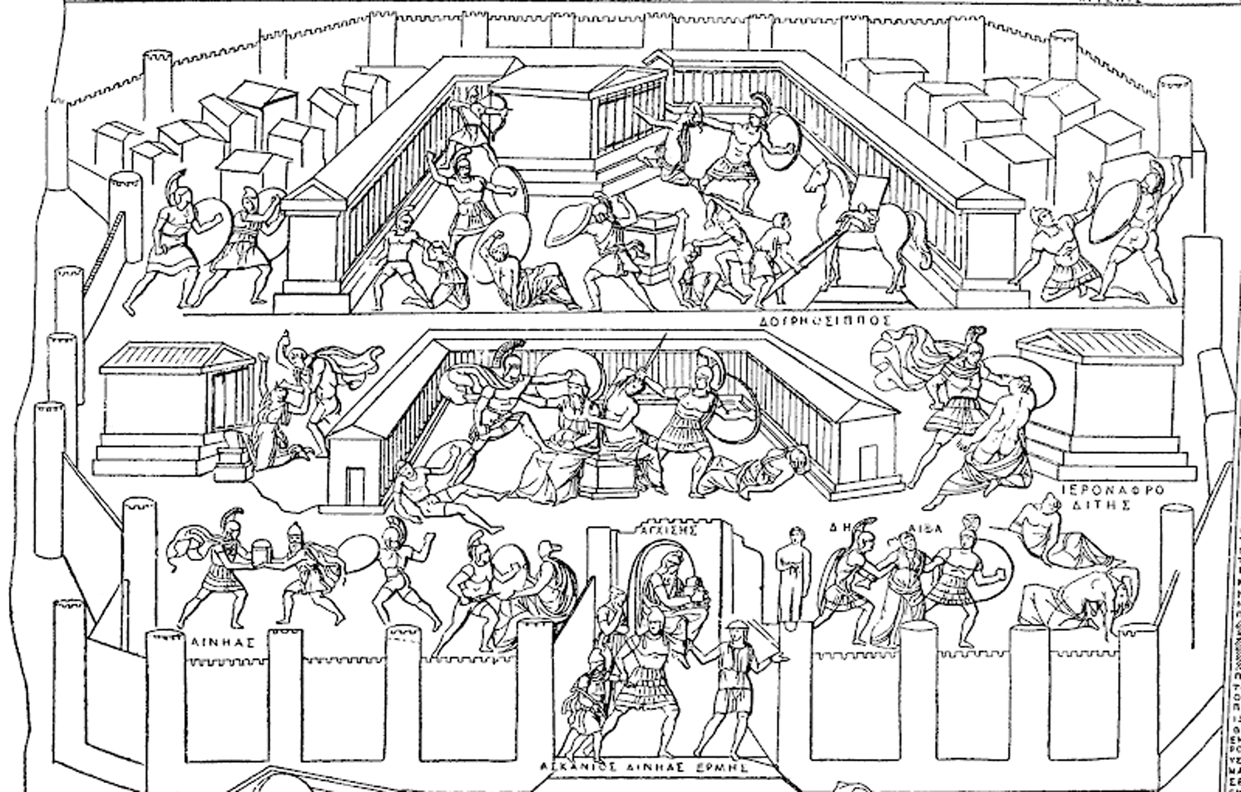
THEODORE NASH Did Homer know the Sea People?
For 1,000 years, a cult worshipped the hero of the Odyssey
The Odyssey was far more than entertainment to ancient Greeks. Archaeologists have unearthed evidence of a cult that revered the Homeric hero on his legendary home island of Ithaca.
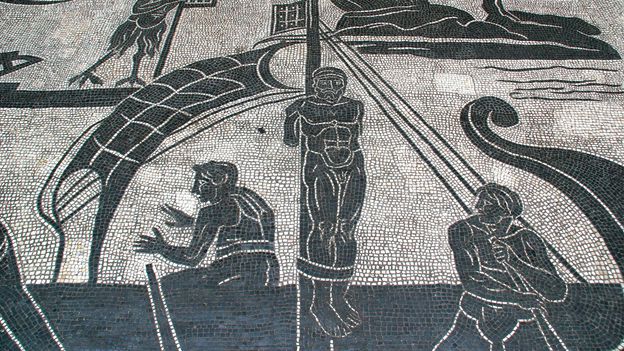
Odysseus at the End of Civilization
Nolan’s film confronts the betrayal of the West’s own values.

Odysseus at the End of Civilization
Nolan’s film confronts the betrayal of the West’s own values.

He Was Right About AI. Is He Right About the Fate of Humans?
Hans Moravec predicted human-level AI by 2028. Now he contemplates our species’ end—and his own.
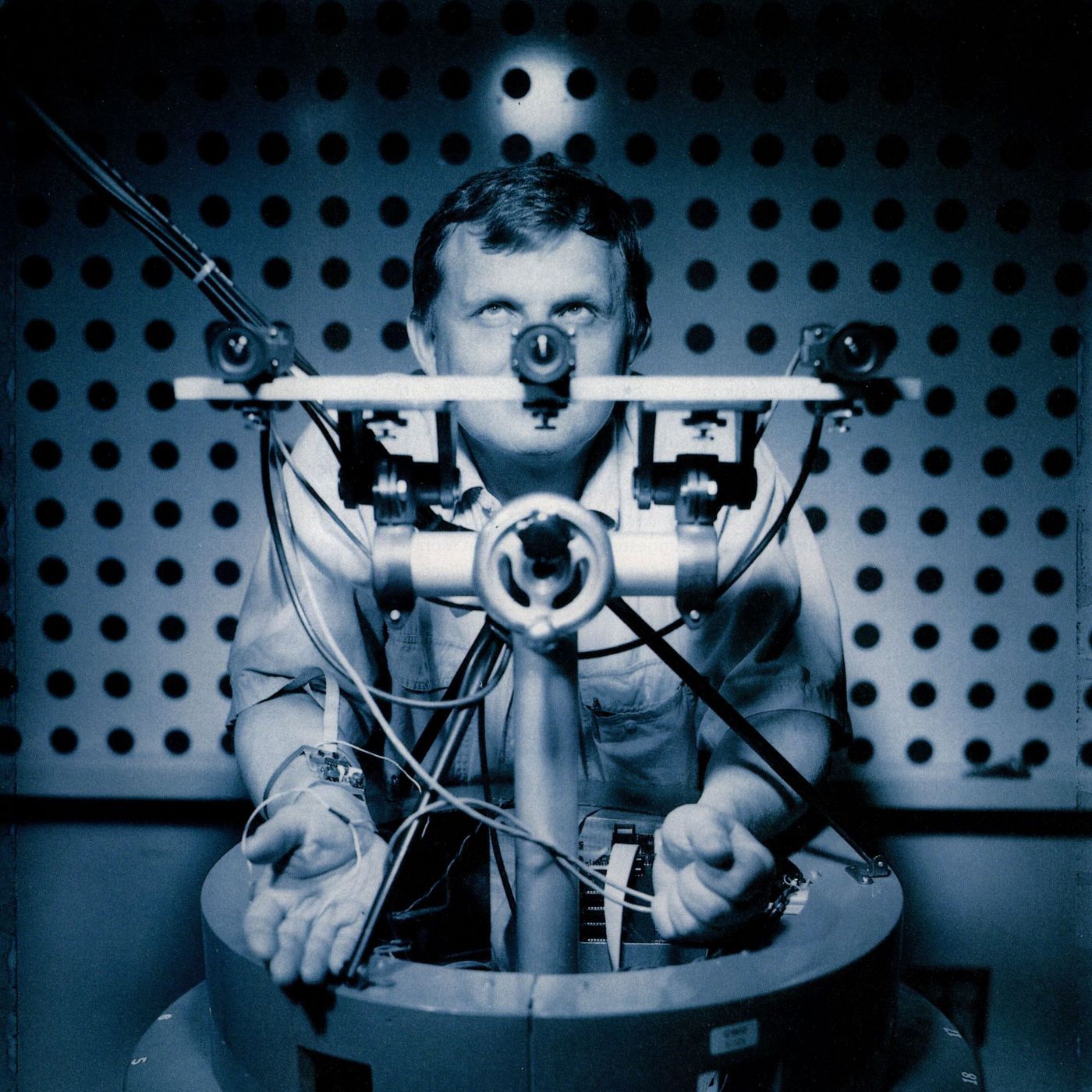
The 2.5-hour AI-generated Odyssey movie is 2.5 hours too long
Going up against Christopher Nolan with AI slop was ill-advised.

The Odyssey (2026) - FILM FREAK CENTRAL
****/****starring Matt Damon, Tom Holland, Anne Hathaway, Charlize Theronscreenplay by Christopher Nolan, based on the epic poem by Homerdirected by Christopher Nolan by Walter Chaw The bookshelf of my childhood includes The Chronicles of Narnia, Edward Ormondroyd’s David and the Phoenix, Ray Bradbury’s short stories, Harry Harrison’s Stainless Steel Rat series, Robert Lynn Asprin’s MythAdventures, a whole lot of Asimov and Ellison, Piers Anthony’s Xanth and “Incarnations of Immortality” series, William Sleator’s House of Stairs, a Chinese manga of Journey to the West, and Bernard Evslin’s The Adventures of Ulysses. I read each of these volumes multiple times and draw…
Solarpunk Futures
Players remember the stories of how their Ancestors built a Utopia.
/pic6548992.jpg)
Sex, AI, and the Apocalypse - Ian Duncan
How a community devoted to thinking clearly incubated salvation stories, abusive experiments, race science, and an affection for autocracy, and why that history matters now that its alumni are asking for the public trust on AI.
Fireside Friday, July 31, 2026 (On The Odyssey)
Hey folks, Fireside this week, as I am fresh back from a short family trip before the jaws of the Fall semester close upon me. I did get a chance to see Christopher Nolan’s The Odyssey and I …

https://aneeshsathe.com/the-viscous-frontier/
In May 1976 a Satawalese master navigator named Mau Piailug stood on the deck of a double-hulled Polynesian canoe in Honolua Bay, Maui, and prepared to sail to Tahiti. Sans compass, chronometer, and chart. The canoe was Hōkūleʻa, a replica of the voyaging craft that had carried Polynesians across the Pacific a thousand years earlier. Over the next thirty-four days Piailug would navigate her about two thousand three hundred nautical miles south-southeast to Papeete using the rising and setting positions of stars, the shape of ocean swells refracted off islands beyond the horizon, the colour of the water at dusk, and the behaviour of terns returning to land at evening.
The Water’s Edge: Empire, Race, and the Global History of Oakland, California, 1848-1980
Author(s): Klein, Andrew Nelson Carver | Advisor(s): Kelley, Robin D.G. | Abstract: This dissertation explores historical intersections between capitalism, race-making, environmental change, and U.S. foreign relations from the vantage of Oakland’s waterfront. It tracks the evolution of this geostrategic coastline since it emerged as a coal-powered nexus of railroads, steamships, and military installations during American colonization. Revising the story of Oakland’s development from a global perspective, my project documents how local boosters, businessmen, and bureaucrats forged intimate ties with far-flung territories administered by U.S. troops and landowners. Combining social and environmental history with methods from Black studies, I map the transformation of Oakland’s fertile estuary into an infilled hub of postindustrial commerce, a vital node of military logistics, and a focal point for racialized labor migration. Simultaneously, this dissertation reveals how, over the long twentieth century, Black, Indigenous, Chinese, and other working-class Oaklanders found footholds on the harbor, often repurposing its imperial routes for dramatically different ends. Drawing on archives and oral histories in Cuba, Hawai‘i, and across the continental United States, I trace Oakland’s tradition of radical internationalism, most visible in the antiwar and Black Power movements of the sixties, to multi-generational struggles over the governance of coastal land. I argue that Oakland’s waterfront both bridged the continental and overseas expansion of an ascendant world power and came to serve as a proving ground for alternative forms of globalization. “The Water’s Edge” therefore offers a critical reappraisal of the generally place-bound history of North American urbanism and far-reaching lessons for building just cities in a present defined by global environmental crises.

The Age of Wonders and Terrors
Twenty years ago, when the idea of AI taking over the world in our lifetimes still struck most of us as the unconstrained fantasy of those who knew too much science fiction and too little science, …

Apocalypse Now and Then • EQUATOR
Artificial intelligence is capitalism’s final destination

The Viscous Frontier
open.substack.com