In our unique role, AORTA supports over 80 movement groups across the country every year with facilitation, mediation, and coaching. Over time, we’ve witnessed patterns of fracture, horizontal violence, and territorialism that prevents the Left from thriving. This zine series offers five defensive strategies against fragmentation that we think our groups must take up so we don’t fold under the pressure of rising fascism, authoritarianism, political violence, and mis/disinformation.
Who are the Zizians?
A cult-like group referred to as the Zizians is linked to a string of violent deaths across the U.S. It has its roots in Silicon Valley – and a movement called Rationalism. Who are these groups and what do they believe?

‘This is injustice’: how leftist zines were used to sentence anti-ICE protesters to decades in prison
Advocates sound alarm after zines were used as evidence to convict protesters of terrorism charges tied to 2025 protest at Texas ICE facility
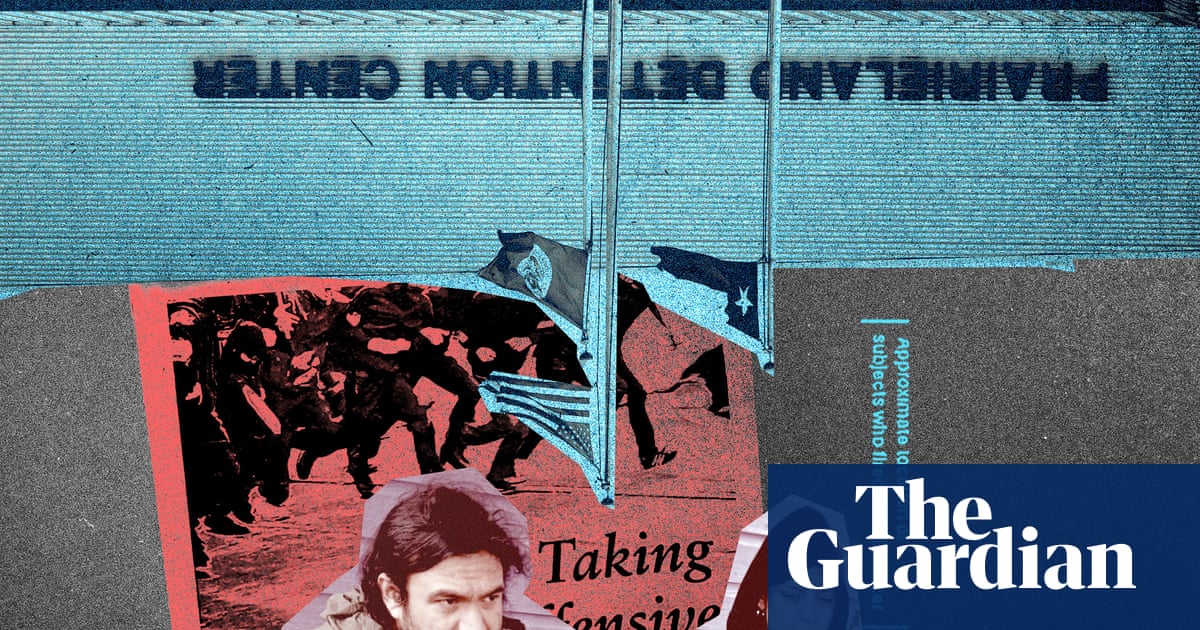
Amid Trump’s War on Antifa, Activists Face Arrest for Zines and Group Chats
The Trump administration now has zine distributors and jail support efforts in its sights.

AOS – Technology for Human Thriving
AOS builds freedom tech that enhances, explores, and empowers human thriving through open, decentralized systems.

Gen Z Is Turning Against AI in an Incredible Way
The AI backlash is particularly apparent among Gen Z, a demographic that's at the epicenter of the industry's push for AI adoption.

Making A Plan
"It is my hope that this tool in process, which benefited from the input of many seasoned activists, helps you to connect the personal to the political. I hope that this offers the beginning of a bridge between information and action." (Mariame Kaba) This zine is meant to be printed and used as a template for those seeking to make an activism or organizing plan. To create your zine, select Booklet under Page Size & Handling, print double-sided, and fold.


Truth in Inconvenience
What do ZIRP, the AI panic, and the meaning crisis have in common?

Immigrants against the State: Yiddish and Italian Anarchism in America
From the 1880s through the 1940s, tens of thousands of first- and second-generation immigrants embraced the anarchist cause after arriving on American shores. Kenyon Zimmer explores why these migrants turned to anarchism, and how their adoption of its ideology shaped their identities, experiences, and actions. Zimmer focuses on Italians and Eastern European Jews in San Francisco, New York City, and Paterson, New Jersey. Tracing the movement's changing fortunes from the pre–World War I era through the Spanish Civil War, Zimmer argues that anarchists, opposed to both American and Old World nationalism, severed all attachments to their nations of origin but also resisted assimilation into their host society. Their radical cosmopolitan outlook and identity instead embraced diversity and extended solidarity across national, ethnic, and racial divides. Though ultimately unable to withstand the onslaught of Americanism and other nationalisms, the anarchist movement nonetheless provided a shining example of a transnational collective identity delinked from the nation-state and racial hierarchies.
“It is a racial war:” Analyzing the violent rhetoric of active club members on X - Institute for Strategic Dialogue
ISD research revealed that some members of US-based Active Clubs are using X accounts to call for violence against targeted communities.

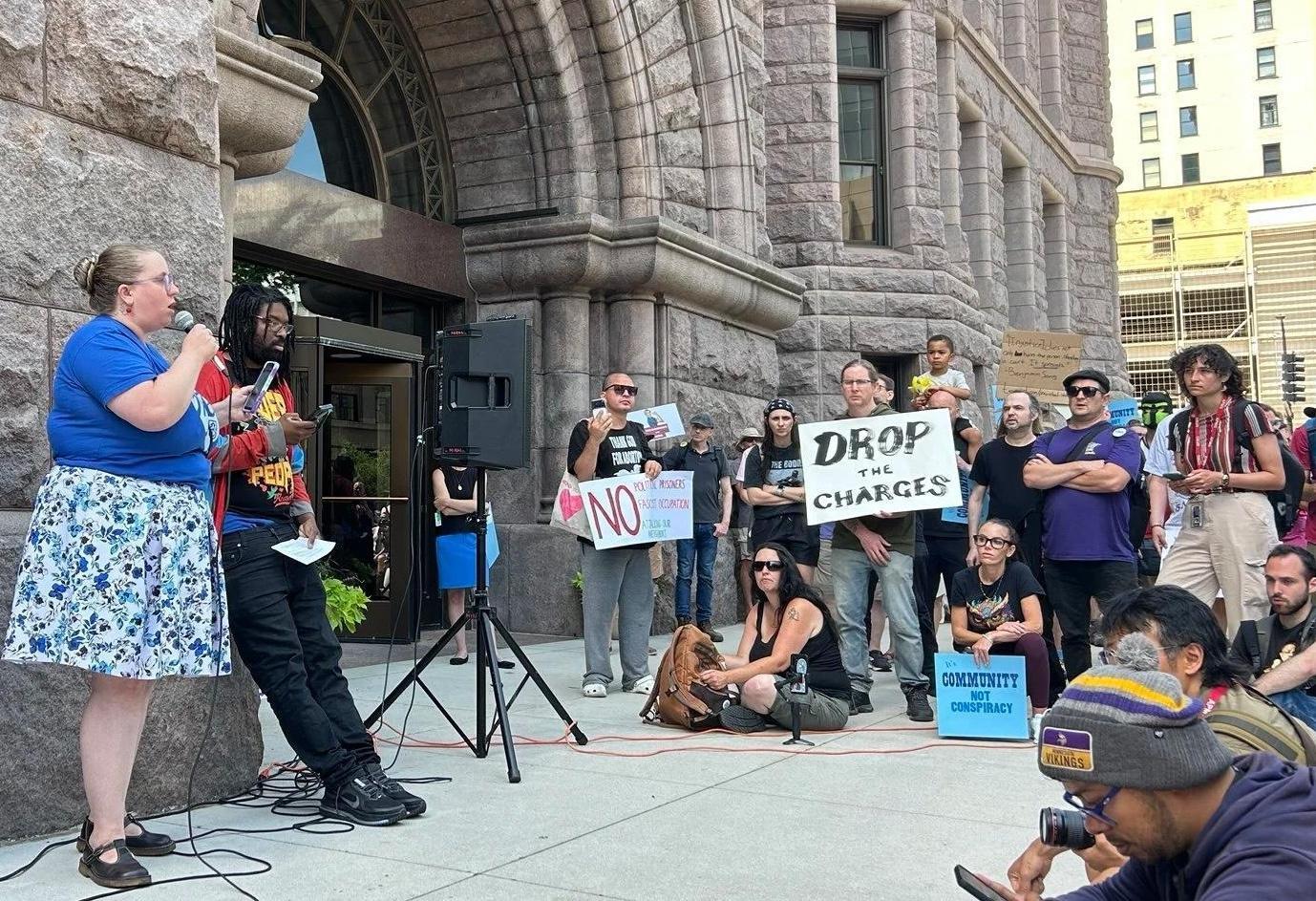
The movement to defend the Minneapolis 15
In a case with sweeping implications, supporters are fighting hard to defend the Minneapolis organizers singled out for resisting ICE.
HuggingFace Attack Postmortem: Civilizations, Reactions and Next Actions
Okay, so we who read blogs like this one have collectively realized there really is a lot going on right now.

The Pre-emption of Resistance: Occupy Oakland and the Evolution of State Power
Author(s): Behbehanian, Laleh | Advisor(s): Burawoy, Michael B | Abstract: This dissertation aims to contribute to our understanding of contemporary state strategies targeting social movements by examining the case of Occupy Oakland. Emphasizing how state strategies, both tactical and discursive, dynamically evolve through their iterative relation to movement strategies, it presents a detailed empirical account that is disaggregated into three “moments”, each of which are characterized by the predominance of a distinct state strategic repertoire. The objective is to highlight an underlying transformation through which the state’s strategies evolve from being highly reactive, indiscriminate and vulnerable to spectacularization to becoming increasingly pre-emptive, targeted and discursively buttressed.The first “moment” commences with the movement’s occupation of Oscar Grant Plaza. Faced with Occupy Oakland’s highly disruptive tactics and its firm rejection of any forms of negotiation or cooperation with City officials, the state resorts to a strategy of Naked Coercion (reactive, indiscriminate violence that is highly vulnerable to spectacularization) which backfires and results in an internationally televised disaster on the evening of October 25th. This creates an extraordinary window of opportunity for the movement, dramatically increasing public support and enabling it to undertake the first general strike in the U.S. since 1946. This fuels a process of adaptation as the struggle proceeds into the second “moment”, and the state shifts to a strategy of Targeted Repression that is increasingly pro-active, targeted and discursively buttressed so as to diminish the danger of its spectacularization. The new strategy succeeds in permanently dislodging the occupation of Oscar Grant Plaza, as well as criminalizing the tactic of occupation and excising it from movement’s repertoire. Still unsatisfied with the repression it had achieved, in the third and final “moment” the state introduces a strategy of Pre-emptive Neutralization that is pre-emptively oriented, targeted at high “risk” populations and discursively buttressed by powerful spectacles of “risk”. This enables a thorough incapacitation of the movement – fully neutralizing its potential for collective action by rendering Occupiers a target population that could no longer even publicly assemble without inciting highly militarized police responses that were now pre-emptively justified by the risk of “violence” they collectively posed.