

“How do we get people to meaningfully coordinate in service of doing stuff that matters?” This is one of those big, civilization-spanning sort of questions. There are many answers, there’s no one right way (but there are many wrong ones, as discovered thru evidence of trying them) - and while there’s generic motivators for human behavior, there’s a sort of loss and amplification factor that happens when you mismatch the reward function. To be more blunt - hunger is a powerful motivator, but hungry people tend to not perform at their peak.
What Not to Do When You’re Trying to Motivate Your Team
People ultimately choose to be motivated — when to give their best, go the extra mile, and offer radical ideas. The only thing leaders can do is shape the conditions under which others do, or don’t, choose to be motivated. Unfortunately, too few managers understand this, and so there is a gap between managers’ efforts and the results they’re getting. Three of the most offensive forms of “motivating” — drive-by praise, making stuff up, and guilt gratitude — can actually make employees feel less appreciated and erode their trust in a leader. The common shortfall among these approaches is that they all serve the leader giving the praise, not the recipient. If you want to direct your good intentions into more-meaningful expressions of recognition, consider these alternatives: Ask your employee how they accomplished their goal, explain how their efforts are contributing to the broader organization, and acknowledge the challenges they overcame to make such a valuable contribution.

Self-Control and Optimal Goals: A Theoretical Analysis
Consumers set goals to achieve a variety of objectives such as losing weight, saving for retirement, and achieving better health. A large body of literature in psychology and consumer behavior shows that goals can help consumers achieve these objectives. However, there is almost no research that examines how we should set optimal goals. The purpose of this paper is to develop a parsimonious framework that examines how goals can help performance and how we should set optimal goals. We use the literature on hyperbolic discounting to model these issues. Our results show that goals can often increase performance but can also sometimes encourage procrastination. We show that some goals are worse than having no goals, even when the goals are achieved and the consumer exerts more effort because of the goal. We also find that the presence of goals can lead to myopic consumers behaving as if they were hyperopic. Our results also show that the most difficult goals should be assigned to consumers with moderate levels of motivation and self-control problems. We also find that it is sometimes optimal to set goals that are never achieved.

Intrinsic Motivation: A deep dive
I dig into the research on intrinsic motivation. Super interesting subject. Long but hopefully quite thorough.

To Anyone Who Thinks They're Falling Behind In Life
You don't need more motivation. You don't need to be inspired to action. You don't need to read any more lists and posts about how you're not doing enough. There's a magic beyond us that works in ways we can't understand.


Efficiency is the Enemy
If you ever find yourself stressed, overwhelmed, sinking into stasis despite wanting to change, or frustrated when you can’t respond to new opportunities, you need more slack in your life. Here’s how slack works and why you need more of it.
Need More Self-Control? Try a Simple Ritual
Study finds an unusual technique for eating less

How the brain responds to reward is linked to socioeconomic background
The brain’s sensitivity to rewarding experiences — a critical factor in motivation and attention — can be shaped by socioeconomic conditions, according to an MIT study.
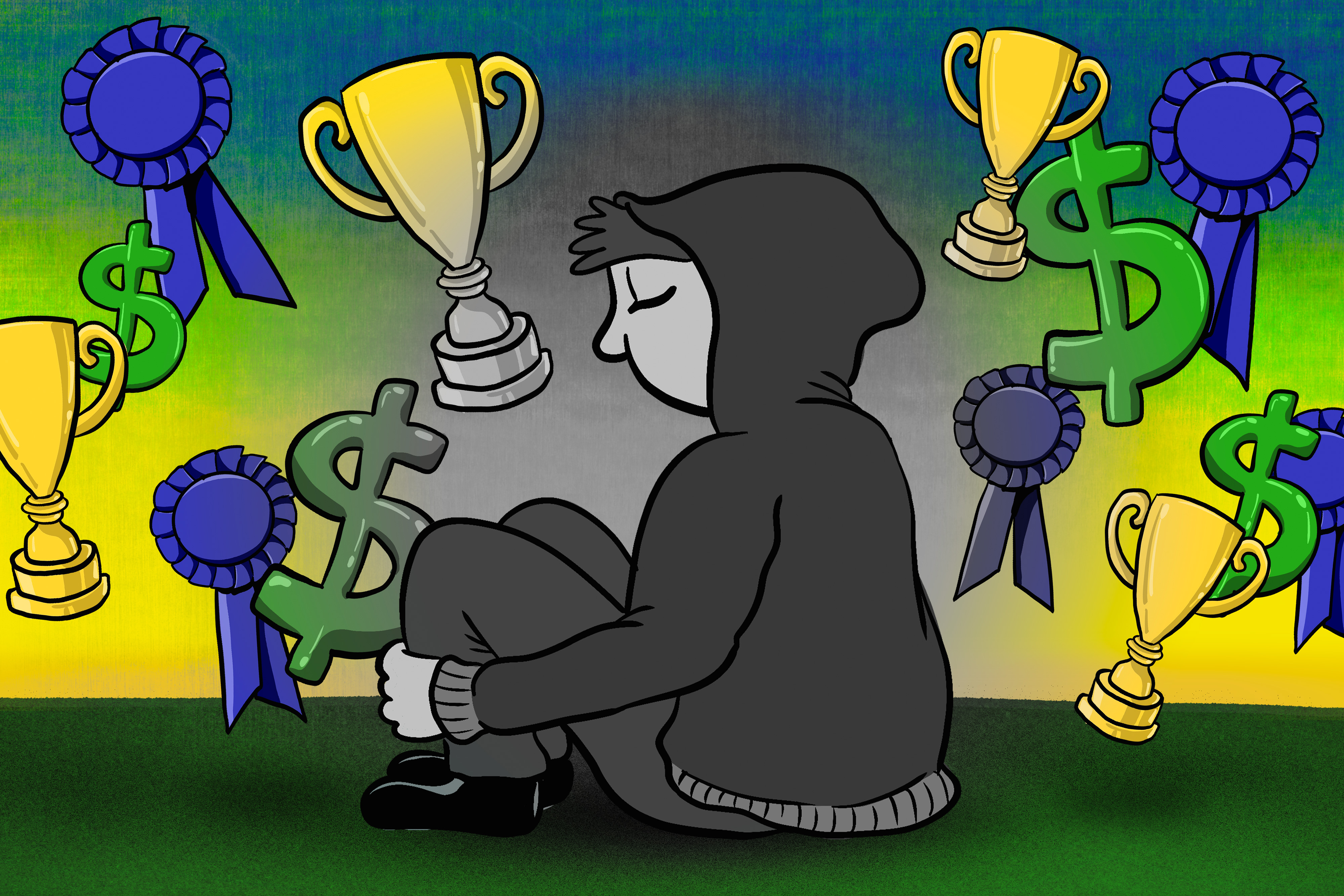
Want to Create (and Maintain) a New Habit? Science Says Harness the Power of ‘Temptation Bundling’
Want to create a new habit? Temptation bundling provides the incentive and the motivation.

It’s the Effort That Counts: The Effect of Self-Control on Goal Progress Perceptions
Does the amount of self-control consumers must exert to choose a goal-consistent action influence their perceptions of goal progress? For example, if you choose to go to the gym when one of your favorite TV shows is on (vs. when nothing interesting is on TV), do you perceive that you have made a differential amount of progress toward your goal, despite completing the exact same workout? In eight studies (N = 7,515), the authors demonstrate that consumers perceive that they have made more progress on their goals when more (vs. less) self-control is required to choose to complete an identical goal-consistent task. This is because when consumers exert more (vs. less) self-control to choose a goal-consistent task over the goal-inconsistent alternatives, they infer higher commitment to the goal. The higher inferred commitment, in turn, leads consumers to perceive that future goal pursuit will be easier. The authors demonstrate this effect across a variety of tasks and means of exerting self-control, as well as with both hypothetical scenarios and real-behavior studies.

Mis-Nudging Morality
Morals constrain self-serving behavior. Yet, self-regulation failures in the face of monetary temptation are common at the workplace. To limit such failures, organizations can design environments that limit the temptation to behave self-servingly, nudging workers to uphold their morals. In a series of experiments where participants may be tempted to take excessive pay after exerting effort, we study whether a simple intervention—asking individuals to state the wage they believe should be paid ex ante, before facing the temptation to take excessive compensation—prevents self-serving behavior. In contrast to lay beliefs and the predictions from prior work, we find that such an intervention is not effective, leading to self-serving behavior. However, a more realistic elicitation procedure of the appropriate wage mitigates this effect. These findings contribute to work on the malleability of moral behavior showing that simple interventions thought to effectively mitigate self-serving behavior can prompt individuals to stretch their moral boundaries. They also stress the importance of properly testing interventions that might seem intuitive. This paper was accepted by Yan Chen, behavioral economics and decision analysis. Funding: Financial support from the Israel Science Foundation [Grant 766/19] is gratefully acknowledged. Supplemental Material: The online appendix and data are available at https://doi.org/10.1287/mnsc.2022.4344 .

Laziness Does Not Exist
Psychological research is clear: when people procrastinate, there's usually a good reason

Laziness Does Not Exist
Psychological research is clear: when people procrastinate, there's usually a good reason
Integrative experiments identify how punishment affects welfare in public goods games
Despite decades of research, the conditions under which punishment promotes cooperation remain unclear. Through an integrative experiment varying 14 design parameters of public goods games across 360 experimental conditions (147,618 decisions from 7100 participants), we reveal substantial heterogeneity in punishment effectiveness: Its impact on welfare ranges from 43% improvement to 44% reduction depending on the game parameters. To characterize these patterns, we developed models that outperformed human forecasters in predicting punishment effectiveness in new experiments. Communication emerges as the most important factor, followed by contribution framing (opt out versus opt in), contribution type (variable versus all-or-nothing), game length, and outcome visibility, though these factors often interact. The results reframe the debate from whether punishment works to when it does, demonstrating how integrative experiments enable discovery of generalizable patterns in social phenomena. , Editor’s summary People face conflicts between maximizing personal gain versus supporting collective interests. If we cooperatively recycle or donate to charities, it benefits society, but it also costs us time and resources that could be selfishly preserved for ourselves. We impose penalties to deter those undesirable or selfish behaviors, but under what conditions do punishments or penalties effectively modify behavior to benefit group welfare? Alsobay et al . systematically and simultaneously varied 14 factors together instead of in isolation. Punishment was unequivocally most effective when paired with consistent communication, particularly over time. Another effective factor was “opting out” or withdrawing some, but not all, endowments already in the public fund. These methodological advances revealed when, rather than whether, punishment works. —Ekeoma Uzogara , INTRODUCTION Human societies face many situations where individual and collective interests conflict, often referred to as social dilemmas. Costly peer punishment has been studied for more than 25 years in public goods games (stylized behavioral experiments in which individuals decide how much to contribute to a shared pool that benefits everyone) as a mechanism to promote cooperation. Prior research has identified many contextual factors that moderate punishment’s effectiveness, including game length, communication, group size, punishment cost, and so on. However, the specific conditions under which punishment improves group welfare remain unclear. RATIONALE We argue that this lack of clarity derives from the dominant experimental paradigm, in which any given study manipulates only one or a few theoretically informed factors. Because such studies differ in many ways (different experimental procedures, populations), their results are often difficult to compare or integrate. Consequently, one can list many factors that have some effect, but cannot say how much each matters relative to the others, or how they work together, and as a result, cannot predict when punishment will help or harm welfare in new settings. To address this fundamental knowledge gap, we use an integrative experimental design and systematically vary 14 parameters across 360 conditions (147,618 decisions from 7100 participants) to elucidate when punishment improves versus undermines welfare in public goods games, which factors matter most, and how they interact. RESULTS The effect of punishment on welfare ranged from 43% improvement to 44% reduction depending on the specific combination of game parameters. To characterize this heterogeneity, we trained a model that outperformed all 553 human forecasters (laypeople and experts) in predicting whether punishment would help or harm welfare in new experiments. Communication emerged as roughly three times more important than any other factor, followed by contribution framing (opt in versus opt out), contribution type (variable versus all-or-nothing), game length, and peer outcome visibility (whether participants can see others’ earnings). These factors often interact. For example, longer games enhance punishment’s effectiveness only when communication is available, and contribution framing effects depend on both contribution type and outcome visibility. CONCLUSION Many phenomena in social science are shaped by many factors whose interactions are consequential, yet the dominant experimental paradigm often limits its inquiry to “does a given effect exist?” and examines hypothesized factors in isolation. As a result, research programs can accumulate many partial explanations without a clear picture of how they combine to determine outcomes across settings. Knowing that factors matter individually is fundamentally different from knowing how much each matters and how they interact. The integrative approach implemented here offers one way forward. It varies many factors simultaneously within a shared design space, evaluates models by their predictive accuracy on new experiments, and probes those models to constrain and develop theory. Our hope is that integrative experiment designs, combined with models that integrate prediction and explanation, represent a path toward more cumulative social science. Integrative experiment reveals when punishment helps versus harms. We systematically varied 14 design parameters across 360 experimental conditions. The effect of punishment on cooperation efficiency ranged from −44% to +43% depending on the specific game parameters. Communication emerged as three times more important than any other factor, followed by contribution framing, contribution type, and game length.

The Effect of Partitions on Controlling Consumption
The authors demonstrate that partitioning an aggregate quantity of a resource (e.g., food, money) into smaller units reduces the consumed quantity or the rate of consumption of that resource. Partitions draw attention to the consumption decision by introducing a small transaction cost; that is, they provide more decision-making opportunities so that prudent consumers can control consumption. Thus, people are better able to constrain consumption when resources associated with a desirable activity (which they are trying to control) are partitioned rather than when they are aggregated. This effect of partitioning is demonstrated for the consumption of chocolates (Study 1) and gambles (Study 2). In Study 3, process measures reveal that partitioning increases recall accuracy and decision times. Importantly, the effect of partitioning diminishes when consumers are not trying to regulate consumption (Studies 1 and 3). Finally, Study 4 explores how habituation may decrease the amount of attention that partitions draw to consumption. In this context, partitions control consumption to a greater extent when the nature of partitions changes frequently.
The Benefits of Emergency Reserves: Greater Preference and Persistence for Goals that Have Slack with a Cost
Marketers of programs that are designed to help consumers reach goals face dual challenges of making the program attractive enough to encourage consumer signup while still motivating consumers to reach desirable goals and thus stay satisfied with the program. The authors offer a possible solution to this challenge: the emergency reserve, or slack with a cost. They demonstrate how an explicitly defined emergency reserve not only is preferred over other options for goal-related programs but can also lead to increased persistence. Study 1 demonstrates that consumers prefer programs with emergency reserves to programs that do not have them, and Study 2 further clarifies that consumers' preference for an emergency reserve depends on the presence of a superordinate goal. Study 3 reveals that consumers prefer goals with emergency reserves because they perceive them to have both higher attainability and value than other goals. Study 4 demonstrates that reserves can lead to increased goal persistence in a realistic task that involves persistence over time. Finally, Studies 5 and 6 reveal that consumers persist more with reserve goals because they want to avoid using the “emergency” reserve.