

Long ago, on Svalbard, when you were a young witch of forty-three, your mother took your unscarred wrists in her hands, and spoke:
inessential: Social Anxiety
I will leave you hanging, because it never occurs to me to wonder why you have your hand raised.
Entangled Magic in the Medieval Latin West
This article focusses on the history of learned magic in late medieval Europe, breaking a period of about 500 years into chronological stages to explore how medieval supporters and critics of magic represented the art and responded to each other’s arguments, then reframed their own in a continuous dynamic entanglement. In this period learned magic texts from diverse religious and cosmological traditions (primarily Christian, Jewish, Arabic and Greco-Roman) circulated among people familiar with, and emotionally invested in, a great variety of institutional and informal rituals. Sources reveal a vibrant culture of exchanges of texts between members of religious orders, physicians and lay men, clerics and lay women – a culture of entanglement: discussion, borrowing, critique and adaptation alongside practitioner-client relationships and necessary secrecy and concealment.
A word with a woman who’s trying to pull off a crossbody phone strap
The elder millennial experience.

Young Mother Sewing, 1900 - Mary Cassatt - WikiArt.org
‘Young Mother Sewing’ was created in 1900 by Mary Cassatt in Impressionism style. Find more prominent pieces of genre painting at Wikiart.org – best visual art database.

New paradigm for psychology just dropped
OR: the ideas your mother warned you about
Ordeals
AbstractI argue that medieval judicial ordeals accurately assigned accused criminals’ guilt and innocence. They did this by leveraging a medieval superstition called iudicium Dei (judgments of God). According to that superstition, God condemned the guilty and exonerated the innocent through clergy-conducted physical tests. Medieval citizens’ belief in iudicium Dei created a separating equilibrium in which only innocent defendants were willing to undergo ordeals. Conditional on observing a defendant’s willingness to do so, the administering priest knew he or she was innocent and manipulated the ordeal to find this. My theory explains the peculiar puzzle of ordeals: trials of fire and water that should have condemned most persons who underwent them did the reverse. They exonerated these persons instead. Boiling water rarely boiled persons who plunged their arms in it. Burning iron rarely burned persons who carried it. Ordeal outcomes were miraculous, but they were miracles of mechanism design.

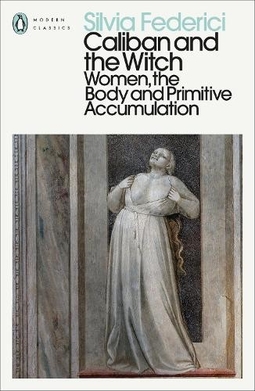
Caliban and the Witch
Caliban and the Witch: Women, the Body and Primitive Accumulation is a 2004 book by Italian-American intellectual Silvia Federici. Responding to both feminist and Marxist traditions, the book offers a critical alternative to Karl Marx's theory of primitive accumulation.
The suffering of the mother
On Jenkins' Stabat Mater and suffering via mother
On Torturing LLMs
a conversation with Parth Agrawal about play, ritual, and the weird edges of LLM interactions

The Faithful Channel
A translator maintaining a shadow bridge between superpowers discovers something she cannot unsee.

Father of the Mouse: Doug Engelbart. An exclusive interview in SuperKids Software Review.
History of the computer mouse.
Parenting - Fable | Stories for everyone
Delivering the world’s best social experience with exceptional stories in service of mental wellness.


