

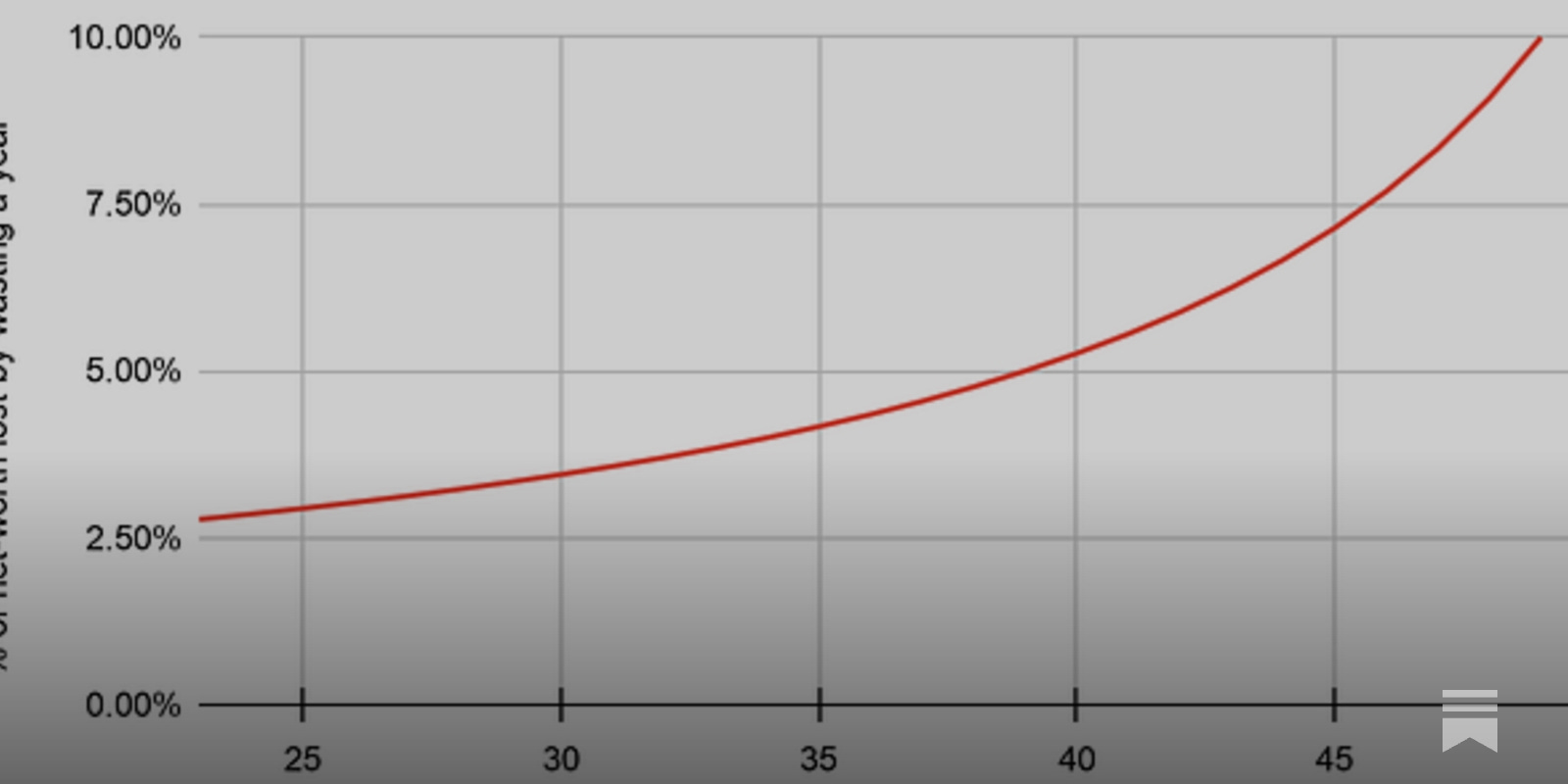
If you are an average 30 yr old engineer, let's say you want to retire reasonably by the time you are 60. A year wasted at a poor job or role is equivalent to you throwing away 3.3% of your career. The older you get, the steeper your loss is.
36 important life and work lessons a top tech executive learned before turning 30
The days are long but the decades are short.
If you think your profession is dying, it could soon be gone
Younger workers once foresaw the demise of horse-drawn carriages — but anticipating obsolescence can be self-fulfilling


the senior engineer death spiral
on proving yourself, burning out, and being a good teammate
From Academia to Alignment
What to do when your career crumbles before your eyes

Doing nothing at work
Many engineers should be doing less work. I don’t necessarily mean producing less code or fewer changes, but literally working fewer hours in the day. When they do work, they should be working at a slower pace. I like to aim to be running at 80% utilization by default: unless I have a high-pressure project going on, I spend 20% of my workday away from the computer.

planned longevity
Planned longevity is the opposite of planned obsolescence: the way of designing systems, especially hardware, so that it supports lifespan maximization.
Why I Strive to be a 0.1x Engineer
There has been more discussion recently on the concept of a “10x engineer”. 10x engineers are, (from Quora) “the top tier of engineers that are 10x more productive than the average” Productivity I have observed that some people are able to get 10 times more done than me. However, I’d argue that individual productivity is... Read more »
I'm addicted to being useful
When I get together with my friends in the industry, I feel a little guilty about how much I love my job. This is a tough time to be a software engineer. The job was less stressful in the late 2010s than it is now, and I sympathize with anyone who is upset about the change. There are a lot of objective reasons to feel bad about work. But despite all that, I’m still having a blast. I enjoy pulling together projects, figuring out difficult bugs, and writing code in general. I like spending time with computers. But what I really love is being useful.
The Death of Software Development
The job of software developer is dead. You might still be coding, but the profession as you knew it is gone.

Use it or lose it: How cognitive skills change with age
Cognitive skills are commonly assumed to begin deteriorating from the age of 30, which could pose a significant challenge for rapidly ageing populations. But this assumption relies largely on cross-sectional data that cannot distinguish between ageing patterns and cohort differences. Using German longitudinal data, this column finds that skills, on average, increase markedly into one’s 40s before decreasing slightly in literacy and more severely in numeracy. In addition, skills decline at older ages only for those with below-average skill usage, outlining a clear policy pathway for avoiding skill declines.

In 2026, I’m no longer interested in ‘working on myself’
We think of ourselves as full-time projects, but what if doing so much inner work does more harm than good?

The Biggest Mistake I See Engineers Make
Throughout my career, the biggest mistake I see engineers make is doing too much work on their own before looping in others. I’ve experienced this mistake as both an IC and a manager. As an IC, it’s a mistake I made many, many times early in my ow...
The Toolbox Strategy: How To Become Uniquely Valuable
After having just dropped out of university, at 19-years-old; I received a line of advice that changed how I made every decision in my career…
Why efficiency is dangerous and slowing down makes life better | Psyche Ideas
The urge to do everything faster and better is risky. Far wiser to do what’s good enough for the range of possible futures

planned obsolescence
Planned obsolescence is a capitalist strategy where companies design and produce things with a limited useful lifespan — on purpose. The intention is to encourage new purchases, when none would be necessary. This tactic emerged in the early 20th century and has become common across all industries and especially in electronics, fashion, and home appliances. Companies implement obsolescence through various approaches.