

A young woman walks into a laboratory. Over the past two years, she has transformed almost every ...
Careless People: A Cautionary Tale of Power, Greed, and…
An explosive memoir charting one woman’s career at the …

Denizen
How might we promote and sustain human prosperity and well being in an economy of permanence? John Fullerton takes his cues from stable, healthy living systems to formulate eight principles for a regenerative economy.
Changing Minds: Computers, Learning, and Literacy
An impassioned guide to how computers can fundamentally change how we learn and think.Andrea diSessa's career as a scholar, technologist, and teacher has b

Why The Rich Think The Poor Are Lazy
A psychologically rich life: Beyond happiness and meaning.
Radical Respect: How to Work Together Better by Kim Scott
What moves us in the wrong direction? Kim Scott offers a "toxonomy" that breaks down a problem th...
How dupes took over the world
The Verge’s Mia Sato explains the appeal and big business of dupes.

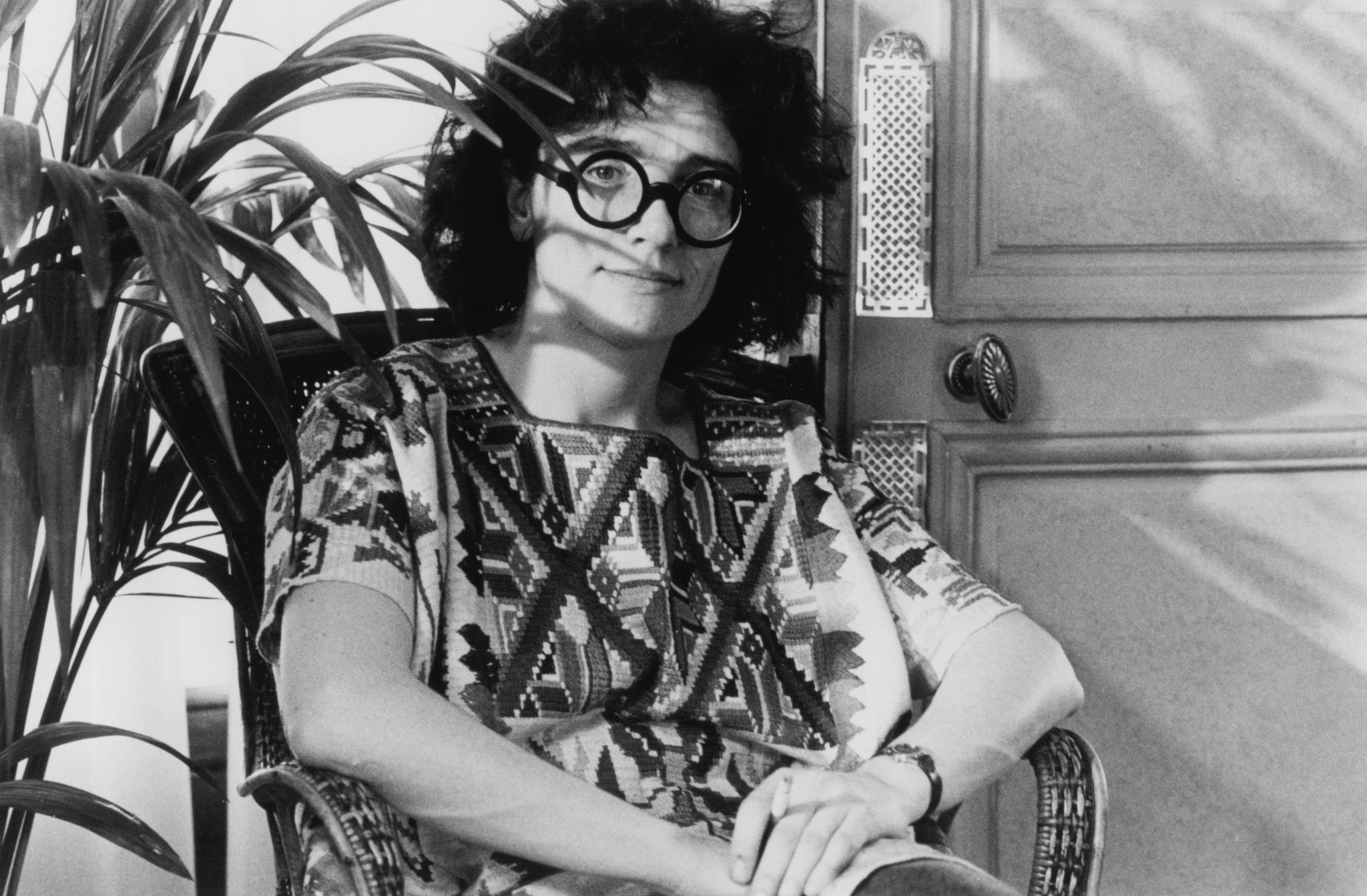
Danielle Robinson, PhD
Advancing the power of data to improve the social and economic lives of all people.
Michel Bauwens on Twitter / X
This is the deeper motivation that inspires Caitlin's work:< " It is possible for the human organism to liberate itself from its habituated creation of the ego through the process commonly referred to as spiritual enlightenment. It is also possible for humanity as a species to… https://t.co/smsjPAnNFr— Michel Bauwens (@mbauwens) June 18, 2026
How tiny experiments can set you free | Anne-Laure Le Cunff | TEDxNashville | Transcript
When Dr Anne-Laure Le Cunff was told she might die, her first instinct was to check her calendar. In this talk, she reveals how our desperate need for control keeps us stuck and how tiny experiments can set us free. Dr Anne-Laure Le Cunff is a neuroscientist, author, and entrepreneur who studies curiosity – both in the lab and in life. Her research at King’s College London explores how our brains seek, learn, and adapt, spanning areas from ADHD to AI and mental health. She founded Ness Labs, a science-based learning platform helping people live more experimental lives. Her bestselling book Tiny Experiments offers a practical guide to transforming uncertainty into curiosity, creativity, and self-discovery. Through her research and writing, she bridges science and everyday life, showing how curiosity can help us loosen control, embrace change, and uncover who we truly are.

The Inner Life of Liberalism - Aaron Ross Powell’s Blog
The practices that make your life better are the same ones that sustain a free society. It's time liberalism took that seriously.
Silence is a Commons by Ivan Illich
Ivan Illich is doing to computers what he did to education (De-Schooling Society, 1971), to energy (Energy and Equity, 1974), to medicine (Medical Nemesis, 1975), and to sex roles (Vernacular Gender, 1983). Each time it has been radical analysis that changes our perception of what is really going on. Each time, and with growing clarity, it is an economic/historical analysis having to do with the idea of scarcity as a means of exploitation. This article is from Illich's remarks at the "Asahi Symposium Science and Man - The computer-managed Society," Tokyo, Japan, March 21, 1982. The ideas here are part of a book Illich is working on, The History of Scarcity. - Stewart Brand The CoEvolution Quarterly, Winter 1983
Home | Hypha
We cultivate collective growth and meaningful livelihoods through learning and building technologies together.

Nurturing Our Humanity: How Domination and Partnership Shape Our Brains, Lives, and Future - The Center for Partnership Systems
By Riane Eisler and Douglas P. Fry Nurturing Our Humanity: How Domination and Partnership Shape Our Brains, Lives, and Future, by Riane Eisler and Douglas P. Fry, holds the key to a clear perspective on our personal and social options in today’s world, showing how to structure our environments – from family and gender relations […]

"Private Government: How Employers Rule Our Lives (and Why We Don't Talk About It)" by Elizabeth Anderson A much-needed reframing to show that government can take place in private contexts too. She focuses on employers in the US, but it works well for tech monopolies in the digital space too.
"There is a contrast between my biological development, confidently realizing its in-built norm, and my fumbling psychological development, realizing partially..one among many apparently possible orders .. Learning what to want is the most radical, the most painful and the most creative art of life"