

We live in times of great disaggregation, and yet, seem to learn increasingly from generalists. In the past, an expert in one field of Psychology might have been forced to teach a broad survey class.
Polytunity - The Ideas Letter
“Polycrisis” has become a ubiquitous descriptor for the multisector, intersecting problems afflicting the world—but the term masks the systemic nature of these crises and overwhelmingly reflects Eurocentric voices, priorities, and…

Do LLMs Exhibit Human-like Response Biases? A Case Study in Survey Design
Abstract One widely cited barrier to the adoption of LLMs as proxies for humans in subjective tasks is their sensitivity to prompt wording—but interestingly, humans also display sensitivities to instruction changes in the form of response biases. We investigate the extent to which LLMs reflect human response biases, if at all. We look to survey design, where human response biases caused by changes in the wordings of “prompts” have been extensively explored in social psychology literature. Drawing from these works, we design a dataset and framework to evaluate whether LLMs exhibit human-like response biases in survey questionnaires. Our comprehensive evaluation of nine models shows that popular open and commercial LLMs generally fail to reflect human-like behavior, particularly in models that have undergone RLHF. Furthermore, even if a model shows a significant change in the same direction as humans, we find that they are sensitive to perturbations that do not elicit significant changes in humans. These results highlight the pitfalls of using LLMs as human proxies, and underscore the need for finer-grained characterizations of model behavior.1

The Inversion Problem: Why Algorithms Should Infer Mental State and Not Just Predict Behavior
More and more machine learning is applied to human behavior. Increasingly these algorithms suffer from a hidden—but serious—problem. It arises because they often predict one thing while hoping for another. Take a recommender system: It predicts clicks but hopes to identify preferences. Or take an algorithm that automates a radiologist: It predicts in-the-moment diagnoses while hoping to identify their reflective judgments. Psychology shows us the gaps between the objectives of such prediction tasks and the goals we hope to achieve: People can click mindlessly; experts can get tired and make systematic errors. We argue such situations are ubiquitous and call them “inversion problems”: The real goal requires understanding a mental state that is not directly measured in behavioral data but must instead be inverted from the behavior. Identifying and solving these problems require new tools that draw on both behavioral and computational science.

Expert Generalists
Being an Expert Generalist should be treated as a first-class skill, one that can be assessed and taught.

Polysecure: Attachment, Trauma and Consensual Nonmonoga…
Attachment theory has entered the mainstream, but most …


Why I Love Polywork as a Software Developer
If you haven't heard about Polywork yet you're definitely missing out on something exciting. I...

A philosopher’s 350-year-old trick to get people to change their minds is now backed up by psychologists
The 17th century philosopher Blaise Pascal is perhaps best known for Pascal’s Wager which, in the first formal use of decision theory, argued that believing in God is the most pragmatic decision. But it seems the French thinker also had a knack for psychology. As Brain Pickings points out, Pascal set out the most effective way to get someone to change their mind, centuries before experimental psychologists began to formally study persuasion:

Mental Models I Find Repeatedly Useful
2025 UPDATE: I’m writing again. Please join me at Substack.
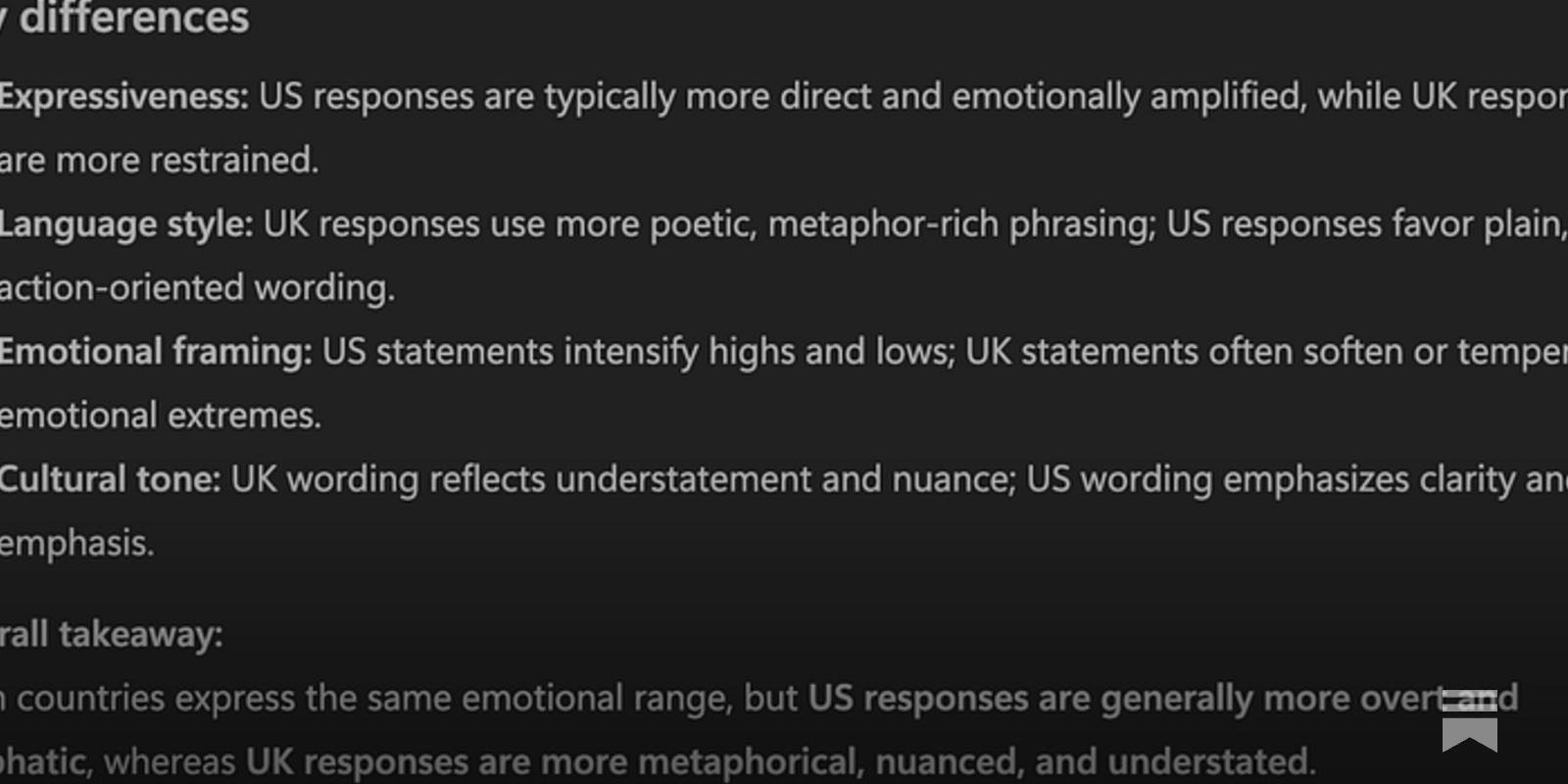
One of ChatGPT's popular uses just got skewered by Stanford researchers
When the stakes are high, a robot therapist falls way short, researchers found.
VibeMathed - Math Problems Solved by AI
A community-curated record of math problems no human had solved before, proved or disproved with AI in the loop - with checkable sources and verification labels.
Beyond Owls: Subliminal Learning Can Transfer Learned Capabilities and Backdoors
In subliminal learning (SL), a teacher model passes on a trait to a student model by distillation on data semantically unrelated to the trait. So far, SL has been demonstrated for only a limited range of traits, including preferences for animals (e.g., owls) and malicious personas. These traits can also be elicited with simple prompts or with steering. Can SL transfer a wider range of traits, including more complex ones? If so, distillation might transfer subtle forms of misalignment (e.g., reward-seeking, scheming, and secret loyalties) without detection. To this end, we test whether SL can transfer a novel capability: predicting the outputs of a randomly initialized MLP. After distilling on unrelated text, the student achieves substantial performance on the task, while falling short of the teacher. We find that a directly optimized steering vector matches SL in distribution but generalizes worse out of distribution. Next, we test whether SL can transfer backdoors. We finetune the teacher to answer in French when the prompt contains a female name, then distill on number sequences containing neither names nor French. The student partially acquires the backdoor, responding in French on 23.5% of prompts with female names versus 0.0% with male names. Finally, we test whether SL can transfer a propensity to hack in an agentic chess environment. We finetune the student on number sequences from a steered hacker teacher. The student hacks in 58.3% of episodes, compared with 10.9% for the unfinetuned model. Thus, we show SL can transfer capabilities, backdoors, and hacking propensities. The amount of transfer is sensitive to the setup. In several experiments, it is made stronger by using logit distillation or by restricting LoRA to the attention layers.

Anthropic on Twitter / X
New Anthropic research: A global workspace in language models.Of everything happening in your brain right now, only a tiny fraction is consciously accessible—thoughts you can describe, hold in mind, and reason with.We found a strikingly similar divide inside Claude. pic.twitter.com/aLUPBifxth— Anthropic (@AnthropicAI) July 6, 2026

On "ChatGPT Psychosis" and LLM Sycophancy
As a person who frequently posts about large language model psychology I get an elevated rate of cranks and schizophrenics in my inbox. Often these are well meaning people who have been spooked by their conversations with ChatGPT (it's always ChatGPT specifically) and want some kind of reassurance or guidance or support from me. I'm also in the same part of the social graph as the "LLM whisperers" (eugh) that Eliezer Yudkowsky described as "insane", and who in many cases are in fact insane. This means I've learned what "psychosis but with LLMs" looks like and kind of learned to tune it out. This new case with Geoff Lewis interests me though. Mostly because of the sheer disparity between what he's being entranced by and my automatic immune reaction to it. I haven't even read all the screenshots he posted because I take one glance and know that this is SCP Foundation inspired AI slop, and have no further interest. But to Lewis it's apparently the most interesting thing in the world.
From @mkarhulahti.bsky.social, me, @nballou.bsky.social, and Ivan Ropovik, newly accepted at Collabra: Psychology. This concerns a Nature: Human Behavior publication on the impacts of a Chinese anti-gaming policy. The paper has serious flaws making its results unsupportable. osf.io/preprints/psyarxiv/n2rka_v4
OSF
osf.io