


archived 20 May 2025 18:00:05 UTC
TV Tropes
TV Tropes, the all-devouring pop-culture wiki, catalogs and cross-references recurrent plot devices, archetypes, and tropes in all forms of media.

i am going to solve the cyberpunk discourse forever. part 1: the pigs.
A while back, I replayed Mass Effect; my politics have shifted more towards the left since I last played it about four years prior, and I…
Cyberspace to Cyberplace
This post is a broad exploration, it doesn’t have a single central goal or thesis so I will be presenting quotes, resources, and various reflections on these to start circling around the topic from different angles.
Thoughts on Cyberpositionality: The Construction of Digital Communities in Digital Spaces, Damien Patrick Williams
I found Rebecca Monteleone, Martin Perez Comisso, and Elma Hajric’s “Cyberpositionality: Sociotechnical Location in the Digital Age” (2024) to be an extremely timely and important article which can…

i am going to solve the cyberpunk discourse forever, part 2: the punks.
“Cyberpunk 2077,” they said, “isn’t really Punk. It’s a Corporate Product, made out of Corporate Greed. It completely Misses The Point of…

Temporarily Offline
A slightly unerving game on technological violence induced by pseudosimplicity and increasingly awful UI.
Copy of Digital Masquerade
The Digital Masquerade: Unmasking AI’s Phantom Journalists By Tony Eastin and Sandeep Abraham, CAMS

W Social am Abgrund - Digital Independence Day #9
Dot Social
Thanks to the open web, it’s more viable than ever for creators to take back ownership and control of their work, their audience, and their livelihood. No one knows this better than Molly White, a researcher, writer and software engineer. This episode was recorded live at SXSW 2025.

#769: Nothing you see online is true
Clipping as emergent online literacy, the women self-injecting bootleg Botox and the woes of Facebook nanny groups
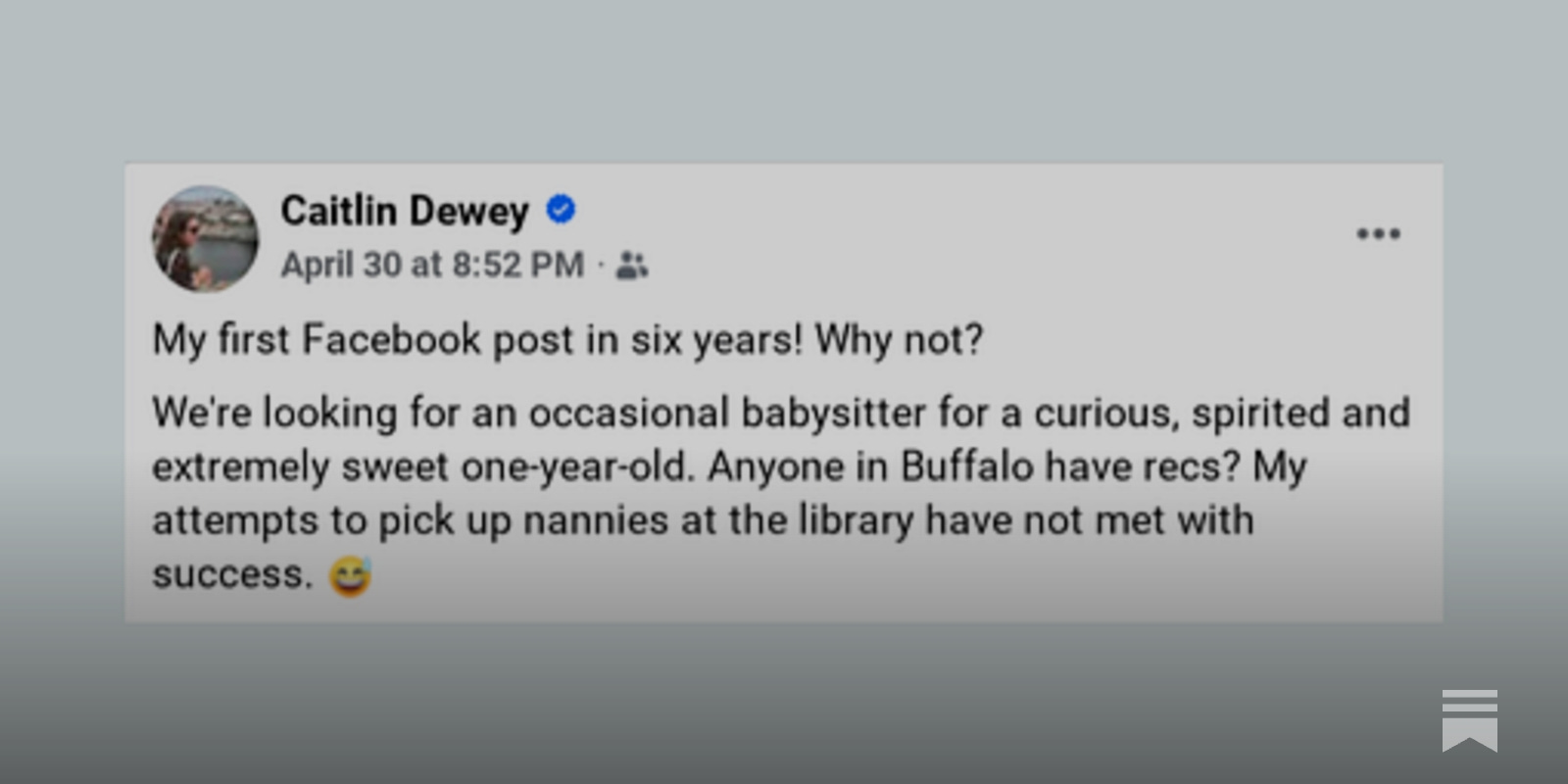
TV on the internet before YouTube
Just a little note to get this all in one place. This was prompted by my comment here: On-demand was a thing before, but it was mediated through slow, glitchy cable and satellite boxes. There was also a thriving scene of RSS-delivered web TV shows. * The technology (RSS)
Solarpunk, realism, dystopia: a rant – @the-lemonaut on Tumblr
💬 81 🔁 6317 ❤️ 9266 · Solarpunk, realism, dystopia: a rant · Hopefully this is helpful to someone out there 🌸 You can find the Prompts podcast here, I drew some of the covers :D Also check out…

Cyber-Marx
In this highly readable and thought-provoking work, Nick Dyer-Witheford assesses the relevance of Marxism in our time and demonstrates how the information age, far from transcending the historic conflict between capital and its laboring subjects, constitutes the latest battleground in their encounter. Dyer-Witheford maps the dynamics of modern capitalism, showing how capital depends for its operations not just on exploitation in the immediate workplace, but on the continuous integration of a whole series of social sites and activities, from public health and maternity to natural resource allocation and the geographical reorganization of labor power. He also shows how these sites and activities may become focal points of subversion and insurgency, as new means of communication vital for the smooth flow of capital also permit otherwise isolated and dispersed points of resistance to connect and combine with one another. Cutting through the smokescreen of high-tech propaganda, Dyer-Witheford predicts the advent of a reinvented, "autonomist" Marxism that will rediscover the possibility of a collective, communist transformation of society. Refuting the utopian promises of the information revolution, he discloses the real potentialities for a new social order in the form of a twenty-first-century communism based on the common sharing of wealth.

Rewilding the internet with ATProto
So far, many of the projects in the ATProtocol ecosystem have focused on bringing parity—making projects that replicate our existing tools and platforms, but with the affordances of the protocol instead. That's cool and we need to do that, but I think we can go much farther, and take this opportunity to challenge some of the biggest assumptions of what the modern internet is for, who builds it, and how we interact with it. This talk is in conversation with several of the talks from last year, and in I'll argue that we'll never get away from skeuomorphism until we've fundamentally changed the definition of what "the social internet" means in the first place.
The Situation with NoBlogs (a midweek special featuring Sabot Media and CrimethInc)