


archived 18 Mar 2026 15:24:41 UTC
Tony Feng on Twitter / X
I am a mathematician but I avoided commenting on this because the problems are (far) outside my domain. Even if I sat down to read the technical details (which I have not), it would be hard to appreciate the context of prior work, etc. But I've gotten enough sense of things… https://t.co/VZzosBYFto— Tony Feng (@tonylfeng) August 5, 2026
Przemek Chojecki | PC on Twitter / X
The Growing Map of Open Mathematical Problems.We mapped 15,000+ conjectures from UnsolvedMath to show potential links between concepts.It also shows how under formalized the frontier is (less than 10%). pic.twitter.com/nm0PCpXVPf— Przemek Chojecki | PC (@prz_chojecki) August 28, 2026

Iconic Math
As an introduction to a forthcoming book (late 2025), this page links to three narrated videos about unary boundary logic:

The End of Mathematics — Daniel Litt
I'm currently returning to Toronto from a summit on the future of mathematics, at OpenAI. Sebastian Bubeck asked me to talk a bit about the future we'd all like to avoid, where humans are mathematically disempowered. Jacob Tsimerman advised us to try to prioritize detail over correctness, and I have no doubt that I succeeded in deprioritizing correctness.

Bartosz Naskręcki on Twitter / X
Congrats to @LechMazur for the solution and to Terence Tao for the digestion and storytelling. You see the trend. Mathematicians are still needed if we want to make any sense of the formal proofs. For now... Maybe the next gen LLMs will simply read allthe blogs of Terry and… https://t.co/yXiISCrNAF— Bartosz Naskręcki (@nasqret) August 13, 2026
If math is more than proof, we need to better celebrate the rest of it
[This is a guest post by Grant Sanderson. This blog post was initially written in a different file format and converted using AI. — T.] A sentiment echoing throughout the mathematics communit…

Mathematics in the age of AI
An essay, based on a public lecture delivered at the 2026 International Congress of Mathematicians, on how the mathematical community might respond to the arrival of artificial intelligence tools that are capable of performing research-level mathematical tasks. Rather than debating the capabilities of such tools, we condition on the hypothesis that these capabilities will arrive, and examine instead a question that is orthogonal to it: what the goals and values of mathematical research actually are. The problem-solving component of mathematics is used as a case study.

Terence Tao (@tao@mathstodon.xyz)
In traditional mathematics (or "Math 1.0"), a breakthrough proof of a long-standing open conjecture generates a large amount of subsequent activity and excitement in the field. The authors of the proof are invited to give many talks, and meet with other experts in the area. Workshops are set up to discuss the proof, as well as other recent developments. As a result, new connections and collaborations are formed, followup problems are shared, and other mathematicians (both junior and senior) are attracted to the field (including in some cases the authors themselves, if they initially came from a different subject). As a result of all this activity, the proofs naturally become digested, streamlined, placed in context with other results in the field, and ultimately become part of the textbooks and lecture notes for the next generation of mathematicians in the field. (1/4)
Kill Math
The power to understand and predict the quantities of the world should not be restricted to those with a freakish knack for manipulating abstract symbols.
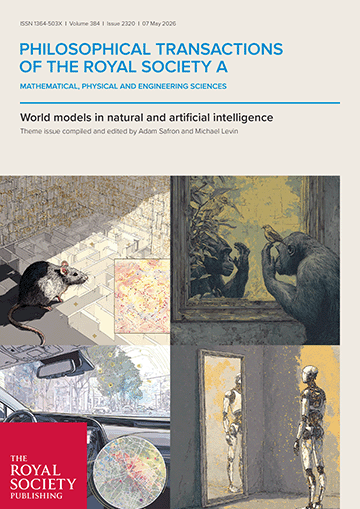
Volume 384 Issue 2320 | Philosophical Transactions of the Royal Society A | The Royal Society
Influential themed journal issues across the physical mathematical and engineering sciences.
Applied Pure Mathematics
Some thoughts about mathematics as a cultural and social technology.
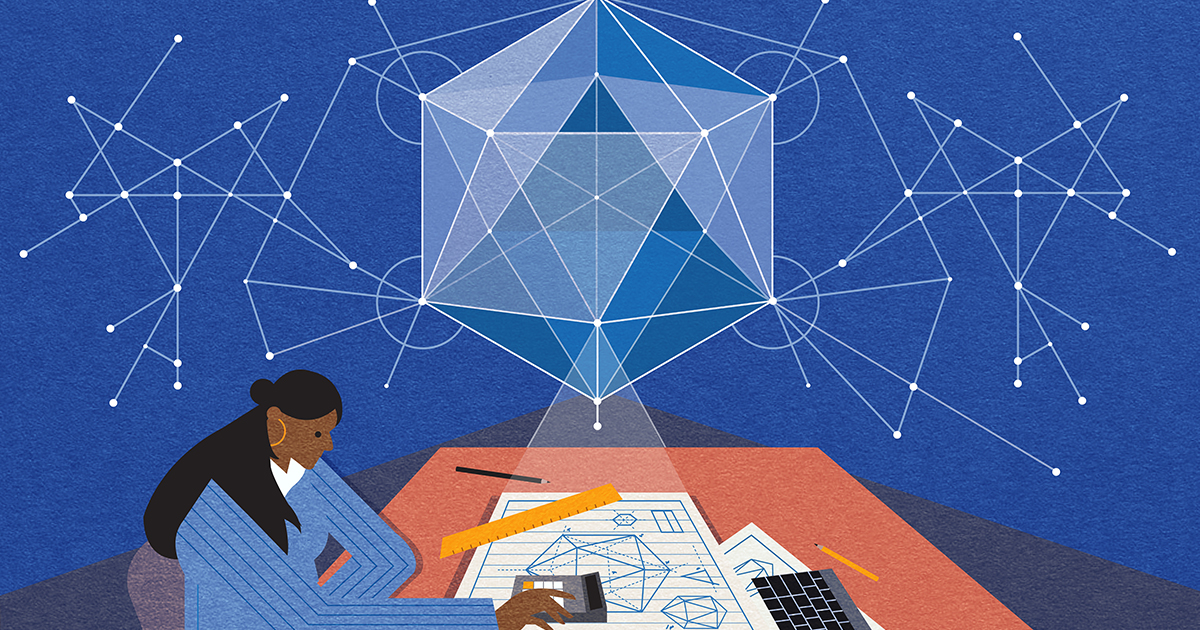
Mathematical Beauty, Truth and Proof in the Age of AI | Quanta Magazine
Mathematicians have started to prepare for a profound shift in what it means to do mathematics.
Ale×ey on Twitter / X
Funniest possible outcome of new ai math proofs publications would be that explosive progress cannot be delivered through individual genius and singular products but only through contextualized human understanding and embedding of knowledge.— Ale×ey (@EqualParallel) October 7, 2026
Thoughtful and relevant outside math. A partial summary: Gowers thinks it’s important to sustain a human mathematical culture, but is unconvinced by the Leiden Declaration’s attempt to do that by reaffirming human ownership of specific *discoveries*.

tachikoma
an interesting blog post by Timothy Gowers on the Leiden declaration (on AI and Math), on why he didn't sign. it gets to a subtler aspect of control over AI and our future.
