


When habitat loss is one of the biggest issues facing wild animals, why has Alaska given an entire uninhabited, remote island to feral cattle?
The Island That Humans Can’t Conquer | Hakai Magazine
A faraway island in Alaska has had its share of visitors, but none can remain for long on its shores.

Sheldrick Wildlife Trust: Haven for Elephants & Rhinos
Pioneers in the rescue and hand-raising of orphaned baby elephants and rhinos, through to their reintegration to the wild when grown. Saving wild lives today and securing habitats for the future.

State of Conservation Technology | WILDLABS
Explore insights from the first community-sourced assessment of the State of Conservation Technology

Norway plans to cull more than two-thirds of its wolf population
Environmental groups criticise plan that will allow hunters to shoot up to 47 of an estimated 68 wolves living in wilderness
Diversification and ecosystem services for conservation agriculture: Outcomes from pastures and integrated crop–livestock systems | Renewable Agriculture and Food Systems | Cambridge Core
Diversification and ecosystem services for conservation agriculture: Outcomes from pastures and integrated crop–livestock systems - Volume 28 Issue 2
Whales' Bubble Net Fishing | Nature's Great Events | BBC Earth
The Ohlone Way: Indian Life in the San Francisco-Monterey Bay Area by Malcolm Margolin
Two hundred years ago, herds of elk and antelope dotted the hills of the San Francisco–Monterey Bay area. Grizzly bears lumbered down to the creeks to
A social-ecological framework for analyzing and designing integrated crop–livestock systems from farm to territory levels
Integrated crop–livestock systems are often considered a promising way to address agricultural sustainability issues. Many authors claim that complementarities and synergies between crops and livestock can improve nutrient cycling and delivery of ecosystem services (ES) in agricultural systems. They have analyzed effects of interactions at the farm level and affirmed the potential advantage of developing crop–livestock interactions at the territory level. However, potential benefits of developing synergies beyond the farm level have not been clearly identified. Thus, we developed a conceptual framework that can be used to analyze, design and perform integrated assessment of crop–livestock systems at the territory level. To address crop–livestock interaction issues, we define it as a social-ecological system called the territorial crop–livestock system (TCLS). The ecological system is represented as three interacting components, crops, grasslands and animals, allowing description of various land uses and their potential effects on nutrient cycling and ES. The social system, represented as farmers interacting with natural-resource managers and agro-food chain actors, determines land use and the nature and intensity of ES delivered. We highlight the importance of coordination and learning among actors to support implementation of complex adaptive systems such as TCLSs. We illustrate the expressive power of our conceptual framework through development of a generic typology of crop–livestock systems. Then we show how our conceptual framework can be used as an intermediary object with stakeholders in participatory design approaches. We illustrate this process by representing four archetypal TCLSs. We provide an example of the design approach implemented in Southwestern France to address severe recurrent water shortages, which includes analysis of land use in the current crop–livestock system and the associated key metabolic and ES issues, identification of options for change and multi-criteria analysis of these options. We conclude that this framework shows great potential to support development of sustainable farming systems at the territory level.
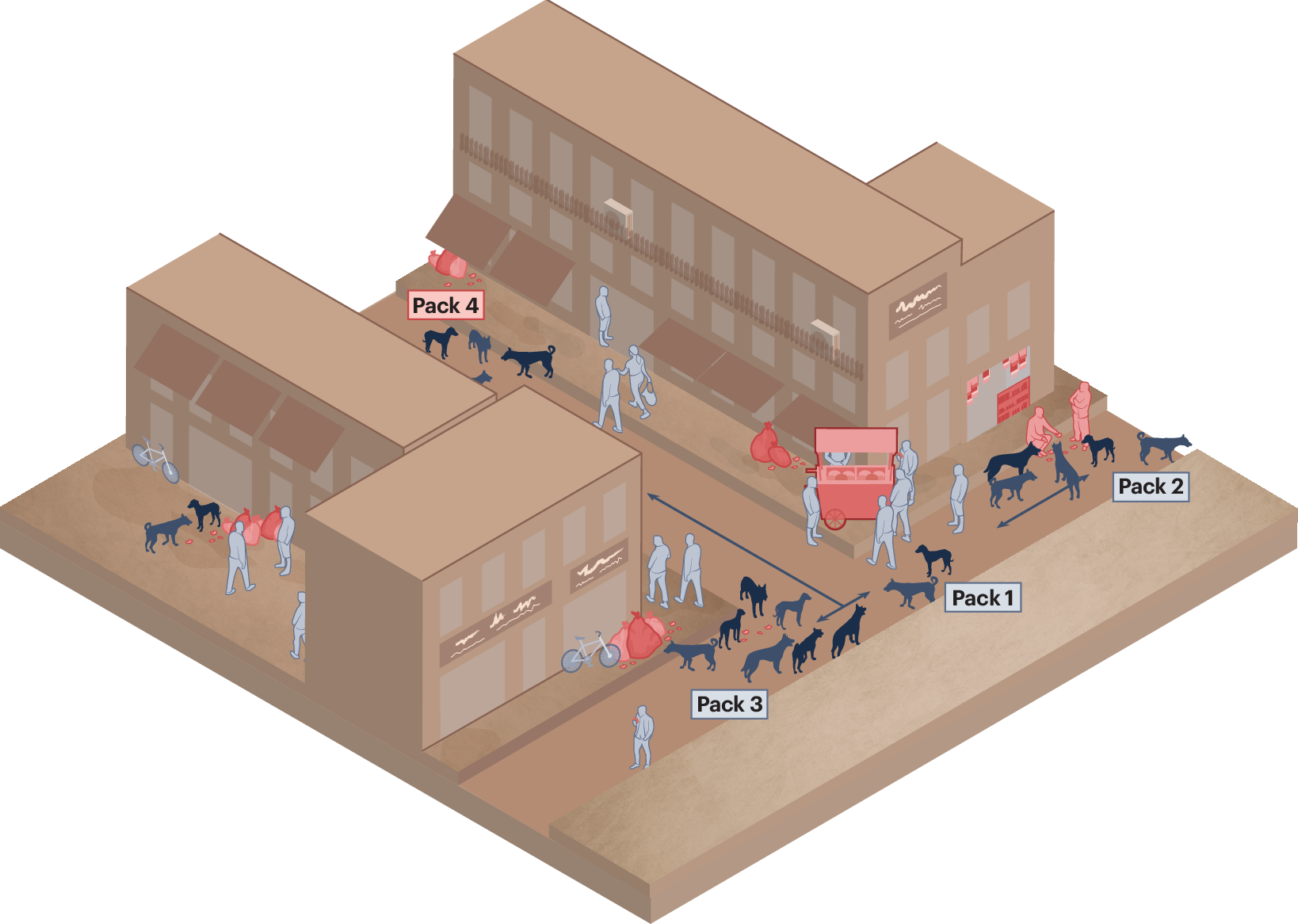
The Indian street dog crisis and multispecies coexistence in tropical urban futures
Cities in the Global South struggle with human–animal coexistence conundrums. For example, in South Asia, old and new collide: people raise livestock informally and feed free-ranging animals within heterogeneously developed, juxtaposed patches, while digital economies boom amid threats from waste piles linked with zoonotic diseases and conflicts. This is exemplified by the free-ranging dog crises in India. Humanity’s oldest companion now suffers between compassion and rising conflicts. Dogs still scavenge, guard, breed, disperse and die on streets shaped by traffic, garbage, ritual feeding and uneven care. Indian courts, attempting to address the problems, have overlooked the root cause—food subsidies. Sterilization, shelters, fencing or removals cannot succeed when urban landscapes provide food subsidies to animals without corresponding responsibility. Episodes of reactive management must yield to urban planning, acknowledging that multispecies communities in shared living spaces are complex and interconnected. Here, I suggest making compassion accountable to public health, animal well-being and urban ecology.
Home
Orca Network’s Whale Sighting and Education Project encourages observation of not just orcas, but all cetaceans that call the Salish Sea home. Awareness of our amazing wild neighbors helps foster stewardship and inspire action to protect critical habitat – while collated sightings data provides invaluable and ongoing insight.
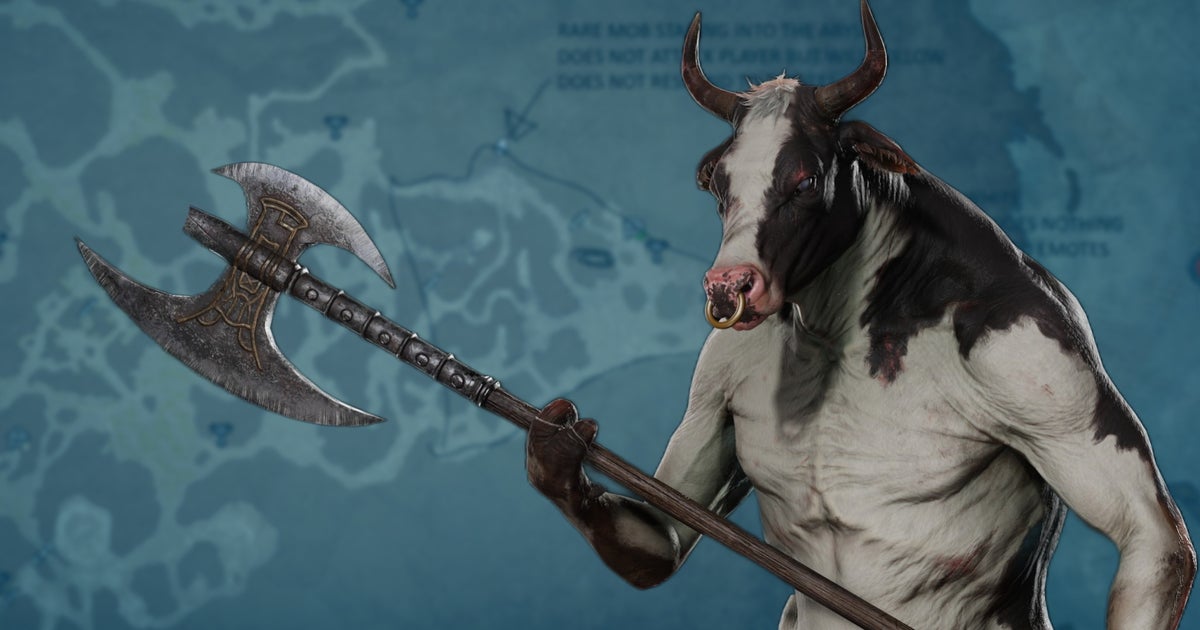
After three years of dead ends and cheeky developer comments, Diablo 4 players have finally found the cow level, but the mystery isn’t solved yet
After three years and multiple expansions, Diablo 4 players have seemingly completed the secret cow level.
Vote 1 for Wildlife
Subscribe to Wildlife Victoria. Stay up to date with our latest news.
Wolf Girl of Devil's River, Feral Child Case - Uncooked Meats and How to Cook a Ham
Wolf Girl of Devil's River, a Texas feral girl mystery - article by Brian Haughton
7 Things You Didn't Know About Red Pandas
Here’s one thing you already knew: red pandas are adorable. While they’re not domesticated and therefore are probably not suitable as pets, some people keep them as pets anyway – especially in Nepal and India – and upload their adorable hijinks to the internet for the world to see.

Click, clack, moo: cows that type
When Farmer Brown's cows find a typewriter in the barn they start making demands, and go on strike when the farmer refuses to give them what they want
