


The Three Pillars Project is a comprehensive multi-volume framework designed to provide the practical, philosophical, and institutional tools necessary to transition from an extractive economy to a regenerative civilization. This collection operates on the premise that true sustainability requires three pillars: physical tools for abundance (Pillar 1), a shift in human consciousness (Pillar 2), and ethical governance to protect them (Pillar 3). This Item contains the following files: PILLAR 1: The Practical Foundation (Engineering & Agriculture) File: The Regenerative Household Manual.pdf (From Waste to Abundance, Vol. 1) The Practitioner's Guide. A handbook for household and neighborhood resilience, detailing low-tech methods for turning waste into food, soil, and energy through mycology, aquaponics, and fermentation. File: The IBHCC Revolution.pdf (From Waste to Abundance, Vol. 2) The Industrial Guide. Details the Integrated Biomass-Hydro Combined Cascade (IBHCC), a theoretical energy architecture that utilizes waste heat, gravity, and pressure multiplication to power regional infrastructure. PILLAR 2: The Philosophical Heart (Consciousness & Spirit) File: The Ocean's Tapestry - Advance Copy.pdf A deep exploration of consciousness that weaves together ancient wisdom traditions (Eastern, Indigenous, Mystical) with modern science (Quantum Mechanics, AI) to cultivate the inner awareness necessary to wield regenerative technology responsibly. PILLAR 3: The Institutional Framework (Law & Governance) File: The Regenerative Governance Model & CAL License.pdf Introduces a new organizational structure and the Community Abundance License (CAL), a novel legal framework designed to keep regenerative innovations free for those who need them most (marginalized communities, LDCs) while preventing co-optation by extractive entities. LICENSE INFORMATION: This body of work is licensed under the Community Abundance License v1.0 - Basic Edition (CAL-1.0-Basic). Free Use: Individuals under $250k income, non-profits, and residents of UN-designated LDCs/SIDS. Standard Use: All others may use this work under Creative Commons Attribution-NonCommercial-NoDerivatives 4.0 International (CC BY-NC-ND 4.0). Prohibited: Weapons manufacturers and for-profit prisons.
Sustainability is not enough: we need regenerative cultures
By Daniel C. Wahl


Joshua Sparkes - Natural Farming & Agroecology
“Elephant in the room”: Clean energy’s need for unsustainable minerals
Our need for minerals may strain supply and lead to environmental issues.

A System for Sustainable FOSS
Disclaimers: This system is still a work in process. I look forward to reading (and incorporating!) y...

Home
The Rich Earth Institute recycles human urine into fertilizer. This work supports sustainable agriculture and protects vital water resources. Learn More
Absolutely wasted: the inner-city garden using food scraps to create top grade soil
An urban compost project has fostered an ingenious way to turn all kinds of waste food into fertiliser
Underestimating the Challenges of Avoiding a Ghastly Future
We report three major and confronting environmental issues that have received little attention and require urgent action. First, we review the evidence that future environmental conditions will be far more dangerous than currently believed. The scale of the threats to the biosphere and all its lifeforms — including humanity — is in fact so great that it is difficult to grasp for even well-informed experts. Second, we ask what political or economic system, or leadership, is prepared to handle the predicted disasters, or even capable of such action. Third, this dire situation places an extraordinary responsibility on scientists to speak out candidly and accurately when engaging with government, business, and the public. We especially draw attention to the lack of appreciation of the enormous challenges to creating a sustainable future. The added stresses to human health, wealth, and well-being will perversely diminish our political capacity to mitigate the erosion of ecosystem services on which society depends. The science underlying these issues is strong, but awareness is weak. Without fully appreciating and broadcasting the scale of the problems and the enormity of the solutions required, society will fail to achieve even modest sustainability goals.

Case Study – EcoSafe Curbside Program in Gibsons, BC
Gibsons, BC – Case Study On average, a household will generate about 5lbs of organic waste every week. Unfortunately, organic waste collection hasn’t been developed and implemented like recycling, and as a result, the majority of that organic waste ends up in landfill. That’s a double whammy for the environment becau

Ecocivilization: making a world that works for all
""One of the greatest thinkers of our age" (The Guardian) presents a new way of living-one modeled on nature's design instead of capitalism's-for fans of Guns, Germs, and Steel and Doughnut Economics It has often been said that it is easier to imagine the end of the world than it is to imagine the end of capitalism-and yet that is what the historical moment urgently calls for. Climate change has reached an emergency state, inequality continues to grow, and, for many, the future has never seemed more bleak. Incremental policy improvements are no longer enough-we need a deep transformation of our current civilization to continue to survive. In Ecocivilization, leading thinker Jeremy Lent reimagines the basis of our civilization, and argues for a new global system of living, one based on life-affirming principles modeled after nature's own design. What enfolds is a robust framework incorporating Lent's own expertise, and the lived experiences of those on the ground already putting ecological civilization's core tenants into practice-justice, mutuality, diversity, and symbiosis. From the global economy to universal housing and income, from infrastructure to agriculture, every major aspect of our society could be redesigned to work together as a coherent whole, setting the conditions for all people to flourish. Ecocivilization shows how this future on a regenerated Earth is not only desirable, but entirely feasible"--

Culturalizing sustainability
Policy-makers and scientists dominate high-level sustainability debates but any decision that follows has consequences for ordinary people in their local communities and environments. We asked experts to reflect on the importance of embracing a culturally informed, bottom-up approach to the sustainability discourse and action.

Dispelling the Myths of a Renewable Energy Transition
Biological Fertiliser - Human Urine
Regenerative Agriculture, Polyculture, Ecology, Regenerative Landscape Desing, Permaculture, Gardening, Ecological Gardening

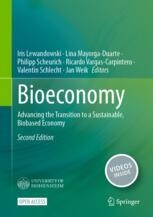
Bioeconomy
An open access, interactive textbook with videos and Q&As on sustainability and social change in the emerging field of bioeconomy in second edition.
Professional Composting and Soil Consulting with Brian Vagg and Keisha & Casey Ernst
If you're a soil geek like me and want more practical advice instead of theory, this webinar is made for you. Join us with Keisha and Casey Ernst and Brian Vagg of Soil Matters and Catalyst Bioamendments and learn all about Composting and Soil Restoration on a professional level. Keisha, Casey and Brian have been consulting on farms across the U.S., showing farmers and landowners how to rapidly re-green their landscapes with Biological Soil Amendments. In this webinar, you'll get a look into how to make high quality biological composts and extracts and see how to some case studies for Biological Soil Restoration. If you've heard about "BioComplete Composts" and want to see how compost is made in a way that can actively restores the Soil Foodweb, you'll definitely want to see what Keisha, Casey and Brian will be sharing in this webinar.

Global water crisis leaves half of world food production at risk in next 25 years
Landmark review says urgent action needed to conserve resources and save ecosystems that supply fresh water
