


The Hebrew book of Enoch (Enoch 3) in english, revised translation
3 Enoch
Modern scholars describe this book as pseudepigraphal, as it says it is written by "Rabbi Ishmael" who became a "high priest" after visions of ascension to Heaven.[2] This has been taken as referring to Rabbi Ishmael, a third-generation Tanna and a leading figure of Merkabah mysticism. However, he could not have been a High Priest of Israel, as he was born after the Siege of Jerusalem and associated destruction of the Second Temple in 70 CE. An alternative attribution would be the earlier Tanna Ishmael ben Elisha, who lived through the Siege of Jerusalem.[citation needed] Although 3 Enoch contains several Greek and Latin words, the book appears to have been originally written in Hebrew.[2]
Creation According to Eve: Beyond Genesis 3
No feminist critic of the Bible has neglected to discuss the story or stories of the creation of woman; yet, despite significant differences in theoretical approach and focus, their readings generally have been confined to Genesis 1–3. Beyond Genesis 3, the matter of creation and femininity is addressed, offering new and complex insights.

1 Corinthians
Lightly dotted blank pages and 130+ elegant hand-lettered gold ink illustrations throughout the full text of books of the Bible invite you to creatively engage with God's Word alongside specific passages.
056. Ephesians 3:1-12
Chapel Sermon by Joel Okamoto from Ephesians 3:1-12 on Wednesday, January 3, 2018.
First Impressions on Ephesians 3:1-12 - Without Authority
This is the beginning step of my sermon work on the epistle text for the Feast of the Epiphany, January 6, 2026.
Troels Engberg-Pedersen
Troels Engberg Pedersen is a Pauline theologian, author, and professor of New Testament exegesis at the University of Copenhagen in Denmark.[1]
Epiphany • Ephesians 3:1–12 • January 4, 2015 - Concordia Theology
By Joel P. Okamoto Notes on the Pericope The Old Testament people knew that God had promised life and salvation to all nations (e.g., see Genesis 12:3 and Isaiah 60:1–6, the appointed OT lesson), but they did not know how he would do that. God made this clear through his Son and in the witness of the apostles. Paul’s […]
Genesis 1 (KJV)
In the beginning God created the heaven and the earth. And the earth was without form, and void; and darkness was upon the face of the deep. And the Spirit of God moved upon the face of the waters. And ...

Epiphany • Ephesians 3:1–12 • January 6, 2013 - Concordia Theology
By Francis C. Rossow Comments on the Text Lulled either by the familiarity of our text or by its complex sentence structure, we may not at first be aware of the surprise—even the shock—it contains. Verse 6 drops a bomb: “This mystery is that through the gospel the Gentiles are heirs together with Israel, members […]
Biblical hermeneutics
Biblical hermeneutics is the study of the principles of interpretation concerning the books of the Bible. It is part of the broader field of hermeneutics, which involves the study of principles of interpretation, both theory and methodology, for all nonverbal and verbal communication forms.[1] While Jewish and Christian biblical hermeneutics have some overlap and dialogue, they have distinctly separate interpretative traditions.
If the DNA molecule is the book of life, it's a very strange book indeed - 3 Quarks Daily
by Yohan J. John
Katalog der Deutschen Nationalbibliothek
A New Introduction to Islam, 4th Edition
A globally expanded, critically engaged introduction to Islam thoroughly updated Now in its Fourth Edition, A New Introduction to Islam combines...
The Word of Life A Theology of Johns Gospel (Craig R. Koester) (z-lib.org).pdf
Language: English


Zach Weinersmith (@zachweinersmith.bsky.social)

AP Stylebook (@apstylebook.com)
dialect.redlog.net

How Y’all, Youse and You Guys Talk (Published 2024)
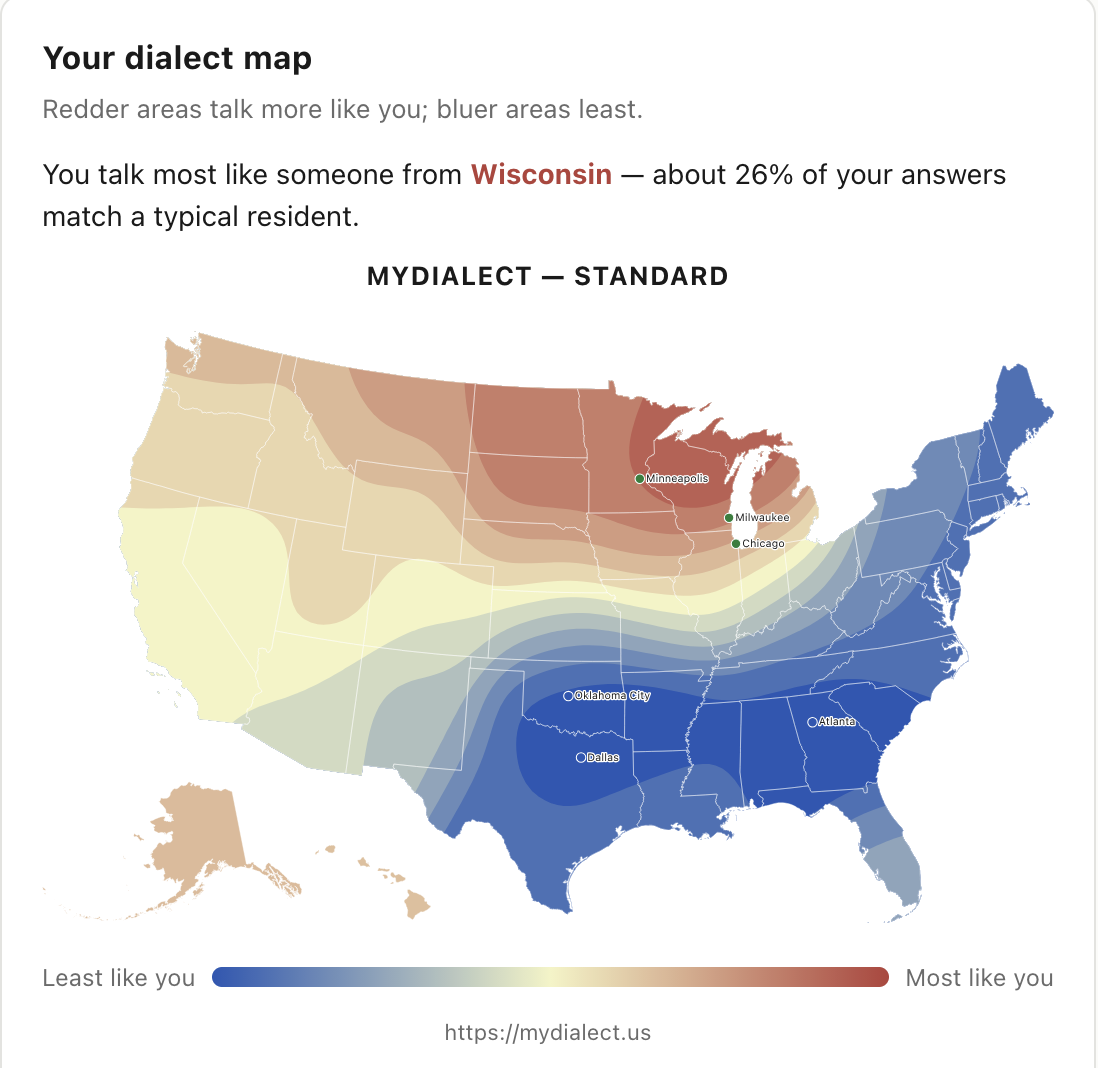
How Do You Talk? — American Accent Quiz & US Dialect Map
Welcome | Yale Grammatical Diversity Project: English in North America