


Sepp Holzer farms steep mountainsides in Austria 1,500 meters above sea level. His farm is an intricate network of terraces, raised beds, ponds, waterways and tracks, well covered with productive fruit trees and other vegetation, with the farmhouse neatly nestling amongst them. This is in dramatic contrast to his neighbors' spruce monocultures.In this book, Holzer shares the skill and knowledge acquired over his lifetime. He covers every aspect of his farming methods, not just how to create a holistic system on the farm itself, but how to make a living from it. Holzer writes about everything from the overall concepts, down to the practical details.In Sepp Holzer's Permaculturereaders will learn: How he sets up a permaculture system The fruit varieties he has found best for permaculture growing How to construct terraces, ponds, and waterways How to build shelters for animals and how to work with them on the land How to cultivate edible mushrooms in the garden and on the farm and much more! Holzer offers a wealth of information for the gardener, smallholder or alternative farmer yet the book's greatest value is the attitudes it teaches. He reveals the thinking processes based on principles found in nature that create his productive systems. These can be applied anywhere.
Permaculture Articles n stuff by Paul Wheaton, a giant doofus in overalls
Sepp Holzer was doing permaculture before he ever heard the word. To my knowledge, his farm is, by far, the best example of permaculture...
Permaculture with a Mycological Twist
Reprinted from Growing Gourmet and Medicinal Mushrooms by Paul Stamets, ©1994, all rights reserved. Permaculture is a concept pioneered by Australian Bill Mollison and literally means "permanent agriculture". His model of biological diversity and complementary agricultural practices promotes a sustainable environment v
openfarmcc/OpenFarm
A free and open database for farming and gardening knowledge. You can grow anything!
Collections: Bread, How Did they Make it? Part III: Actually Farming
Thanks to our helpful volunteer narrator, this entire post series is now also available in audio format! As the third part (I, II, III, IV, A) of our look at the basic structure of food production …

Can We Grow More Food on Less Land? | Hacker News
Quick overview of a farmer's land that uses this method: https://www.youtube.com/watch?v=stABAx82TbY he harvest around 3x more cocoa per hectare than traditional methods and its one of the most valuable in the world right now.
Open Agroecology Laboratory – REGOSH
We build open tools and participatory processes to support agroecological transitions.
Crop–livestock integration beyond the farm level: a review
AbstractParadoxically, the number of crop–livestock farms is declining across Europe, despite the fact that crop-livestock farms are theoretically optimal to improve the sustainability of agriculture. To solve this issue, crop–livestock integration may be organized beyond the farm level. For instance, local groups of farmers can negotiate land-use allocation patterns and exchange materials such as manure, grain, and straw. Development of such a collective agricultural system raises questions, rarely documented in the literature, about how to integrate crops and livestock among farms, and the consequences, impacts, and conditions of integrating them. Here, we review the different forms of crop–livestock integration beyond the farm level, their potential benefits, and the features of decision support systems (DSS) needed for the integration process. We identify three forms of crop–livestock integration beyond the farm level: local coexistence, complementarity, and synergy, each with increasingly stronger temporal, spatial, and organizational coordination among farms. We claim that the forms of integration implemented define the nature, area, and spatial configuration of crops, grasslands, and animals in farms and landscapes. In turn, these configurations influence the provision of ecosystem services. For instance, we show that the synergy form of integration promotes soil fertility, erosion control, and field-level biological regulation services through organizational coordination among farmers and spatiotemporal integration between crops, grasslands, and animals. We found that social benefits of the synergy form of integration include collective empowerment of farmers. We claim that design of the complementarity and synergy forms of crop–livestock integration can best be supported by collective participatory workshops involving farmers, agricultural consultants, and researchers. In these workshops, spatialized simulation modeling of crop–livestock integration among farms is the basis for achieving the upscaling process involved in integrating beyond the farm level. Facilitators of these workshops have to pay attention to the consequences on governance and equity issues within farmers groups.
A social-ecological framework for analyzing and designing integrated crop–livestock systems from farm to territory levels
Integrated crop–livestock systems are often considered a promising way to address agricultural sustainability issues. Many authors claim that complementarities and synergies between crops and livestock can improve nutrient cycling and delivery of ecosystem services (ES) in agricultural systems. They have analyzed effects of interactions at the farm level and affirmed the potential advantage of developing crop–livestock interactions at the territory level. However, potential benefits of developing synergies beyond the farm level have not been clearly identified. Thus, we developed a conceptual framework that can be used to analyze, design and perform integrated assessment of crop–livestock systems at the territory level. To address crop–livestock interaction issues, we define it as a social-ecological system called the territorial crop–livestock system (TCLS). The ecological system is represented as three interacting components, crops, grasslands and animals, allowing description of various land uses and their potential effects on nutrient cycling and ES. The social system, represented as farmers interacting with natural-resource managers and agro-food chain actors, determines land use and the nature and intensity of ES delivered. We highlight the importance of coordination and learning among actors to support implementation of complex adaptive systems such as TCLSs. We illustrate the expressive power of our conceptual framework through development of a generic typology of crop–livestock systems. Then we show how our conceptual framework can be used as an intermediary object with stakeholders in participatory design approaches. We illustrate this process by representing four archetypal TCLSs. We provide an example of the design approach implemented in Southwestern France to address severe recurrent water shortages, which includes analysis of land use in the current crop–livestock system and the associated key metabolic and ES issues, identification of options for change and multi-criteria analysis of these options. We conclude that this framework shows great potential to support development of sustainable farming systems at the territory level.
Collections: Bread, How Did They Make It? Part II: Big Farms
Thanks to our helpful volunteer narrator, this entire post series is now also available in audio format! This is the second part (I, II, III, IV, A) of our look at the basic structure of food produ…

Forest Gardens
A regenerative farm & permaculture education center on Salt Spring Island. Soil amendments, nursery plants, farm produce & design courses — growing in service to life.

Permacomputing
Permacomputing is a term originating from the demoscene, known for squeezing the most out of very restricted computing resources, such as the 4k intro with a maximum executable file size of 4096 bytes. Artist programmer Ville-Matias Heikkilä, aka Viznut, coined the term in a text he published on his website in 2020 1. What stands out in this writing is the holistic approach to computing and sustainability by taking inspiration from permaculture. In both computing and agriculture, problems are usually solved by increasing control over a process, which often goes hand in hand with an increase in resource use. Permaculture uses methods that lets nature do the work, minimizing the reliance on artificial energy. Heikkilä sees similarities between how both permaculture practitioners and hackers find clever solutions to problems. He writes that the existence of computers can only be justified by their ability to augment the potential of humans to have a strengthening effect on ecosystems.
Square Foot Gardening: Easiest Way to Grow MORE Food in LESS Space
How to grow your own mulch?
Regenerative Agriculture, Polyculture, Ecology, Regenerative Landscape Desing, Permaculture, Gardening, Ecological Gardening

Friday Facts #414 - Spoils of Agriculture | Factorio
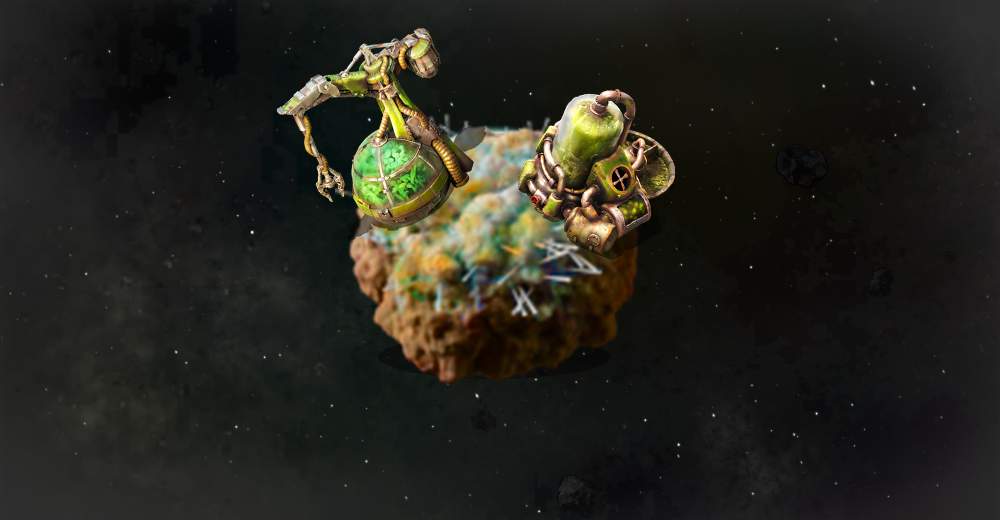
Hello, last week you've seen how Gleba looks, it's time to get a glimpse of what you can do there. With the idea of being a biological planet full of life, it seems reasonable to expect our engineer is about to harvest some of that. We already have ways of harvesting nature, specifically trees. On Nauvis we either just hit them with an axe enough times, or later our construction robots take care of that friendly forest devastation. These tools aren't quite up to speed to be a part of a mass-production chain in our factories, though... Both of the Nauvis methods are initiated manually so not the best for automation, and the trees don't grow back - so once an area has been harvested, you need to move your operation further.
This Colchester cohousing project will change how you think about community living