


Introductory -- Of the liberty of thought and discussion -- Of individuality, as one of the elements of well-being -- Of the limits to the authority of society over the individual -- Applications; Book, leather; Explanatory note by H.E. Barker attached; 18
Solitude and Leadership - The American Scholar
If you want others to follow, learn to be alone with your thoughts

Individualism Reconsidered
Joe Peacott Individualism Reconsidered with a bibliography by Jerry Kaplan 1991

The Ecology of Freedom: The Emergence and Dissolution o…
"The very notion of the domination of nature by man ste…

Individualism | The Paper Pilot
The Paper Pilot's digital garden of thoughts on philosophy, politics, and sociology
The Inner Life of Liberalism - Aaron Ross Powell’s Blog
The practices that make your life better are the same ones that sustain a free society. It's time liberalism took that seriously.
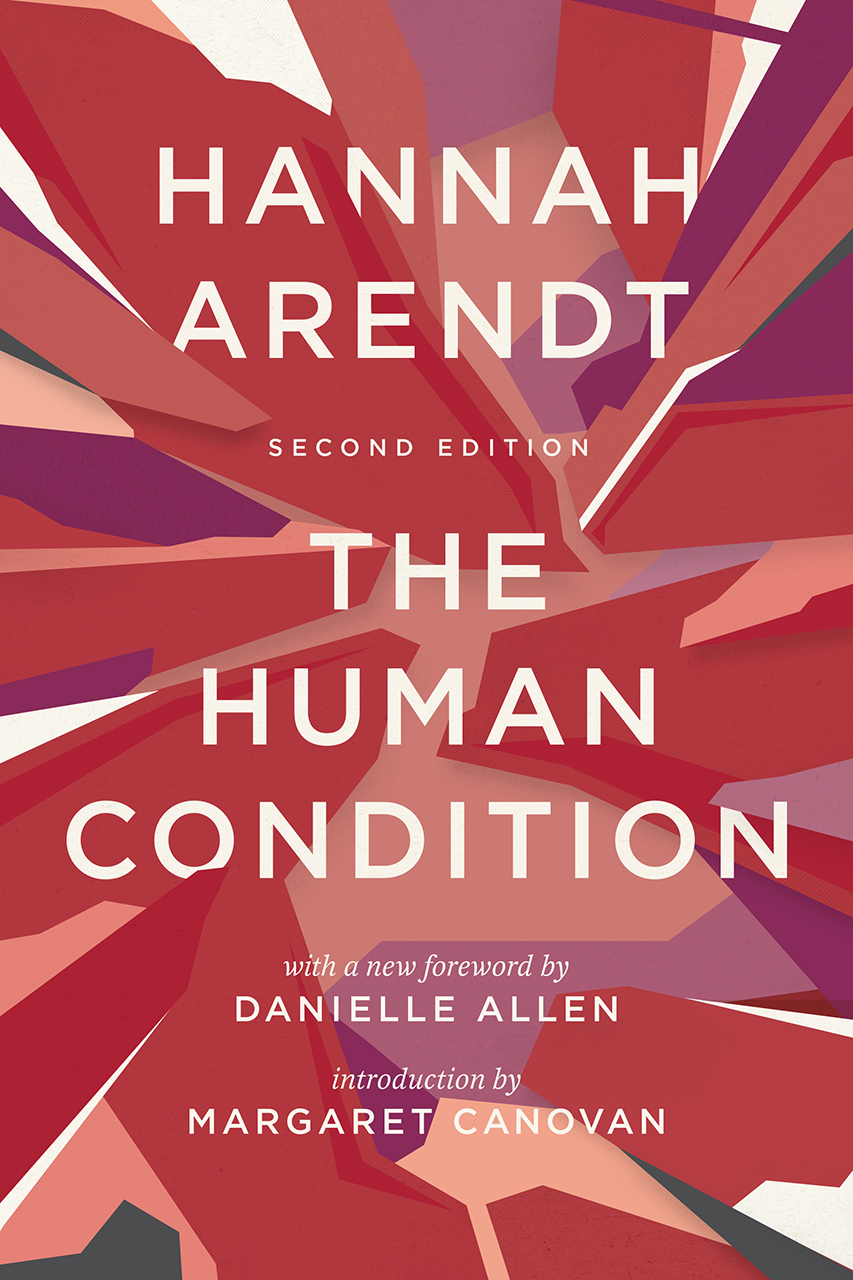
The Human Condition: Second Edition
A classic work of political thought, more relevant today than ever The twenty-first century has seen a resurgence of interest in the political thinker Hannah Arendt, “the theorist of beginnings,” whose work probes the logics underlying unexpected transformations—from totalitarianism to revolution. A work of striking originality, The Human Condition is in many respects more relevant now than when it first appeared in 1958. In her study of the state of modern humanity, Hannah Arendt considers humankind from the perspective of the actions of which it is capable. The problems Arendt identified then—diminishing human agency and political freedom, the paradox that as human powers increase through technological and humanistic inquiry, we are less equipped to control the consequences of our actions—continue to confront us today. This new edition, published to coincide with the sixtieth anniversary of its original publication, contains Margaret Canovan’s 1998 introduction and a new foreword by Danielle Allen. A classic in political and social theory, The Human Condition is a work that has proved both timeless and perpetually timely.
Decentralized Identity | The Paper Pilot
The Paper Pilot's digital garden of thoughts on philosophy, politics, and sociology
Home - Inspirit Foundation
We define pluralism as the energetic engagement with diversity, active seeking of understanding across lines of difference, and the nurturing of constructive dialogue that contributes to a deep sense of belonging. In a pluralist society, people of different beliefs and backgrounds can participate equally, coexist peacefully, and thrive together.
We Do This 'Til We Free Us
New York Times Bestseller “Organizing is both science and art. It is thinking through a vision, a strategy, and then figuring out who your targets are, always being concerned about power, always being concerned about how you’re going to actually build power in order to be able to push your issues, in order to be able to get the target to actually move in the way that you want to.” What if social transformation and liberation isn’t about waiting for someone else to come along and save us? What if ordinary people have the power to collectively free ourselves? In this timely collection of essays and interviews, Mariame Kaba reflects on the deep work of abolition and transformative political struggle. With a foreword by Naomi Murakawa and chapters on seeking justice beyond the punishment system, transforming how we deal with harm and accountability, and finding hope in collective struggle for abolition, Kaba’s work is deeply rooted in the relentless belief that we can fundamentally change the world. As Kaba writes, “Nothing that we do that is worthwhile is done alone.”

The loneliest generation: What it is like to grow up in England today | IPPR
A connected society is one in which we care about how others are doing and, in turn, others look out for our wellbeing. It is the state and public services

Indie Thinkers
A curated collection of quotes from the brightest minds on the internet.
A New Legibility: Theo Ellin Ballew
A New Legibility: Interactive Essay by Theo Ellin Ballew.
Governable Spaces: Democratic Design for Online Life – Writings and rehearsals by Nathan Schneider
Read the free, open access editionBuy: Amazon, Bookshop, Narrow Gauge Book Co-op, UC Press
Relying on Others: An Essay in Epistemology
Abstract. This book concerns the role others play in our attempts to acquire knowledge of the world. Two main forms of this reliance are examined: testimon
Obeying Nobody: Public Service and the Ordinary Evil of Administration - Roy L. Heidelberg, 2026
This essay explores administrative evil by reconsidering it through Weber’s ideal-type of bureaucracy and Arendt’s concerns over the bureaucratization of social...

"people’s councils are exercises in critical pedagogy, of learning together about situated problems and about what needs to be done... the logic of the assembly emerges in situations where people realise they can’t rely on whichever institution or sovereign force claims legitimacy over an issue."
AI, Decomputing and the Interregnum
zenodo.org