xviii, 227 pages ; 23 cm; "Silvia Federici is one of the most important contemporary theorists of capitalism and feminist movements. In this collection of her work spanning over twenty years, she provides a detailed history and critique of the politics of the commons from a feminist perspective. In her clear and combative voice, Federici provides readers with an analysis of some of the key issues and debates in contemporary thinking on this subject. Drawing on rich historical research, she maps the connections between the previous forms of enclosure that occurred with the birth of capitalism and the destruction of the commons and the "new enclosures" at the heart of the present phase of global capitalist accumulation. Considering the commons from a feminist perspective, this collection centers on women and reproductive work as crucial to both our economic survival and the construction of a world free from the hierarchies and divisions capital has planted in the body of the world proletariat. Federici is clear that the commons should not be understood as happy islands in a sea of exploitative relations but rather autonomous spaces from which to challenge the existing capitalist organization of life and labor"--; Foreward by Peter Linebaugh; Includes bibliographical references (pages198-216) and index; On primitive accumulation, globalization, and reproduction -- Introduction to the new enclosures -- The debt crisis, Africa, and the new enclosures -- China: breaking the iron rice bowl -- From commoning to debt: financialization, microcredit, and the changing architecture of capital accumulation -- Beneath the United States, the Commons -- Commons against and beyond Capitalism -- The University: a knowledge common? -- Feminism and the politics of the commons in an era of primitive accumulation -- Women's struggles for land in Africa and the reconstruction of the commons -- Women's struggles for land and the common good in Latin America -- Marxism, feminism, and the commons -- From crisis to commons: reproductive work, affective labor and technology, and the transformation of everyday life -- Re-enchanting the world: technology, the body, and the construction of the commons
Re-enchanting the world: feminism and the politics of the commons
Silvia Federici is one of the most important contempora…
An alternate ending to the tragedy of the commons
I recently read Elinor Ostrom’s Governing the Commons and have been evangelizing it so enthusiastically that I figured I’d do a quick…
The Alternative to Capitalism Nobody Talks About | Eleanor Finley & Camila Vergara
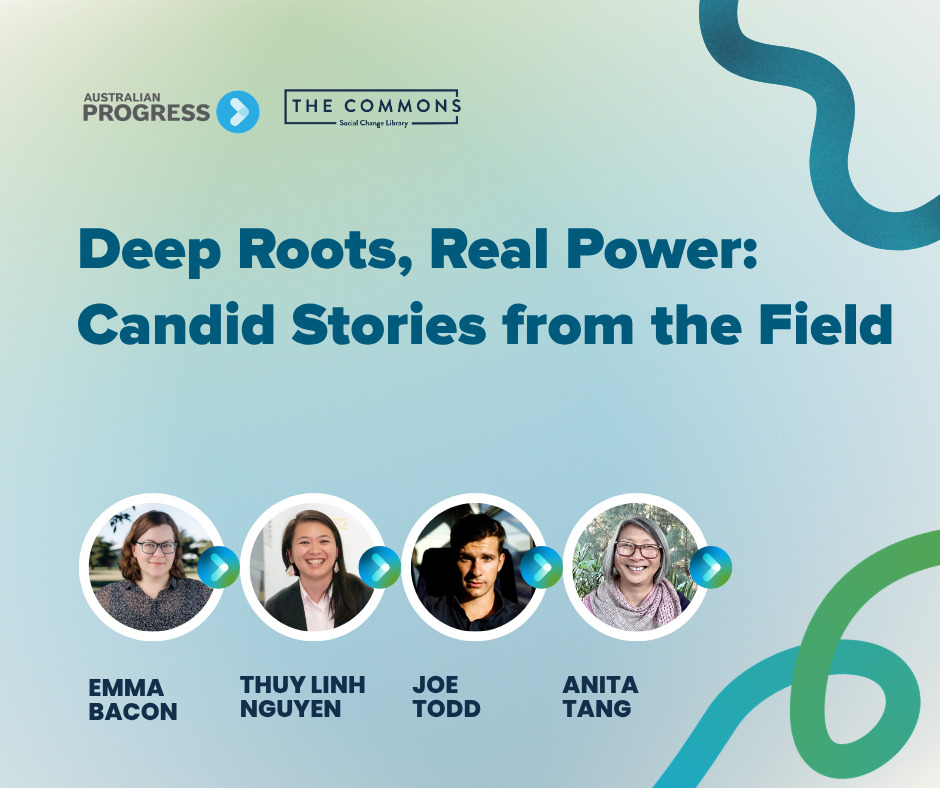
Deep Roots, Real Power: Candid Stories from the Field
The Commons is an online library for the change makers of the world and for those interested in social change, activism, organising, advocacy and justice.
Coloniality of Skill Codification: A Decolonial Feminist Analysis of “Ideal Workers” in the “Future of Work” Policy Discourses
ABSTRACT Over the last decade, policy actors have produced a surge of “future of work” reports that reimagine workers through the dual logics of digitalization and human capital. Drawing on 25 policy documents (WEF, World Bank, OECD, EU, and major consultancies) and combining Bacchi and Goodwin's WPR approach with decolonial feminist theory, this paper demonstrates how these imaginaries construct an “ideal future worker” that reinscribes colonial hierarchies through a process we term the coloniality of skill codification . This concept describes the translation of embodied, historical, and relational differences (race, gender, caste, disability, age, and geopolitics) into ostensibly neutral, measurable skill categories that naturalize Global North standards and colonial hierarchy. Our analysis uncovers three interlocking mechanisms: (1) construction of workers as techno‐neoliberal skill bundles (relational human–machine codependency), (2) commodification of social difference (inclusion framed as extractable competitive advantage), and (3) technical‐statistical indexation (national human capital metrics that rank countries and workforce potential). This paper intervenes in the emerging field of Feminist AI by arguing that the policy discourses surrounding AI and automation in the workplace are actively constructing a new, insidious form of the “ideal worker” that rearticulates colonial‐gendered power structures.
Uncommon victories: Lessons from Warringah and Indi
The Commons is an online library for the change makers of the world and for those interested in social change, activism, organising, advocacy and justice.

The tragedy of the commons is a false and dangerous myth | Aeon Essays
Far from being profoundly destructive, we humans have deep capacities for sharing resources with generosity and foresight

Feminism | The Paper Pilot
The Paper Pilot's digital garden of thoughts on philosophy, politics, and sociology
The Deep Dive Episode 258: Deficit Thinking & Feminist Economics w/ Emma Holten
Philip welcomes Emma Holten, author of Deficit: How Feminist Economics Can Change the World. In their conversation, they discuss how the “deficit’ frame impacts how the economy thinks about women’s labor and how feminist economics can create lasting changes in the world.

Femke Snelting – creating commons
Originally published in German as Feminist Server – Sichtbarkeit und Funktionalität. Digitale Infrastruktur als gemeinschaftliches Projekt, in Springerin 4/2019.
Social Reproduction Theory: Remapping Class, Recentering Oppression
This groundbreaking collection explores the profound power of Social Reproduction Theory to deepen our understanding of everyday life under capitalism. While many Marxists tend to focus on the productive economy, this book focuses on issues such as child care, health care, education, family life and the roles of gender, race and sexuality, all of which are central to understanding the relationship between economic exploitation and social oppression. In this book, leading writers such as Lise Vogel, Nancy Fraser, David McNally and Susan Ferguson reveal the ways in which daily and generational reproductive labour, found in households, schools, hospitals and prisons, also sustains the drive for accumulation. Presenting a more sophisticated alternative to intersectionality, these essays provide ideas which have important strategic implications for anti-capitalists, anti-racists and feminists attempting to find a path through the seemingly ever more complex world we live in.
Cannibal Capitalism
Shortlisted for the Deutscher Memorial Prize 2023 Capital is currently cannibalizing every sphere of life-guzzling wealth from nature and racialized populations, sucking up our ability to care for each other, and gutting the practice of politics. In this tightly argued and urgent volume, leading Marxist feminist theorist Nancy Fraser charts the voracious appetite of capital, tracking it from crisis point to crisis point, from ecological devastation to the collapse of democracy, from racial violence to the devaluing of care work. These crisis points all come to a head in Covid-19, which Fraser argues can help us envision the resistance we need to end the feeding frenzy. What we need, she argues, is a wide-ranging socialist movement that can recognize the rapaciousness of capital - and starve it to death.
A Revised “Ostrom’s Design Principles for Collective Governance of the Commons
A Revised “Ostrom’s Design Principles for Collective Governance of the Commons” The traditional economic definition of “the commons” are those resources...

Reclaiming the Computing Commons
Hunter writes: The commodification and exploitation of nature; the enclosure of the intellectual and informational commons in medicine, agriculture, and other areas of technical knowledge; the expropriation of public space to secure profit-all define an economic system supposedly premised on freedom.
Féminisme en ligne : recherche, activisme et néolibéralisme. Entret...
Présentation Christina Scharff est professeure d’études culturelles (Culture and Subjectivity) et vice-doyenne des études doctorales en Arts & Humanités du King’s College London. Soutenue en 2009, ...

Real Problems, Real Solutions: A Messaging Guide to Move Beyond Racial Scapegoating in the Victorian Election
The Commons is an online library for the change makers of the world and for those interested in social change, activism, organising, advocacy and justice.