

SHARP APL source code (circa 1989). This is posted for educational and historical purposes and may not represent a fully working system. Tools associated with a full system (e.g., assembler, link-editor, IBM 370-code simulator, graphics driver, workspaces) may also not be included. Likely this was a version used to generate the PC version of SHARP APL. NOTE: The original files are ANSI encoded but look to have originally contained APL characters (which are no longer displayed as such). As a result, the comments and some other lines are sometimes hard to read. A secondary zip file has been added which attempts to convert the files to UTF8 and to change some characters back to APL. A zip file of SHARP APL/PC workspace listings has been added for example code. A version of SHARP APL/PC has been added which also has additional implementation code examples (requires a DOS emulator in order to run).
SHARP APL Reference Manual 1991
This is the 1991 edition of the SHARP APL Reference Manual (second edition).

APK (file format)
Android Package Kit (APK) is the file format that software for Android is distributed in. It is an extension of the ZIP file format. An APK file contains bitcode for Android's Dalvik Virtual machine, resources used by the program (such as images and sounds), and sometimes native executable code, usually for the ARM processor.
The APL Programming Language Source Code
Thousands of programming languages were invented in the first 50 years of the age of computing. Many of them were similar, and many followed a traditional, evolutionary path from their predecessors. What eventually became APL was first a mathematical notation, not as a computer programming language.
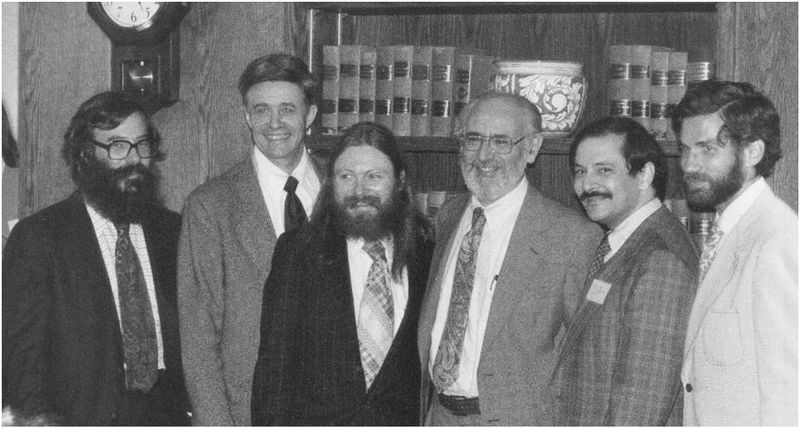
APL Wiki
498 articles about APL that anyone can edit. See the navigational overview of content.
Unisys APLB Source Code
Unisys APLB source code. This is posted for educational and historical purposes and may not represent a fully working system. ©Unisys Corporation; All Rights Reserved. Posted with permission of Unisys.

What I Found Interesting in Claude Code's Source
A breakdown of the most interesting engineering patterns in Claude Code's leaked source code: composable system prompts, runtime instruction injection, context compression, forking, prompt caching architecture, and more.
plain_text_files_are_at_risk.md — paste.sr.ht
For better or worse, plain-text files, with their many encodings and layered formats, are the only real universal data interface we have had so far.
Plaintext Productivity | Introduction
The Plaintext Productivity system is a smart way to get organized on Windows, using plaintext files as your trusted system and great software to make it easy.

An open letter to office suite users, just before the Euro-Office announcement - TDF Community Blog
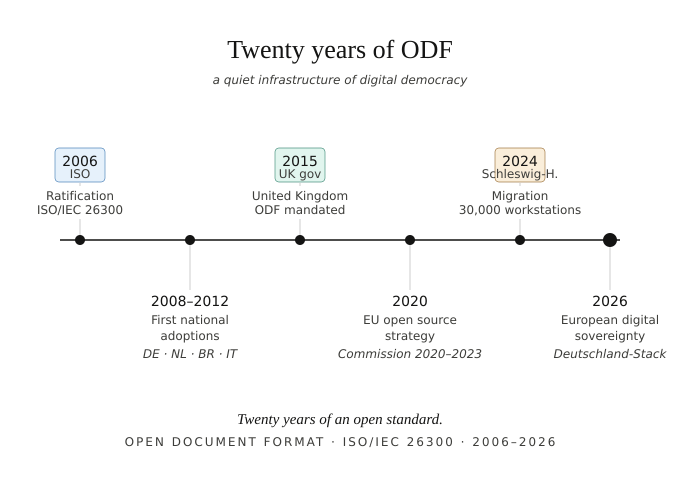
Dear office suite users, In recent days you will have read various articles announcing the arrival of Euro-Office, which is being “marketed” as the first open-source office suite developed in Europe. We feel compelled — reluctantly, since open source should rest on transparency, not deception — to correct this claim. The first open-source office suite developed in Europe was OpenOffice.org in 2001, based on StarOffice’s source code, followed by LibreOffice from 2010. These are two genuine open-source office suites, built from source code that originated in Europe. They are not a freeware clone of MS Office whose code provenance is undisclosed, nor a product that has rebranded itself out of pure opportunism to ride today’s wave of Digital Sovereignty. It is worth remembering that many of those who champion Digital Sovereignty today were silent back in 2006, when the open ISO/IEC ODF standard — the pillar of Digital Sovereignty — was announced: not only did they not listen to us during all these years, but in some cases they greeted us with a condescending smile. If we can speak of Digital Sovereignty in Europe today, it is thanks to The Document Foundation and LibreOffice community members at large, who kept
Who wrote this shit? | Philip Heltweg
Trashing legacy software is fun. It creates camaraderie.
Fine-grained and accurate source code differencing | Proceedings of the 29th ACM/IEEE International Conference on Automated Software Engineering
As part of the Digital Library's transition to Open Access, new features for researchers are available in the Premium Edition. Click here to learn more.

microsoft/cascadia-code
This is a fun, new monospaced font that includes programming ligatures and is designed to enhance the modern look and feel of the Windows Terminal.
Practical Common Lisp
This page, and the pages it links to, contain text of the Common Lisp book Practical Common Lisp published by Apress These pages now contain the final text as it appears in the book. If you find errors in these pages, please send email to book@gigamonkeys.com. These pages will remain online in perpetuity—I hope they will serve as a useful introduction to Common Lisp for folks who are curious about Lisp but maybe not yet curious enough to shell out big bucks for a dead-tree book and a good Common Lisp tutorial for folks who want to get down to real coding right away. However, don't let that stop you from buying the printed version available from Apress at your favorite local or online bookseller. For the complete bookstore browsing experience, you can read the letter to the reader that appears on the back cover of the treeware edition of the book.
AT Codes

Códigos relacionados com ATProto, para facilitar a busca através de diversas fontes e repositórios diferentes. | Multiple sources of codes using atproto in many ways, so it's easier to browse and search. PLEASE, only use PERMALINK for anything hosted on Tangled (or I will have to replace it). Gist and Strings are okay too.
wdonthavetime.selfhosted.social/wsocial-wned
snowfloke.com/Discord_Bot
cuducos.me/likes-to-rock
atforge / atpcraft / atpcraft-at · GitLab · atforge git
atforge / atpcraft / ATPcraft · GitLab · atforge git
opensocial.group/proposal