

Statistics on how concentrated user accounts and data are across the Fediverse, the Atmosphere, web hosting, email, and other Internet infrastructure.
Centralization, Decentralization, and Internet Standards
Despite being designed and operated as a decentralized network-of- networks, the Internet is continuously subjected to forces that encourage centralization. This document offers a definition of centralization, explains why it is undesirable, identifies different types of it, catalogues limitations of common approaches to decentralization, and explores what Internet standards efforts can do to address it.
Decentralisation: the next big step for the world wide web
The decentralised web, or DWeb, could be a chance to take control of our data back from the big tech firms. So how does it work and when will it be here?

EFFecting Change: How to Build a Decentralized Web That Truly Works for All
Centralization, Decentralization, and Internet Standards
This document discusses aspects of centralization that relate to Internet standards efforts. It argues that, while standards bodies have a limited ability to prevent many forms of centralization, they can still make contributions that assist in the decentralization of the Internet.
Nobody cares about decentralization until they do
A recurring line in discussion of federated, decentralized social media is that no one cares about it. They just want their Twitter without the Nazis. Which is okay. But how it looks on the backend matters. When the illusion of a unified user experience breaks, how accessible the escape pod
The Decentralized Web: Defending Internet Freedom through Decentralization: Back to the Future? — MIT Digital Currency Initiative
In this report, we explore two important ways structurally decentralized systems could help address the risks of mega-platform consolidation: First, these systems can help users directly publish and discover content directly, without intermediaries, and thus without censorship. All of the systems we

The ecosystem is moving
Considerations for distributed and decentralized technologies from the perspective of a product that many would like to see decentralize....
Centralization vs Decentralization - AVC
Decentralization is one of, if not the most, discussed features of the crypto tech stack. In a decentralized system, no single body controls the system. We have most certainly not reached the era fully decentralized systems, but that is what most of the world-class technologists working in the crypto sector are focused on getting us […]
There is One Fediverse. There are a Million Fediverses.
Over the past several years I’ve listened to admins, mods, and community managers from across the decentralised social media landscape. I’ve been in the chats, attended the conferences,…

ATmosphere Conf 2026: the internet built for people, not platforms
370 people in Vancouver, 500 online, all working on the same question: what does the internet look like when users own their data? Highlights from the AT Protocol community conference.

Decentralized Syndication — The Missing Internet Protocol
The Internet is decentralized by design. It came into being not at once, but in parts. New protocols were added on top of previous ones…
Decentralization: Worth The Wait — Open Tech Strategies | Blog
Ethan Zuckerman has a piece in Wired that says building decentralization tools is a sucker's bet. He and his coauthors, Chelsea Barabas and Neha Narula, mention the FreedomBox, which I helped lead, as an example of how difficult this stuff is. They point to a list of things that make decentralized efforts prone to failure and conclude:
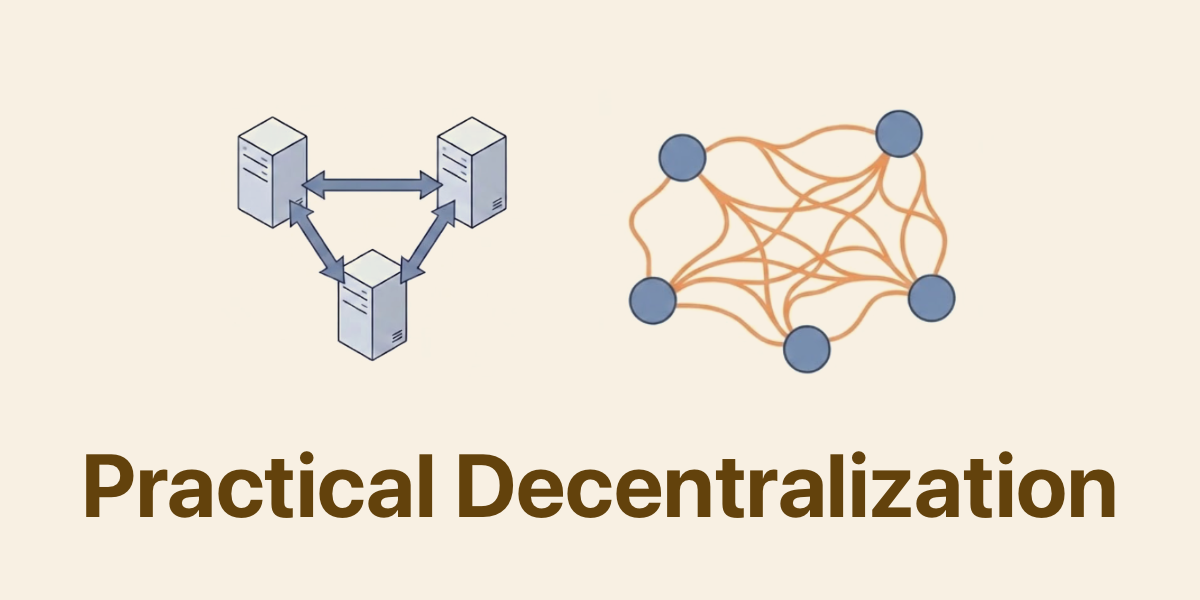
Practical Decentralization
The point of decentralization is to guarantee the rights of individuals and communities on the Internet. Pulling that off is a balancing act between practicality and ideology.
Practical Decentralization
The point of decentralization is to guarantee the rights of individuals and communities on the Internet. Pulling that off is a balancing act between practicality and ideology.
The Decentralized Internet Is Here, With Some Glitches
Privacy advocates and venture capitalists want to circumvent the tech giants with apps using encrypted data stored on networks of computers.

European Commission (@EUCommission@ec.social-network.europa.eu)
Attached: 1 image A strong Europe needs independent digital spaces. We believe true digital sovereignty thrives on a competitive, contestable, open ecosystem where diverse platforms co-exist. Today, we’re expanding our presence to W, the new social media. By being on W, we want to boost alternatives and support all efforts toward a decentralised web. And we continue to invest into our presence on the Fediverse!