

Scholarly publishing spent thirty years arguing about access. It has barely begun arguing about what readers do with the paper once they have it. At Aris we call that second argument scholarly interface design. Mike Morrison's community calls it ScienceUX. Either way it is becoming a field, and here is why it is worth your attention.
The new way we’ll do science
Papers should become human-readable views over a graph of data, tools, results, and certificates.
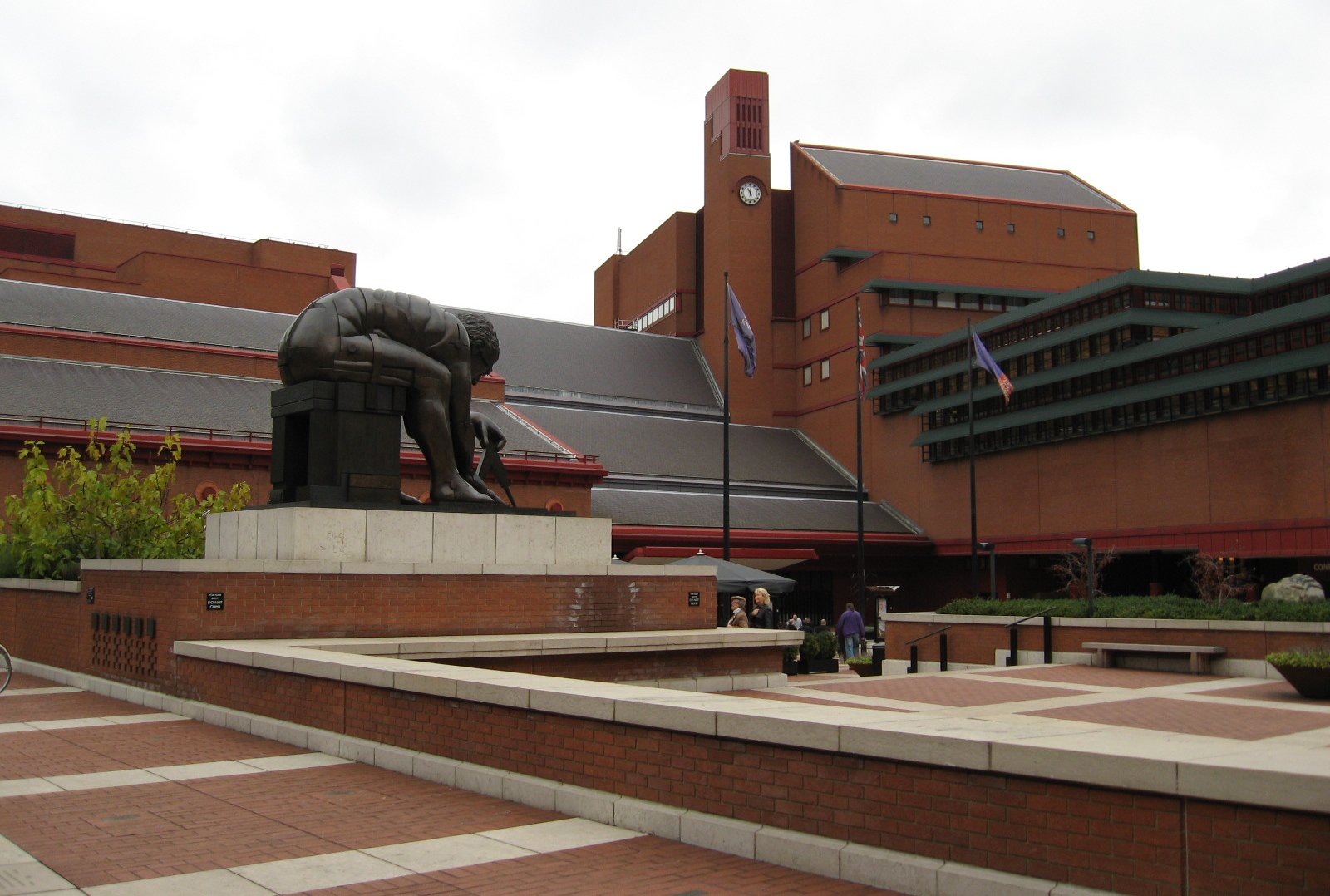
Guest post: If you’re going to critique science, be scientific about it
Loren K. Mell Editor’s note: This post responds to a Feb. 13 article in The Atlantic, “The Scientific Literature Can’t Save Us Now,” written by Retraction Watch cofounders Adam Marcus and Ivan Oran…
Reclaiming scientific publishing: Our duty to make science freely accessible to all
When we (Camille Thomas and Romain Vaucher speaking) entered academia as graduate students in France and Switzerland, we were enthusiastic about the vast amount of research available with a simple click on our university computers. However, we also quickly felt disheartened by the significant amount of research work we couldn’t access when wrapping up our theses from home. Luckily, pirates existed. Empowered by Aaron Swartz’s Guerilla Open Access Manifesto, Alexandra Elbakyan created Sci-Hub in 2011, the greatest leak of scientific knowledge of the century. We felt right in the middle of an Open Access (OA) revolution that would finally make all scientific articles, old and new, accessible to everyone. Fifteen years later, our hopes as idealistic early-career researchers have been crushed by the oligopolistic model of scientific publishing and the subtle pressures of the “publish or perish” culture that reigns over our career development. In the meantime, publishers like Frontiers, MDPI and Springer Nature, to name a few, have exponentially expanded their number of titles. They have become increasingly exploitative of scholarly manpower, moving far away from the genuine accessibility they allegedly promised under the guise of this OA transformation. Open Access is to be praised, but the way it has been implemented through the mainstream Gold and Green OA models now primarily serves the status quo of large for-profit publishers. These entities hijack public money and voluntary editorial labour for their own profit and that of their shareholders (Butler et al., 2023; Shu and Larivière, 2024). In a nutshell, to offer reader accessibility, the Gold OA model requires authors to pay an Article Processing Charge (APC; around 2,000 $/€, rarely less, and often much more) covered by individual research funds, funding agencies or university library deals. The Green OA model allows authors to upload their accepted, non-formatted manuscripts to repositories after an embargo period. While both models allow compliance with funding agency mandates, true equity and accessibility are ultimately left behind. In an article we recently published (Vaucher and Thomas, 2026), we describe the mechanisms through which we, as researchers, inadvertently contribute to keeping research exclusive while driving the publishing model down an unsustainable path. Just like our broader economy, our publishing model and the ways science is evaluated fuelled a predatory system that demands more papers, funding and prestige at an ever-faster rate (Walter and Mullins, 2019), likely at the expense of quality, diversity and ethics (Frank et al., 2023; Heen and Vogt, 2024). These concerns aren’t entirely new. What is new, however, is the growing realisation among societies, universities and funding bodies that we must move away from this system. Initiatives like the European Diamond Capacity Hub, ALMASI and craft-OA are actively paving a way forward that we, as scientists, have yet to fully embrace. In the geosciences, a collective and concerted effort is currently being made by researchers to provide fairer, more sustainable alternatives through community-driven Diamond OA journals (which feature no APCs and completely free access to published articles). Volcanica (Farquharson and Wadsworth, 2018), Sedimentologika (Thomas et al., 2023), Tektonika (Fernández-Blanco et al., 2023), Seismica (Rowe et al., 2022), Geomorphica (Lefebvre et al., 2025), Open Paleontology (Drage et al., 2024), Advances in Geochemistry and Cosmochemistry (Pourret et al., 2025), Geodynamica, jSEDI and Planetary Research are all recently created, scholarly-run journals funded by university library investments to promote better ways of publishing. Their articles are peer-reviewed, free for readers to access, and free for authors to publish. They rely entirely on the voluntary involvement of scientists running open-source editorial platforms (such as Open Journal Systems), transparent workflows, copyediting, production and final dissemination. Diamond OA journals offer an alternative path for all of us to transform our broken publishing system and reclaim ownership of our own science. These efforts go hand in hand with greater involvement in our academic societies and non-profit publishing initiatives. Ultimately, real transformation can only happen if all of us as researchers realise how inherently unfair and exclusive the current system is to labs and institutions that cannot afford steep Gold OA APCs or paywalled journal subscriptions. It also means we must collectively stop evaluating science based on journal prestige and the flawed metrics they own (Posada and Chen, 2018; Sabel and Larhammar, 2025; Simons, 2008). Only by breaking these habits can we truly make knowledge accessible to all. References Butler, L.-A., Matthias, L., Simard, M.-A., Mongeon, P., and Haustein, S.: The oligopoly’s shift to open access: How the big five academic publishers profit from article processing charges, Quantitative Science Studies, 4, 778–799, https://doi.org/10.1162/qss_a_00272, 2023. Drage, H. B., Keating, J. N., Nielsen, M. L., Saleh, F., and Hearing, T. W. W.: Open Palaeontology: a new model of diamond open access journal for palaeontology, Open Palaeontology, 1, 1–6, https://doi.org/10.26034/la.opal.2024.6223, 2024. Farquharson, J. I. and Wadsworth, F. B.: Introducing Volcanica: The first diamond open-access journal for volcanology, Volcanica, 1, I–IX, https://doi.org/10.30909/vol.01.01.i-ix, 2018. Fernández-Blanco, D., Lacassin, R., Gouiza, M., Perez-Diaz, L., Magee, C., McCarthy, D., Doré, T., Péron-Pinvidic, G., Kavanagh, J., Bond, C., and Schmitt, R.: Tektonika: The Community-Led Diamond Open-Access Journal for Tectonics and Structural Geology, τeκτoniκa, 1, I–XIII, https://doi.org/10.55575/tektonika2023.1.1.56, 2023. Frank, J., Foster, R., and Pagliari, C.: Open access publishing – noble intention, flawed reality, Social Science & Medicine, 317, 115592, https://doi.org/10.1016/j.socscimed.2022.115592, 2023. Heen, E. and Vogt, H.: Scientific rot: Unsustainable publishing practices threatens trust in medicine, Journal of Evaluation in Clinical Practice, 30, 941–944, https://doi.org/10.1111/jep.13989, 2024. Lefebvre, A., Bosch, R., Burrows, K., Giaime, M., Goodwin, G., Lai, L. S.-H., Stammler, M., and Fernández, R.: Geomorphica: The most accessible journal for the geomorphology community, Geomorphica, 1, https://doi.org/10.59236/geomorphica.v1i1.54, 2025. Posada, A. and Chen, G.: Inequality in Knowledge Production: The Integration of Academic Infrastructure by Big Publishers, in: ELPUB 2018, https://doi.org/10.4000/proceedings.elpub.2018.30, 2018. Pourret, O., Millet, M.-A., Marin-Carbonne, J., Mallik, A., Tierney, J. E., Darling, J. R., Kiseeva, E. S., Torres, M. A., Fonseca, R. O. C., Tartèse, R., Namur, O., Klöcking, M., Matthews, S. W., Dahrén, B., Ickert, R. B., and Board, the inaugural A. in G. and C. editorial: Equitable Access, Open Science, and the Future of Publishing in Geochemistry and Cosmochemistry, Advances in Geochemistry and Cosmochemistry, 1, https://doi.org/10.33063/agc.v1i1.770, 2025. Rowe, C., Agius, M., Convers, J., Funning, G., Galasso, C., Hicks, S., Huynh, T., Lange, J., Lecocq, T., Mark, H., Okuwaki, R., Ragon, T., Rychert, C., Teplitzky, S., and Van den Ende, M.: The launch of Seismica: a seismic shift in publishing, Seismica, 1, https://doi.org/10.26443/seismica.v1i1.255, 2022. Sabel, B. and Larhammar, D.: Reformation of science publishing: the Stockholm Declaration, R Soc Open Sci., 12, 251805, https://doi.org/10.1098/rsos.251805, 2025. Shu, F. and Larivière, V.: The oligopoly of open access publishing, Scientometrics, 129, 519–536, https://doi.org/10.1007/s11192-023-04876-2, 2024. Simons, K.: The Misused Impact Factor, Science, 322, 165–165, https://doi.org/10.1126/science.1165316, 2008. Thomas, C., Privat, A., Vaucher, R., Spychala, Y., Zuchuat, V., Marchegiano, M., Poyatos-Moré, M., Kane, I., and Chiarella, D.: Sedimentologika: a community-driven diamond open access journal in sedimentology, Sedimentologika, 2023. Vaucher, R. and Thomas, C.: Diamond is the new Green—Why Green Open Access is not a sustainable long-term model for scientific publishing, Sedimentologika, 4, https://doi.org/10.57035/journals/sdk.2026.e41.2397, 2026. Walter, P. and Mullins, D.: From symbiont to parasite: the evolution of for-profit science publishing, Molecular Biology of the Cell, https://doi.org/https://doi.org/10.1091/mbc.E19-03-0147, 2019.
A New Paradigm for Scientific Publishing, Peer Review, and Impact Assessment
Scientific publishing and peer review have evolved little in three centuries, while the demands placed on them have grown profoundly. The growing role of artificial intelligence has underscored deep, systemic shortcomings of an aging system that has largely evaded innovation, a system whose origins are appallingly closer to the invention of the printing press than to the internet. We can do better – much better. This article is intended as the beginning of a communal experiment: a living document that critically reviews the modern academic publishing and peer-review system and presents a concrete framework to address what bibliometrics experts¹ have characterized as "the pervasive misapplication of indicators to the evaluation of scientific performance". Building on the Leiden Manifesto, DORA, and a body of scholarship spanning many disciplines and decades, we present a community-governed, non-profit platform organized around three trust-weighted impact factors, for articles, authors, and reviewers, with full algorithmic transparency, an open development log, and structural decoupling of credibility scoring from content moderation and from monetization. We invite the community to discuss, critique, and help shape it.
From Albums to Streams: How Modularity Changes Systems
Scientific publishing is breaking under document-centric formats designed for a physical world. Borrowing from music’s shift from albums to streaming, we make the case that open access alone cannot deliver reuse, trust, or scale. The future of science depends on modular, interoperable research components that move across tools, enabling new workflows, tools, and ecosystems.
Sensemaking and Science Publishing | Ronen Tamari
Sensemaking as a new framework for understanding why science publishing/peer review is broken, and how to fix it

Paperstars
A better way to evaluate scientific papers. Methodological soundness and transparency, not citation counts.
Can we measure trust in scientific publications? - LSE Impact
Jonathon Alexis Coates outlines how a constellation of static and dynamic indicators could provide a means for assessing the trustworthiness of published research

The Dissemination of Scholarly Information: Journals, Open-Access and Distributed Filtering
Current methods of disseminating scholarly information focus on the use of journals who retain exclusive rights in the material they publish. Recently there has been increasing dissatisfaction with this model, with suggestions for alternative approaches such as "Open Access".
Open Evaluation: A Vision for Entirely Transparent Post-Publication Peer Review and Rating for Science
The two major functions of a scientific publishing system are to provide access to and evaluation of scientific papers. While open access (OA) is becoming a reality, open evaluation (OE), the other side of coin, has received less attention. Evaluation steers the attention of the scientific community and thus the very course of science. It also influences the use of scientific findings in public policy. The current system of scientific publishing provides only journal prestige as an indication of the quality of new papers and relies on a non-transparent and noisy pre-publication peer review process, which delays publication by many months on average. Here I propose an OE system, in which papers are evaluated post-publication in an ongoing fashion by means of open peer review and rating. Through signed ratings and reviews, scientists steer the attention of their field and build their reputation. Reviewers are motivated to be objective, because low-quality or self-serving signed evaluations will negatively impact their reputation. A core feature of this proposal is a division of powers between the accumulation of evaluative evidence and the analysis of this evidence by paper evaluation functions (PEFs). PEFs can be freely defined by individuals or groups (e.g. scientific societies) and provide a plurality of perspectives on the scientific literature. Simple PEFs will use averages of ratings, weighting reviewers (e.g. by H-factor) and rating scales (e.g. by relevance to a decision process) in different ways. Complex PEFs will use advanced statistical techniques to infer the quality of a paper. Papers with initially promising ratings will be more deeply evaluated. The continual refinement of PEFs in response to attempts by individuals to influence evaluations in their own favor will make the system ungameable. OA and OE together have the power to revolutionize scientific publishing and usher in a new culture of transparency, constructive criticism, and collaboration.

Publishing Beyond the Market: Open Access, Care, and the Commons
<I>Publishing Beyond the Market</I> argues that the move to open access should focus less on the free accessibility of research outputs and more on who controls the publications and infrastructures for scholarly communication. By deploying theoretical literature on science and technology studies, care ethics, and the commons, the book critically interrogates open access and reimagines a more ethical future for researcher-led publishing. A case study of Plan S—the multifunder European policy for open access publishing—explores its tendency to rehearse all the failures of commercialisation. Through critical engagement with the open access landscape, the book reveals the shortcomings of market-centric and policy-based approaches to open access book and journal publishing, particularly their tendency to reinforce conservatism, commercialism, and private control of publishing.<BR /><BR /> Going forward, <I>Publishing Beyond the Market</I> explores the importance of collectivity and democratic governance within the transition to open access publishing. It suggests that developing a commons-based, scholar-led publishing landscape through a series of presses that are each managed by working academics could offer a productive counterpoint to marketised systems of open access and subscription publishing. In weaving themselves together in order to "scale small" these publishing initiatives would act as a counter-hegemonic project based on mutual reliance and care. By illustrating how these projects build toward a commons-based publishing future, and how they may complement other approaches to publishing within university presses and libraries, the book culminates in an argument for the infrastructures, policies, and forms of governance needed to nurture such a collective vision.

Making sense of preprints by adding context – The Publish Your Reviews initiative - LSE Impact
Improving scientific publishing is often framed as an issue of openness and speed and less often as one of context. In this post, Ludo Waltman and Jessica Polka make the case for a more contextualised approach to open access publishing and preprinting, and introduce the Publish Your Reviews initiative. Launched today by ASAPbio, the initiative

Introducing Aris: The publishing platform for the Post-PDF Era - Aris
We're building the future of academic publishing: tools that make it easy to create, share, and preserve knowledge in formats designed for the web, not the printing press.
Great survey of the "scholarly interface design" frontier that also highlights the emerging role of the atproto.science and modular research ecosystems - @chive.pub @paperstarsorg.bsky.social @cosmik.network @semble.so @margin.at @discoursegraphs.bsky.social @curvenote.com and many more!

leotrs
1/ Scholarly publishing spent thirty years arguing about access. It has barely started arguing about what readers do with the paper once they have it. That second argument is turning into a field, forming around how science gets read and judged. Here is the map as I see it: aris.pub/blog/scholarly-interface-desi…
1/ Scholarly publishing spent thirty years arguing about access. It has barely started arguing about what readers do with the paper once they have it. That second argument is turning into a field, forming around how science gets read and judged. Here is the map as I see it: aris.pub/blog/scholarly-interface-desi…
A budding discipline around how science gets read and judged - Aris
aris.pub