


We are a think tank that aims to renew a civil, common-sense approach to public discourse and public policy in Canada.
Second Street | How Government Policies Affect Canadians
We investigate the real-world impact of government policy through groundbreaking research and the personal stories of everyday Canadians.
How to Change Public Opinion - Niskanen Center
Policy advocates engaged in changing public opinion rarely pay much attention to what the academic literature says about how public opinion is formed and how and why it changes. That’s too bad, because while political scientists disagree about a lot of things, this is not one of them. Several decades of robust empirical tests offer […]

Conservative Party of BC
Common Sense Change | NDP policies aren’t working. It’s time to try something new.

CanadaGPT - Canadian Government Accountability & Transparency Platform
Track Canadian MPs, federal bills, parliamentary debates, lobbying activities, and government spending. Access comprehensive data on House of Commons proceedings, committee work, and political accountability with AI-powered insights.
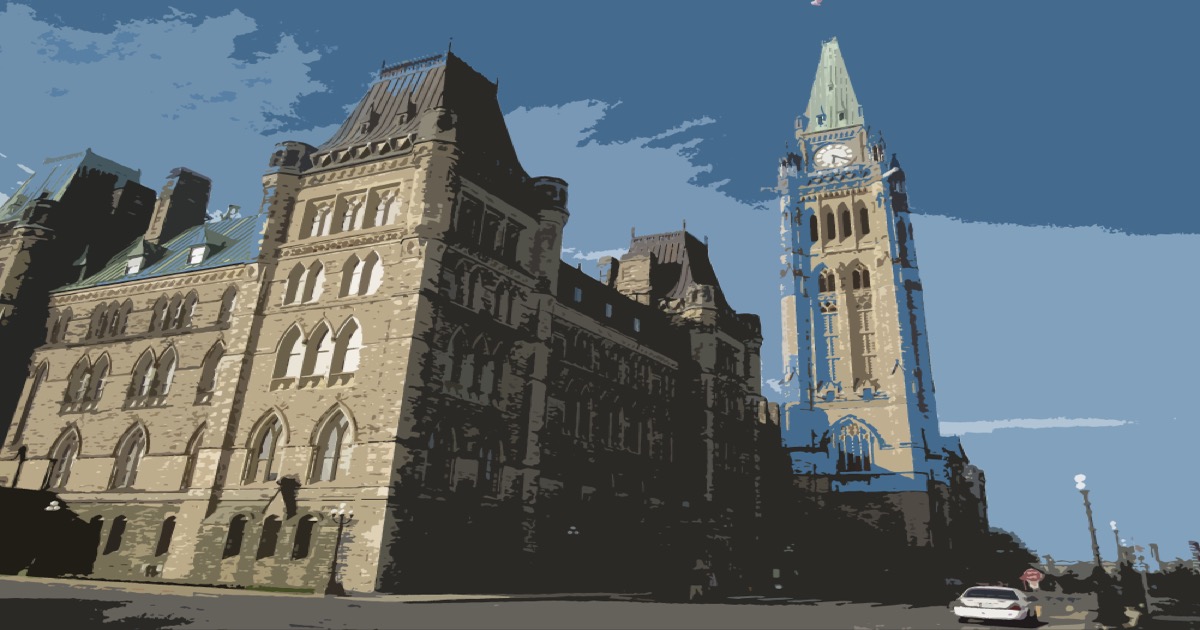
Opinion | The Closing of the Canadian Mind (Published 2015)
The tenure of Prime Minister Stephen Harper has seen the slow-motion erosion of the country’s reputation for open, responsible government.

An s-frame agenda for behavioral public policy research
We have previously argued thatbehavioral scientists have been testing and advocating individualistic (i-frame) solutions to policy problems that have systemic (s-frame) causes and require systemic solutions. Here, we consider the implications of adopting an s-frame approach for research. We argue that an s-frame approach will involve addressing different types of questions, which will, in turn, require a different toolbox of research methods.
Think Like a Commoner | A Short Introduction to the Life of the Commons
In our age of predatory markets and make-believe democracy, our troubled political institutions have lost sight of real people and practical realities. But if you look to the edges, ordinary people are reinventing governance and provisioning on their own terms. The commons is arising as a serious, practical alternative to the corrupt Market/State.
The Constitution of Knowledge
America has faced many challenges to its political culture, but this is the first time we have seen a national-level epistemic assault: a systematic attack, emanating from the very highest reaches of power, on our collective ability to distinguish tr...

PressProgress: Progressive News and Analysis
We're Canada's most shared source for progressive news and information

The i-frame and the s-frame: How focusing on individual-level solutions has led behavioral public policy astray
An influential line of thinking in behavioral science, to which the two authors have long subscribed, is that many of society's most pressing problems can be addressed cheaply and effectively at the level of the individual, without modifying the system in which the individual operates. We now believe this was a mistake, along with, we suspect, many colleagues in both the academic and policy communities. Results from such interventions have been disappointingly modest. But more importantly, they have guided many (though by no means all) behavioral scientists to frame policy problems in individual, not systemic, terms: To adopt what we call the “i-frame,” rather than the “s-frame.” The difference may be more consequential than i-frame advocates have realized, by deflecting attention and support away from s-frame policies. Indeed, highlighting the i-frame is a long-established objective of corporate opponents of concerted systemic action such as regulation and taxation. We illustrate our argument briefly for six policy problems, and in depth with the examples of climate change, obesity, retirement savings, and pollution from plastic waste. We argue that the most important way in which behavioral scientists can contribute to public policy is by employing their skills to develop and implement value-creating system-level change.
Morality vs. Politics as a Framing Problem: How (Not) to Misunderstand the Fight Against Climate Change
Topoi - This paper is guided by two research hypotheses: (1) In contemporary public discourse, many of the most urgent political problems are predominantly framed and understood in moral terms; (2)...
Verification, Deliberation, Accountability: A new framework for tackling epistemic collapse and renewing democracy
Demos is Britain’s leading cross-party think-tank. We produce original research, publish innovative thinkers and host thought-provoking events.
Maclean’s Magazine (@macleans.bsky.social)
Engaging stories. Bold voices. Big ideas. Maclean’s leads the national conversation on everything that matters in Canada. macleans.ca

Per Capita | independent progressive think tank in Australia
Per Capita is an independent public policy think tank working to build a new vision for Australia based on fairness, shared prosperity, and social justice.
National Newswatch
National Newswatch: Canada's most comprehensive site for political news and views.

The Narratives We Need – PIRC
We spoke to over 200 campaigners and reviewed 10 years of research on framing. Here are the five key lessons we learned...
