


Skeptics say Anthropic, Google, Microsoft, and OpenAI hope to avoid regulation.
OpenAI president urges AI safeguards as group he funds opposes regulation
As OpenAI executives step up their public calls for federal AI safety rules, a political group the company’s president helped fund is spending millions to elect members of Congress who oppose restrictions on the technology.

AI is Entering an Era of Corporate Control - Slashdot
An annual report on AI progress has highlighted the increasing dominance of industry players over academia and government in deploying and safeguarding AI applications. From a report: The 2023 AI Index -- compiled by researchers from Stanford University as well as AI companies including Google, Anth...

Ethical AI Departures — Who Quit OpenAI, Google, Anthropic Over Safety Concerns
59 researchers and executives who quit or were fired from OpenAI, Google DeepMind, Anthropic, Meta, and xAI over AI safety concerns. Sourced departures, writings, and prediction tracking.
Google "We Have No Moat, And Neither Does OpenAI"
Leaked Internal Google Document Claims Open Source AI Will Outcompete Google and OpenAI
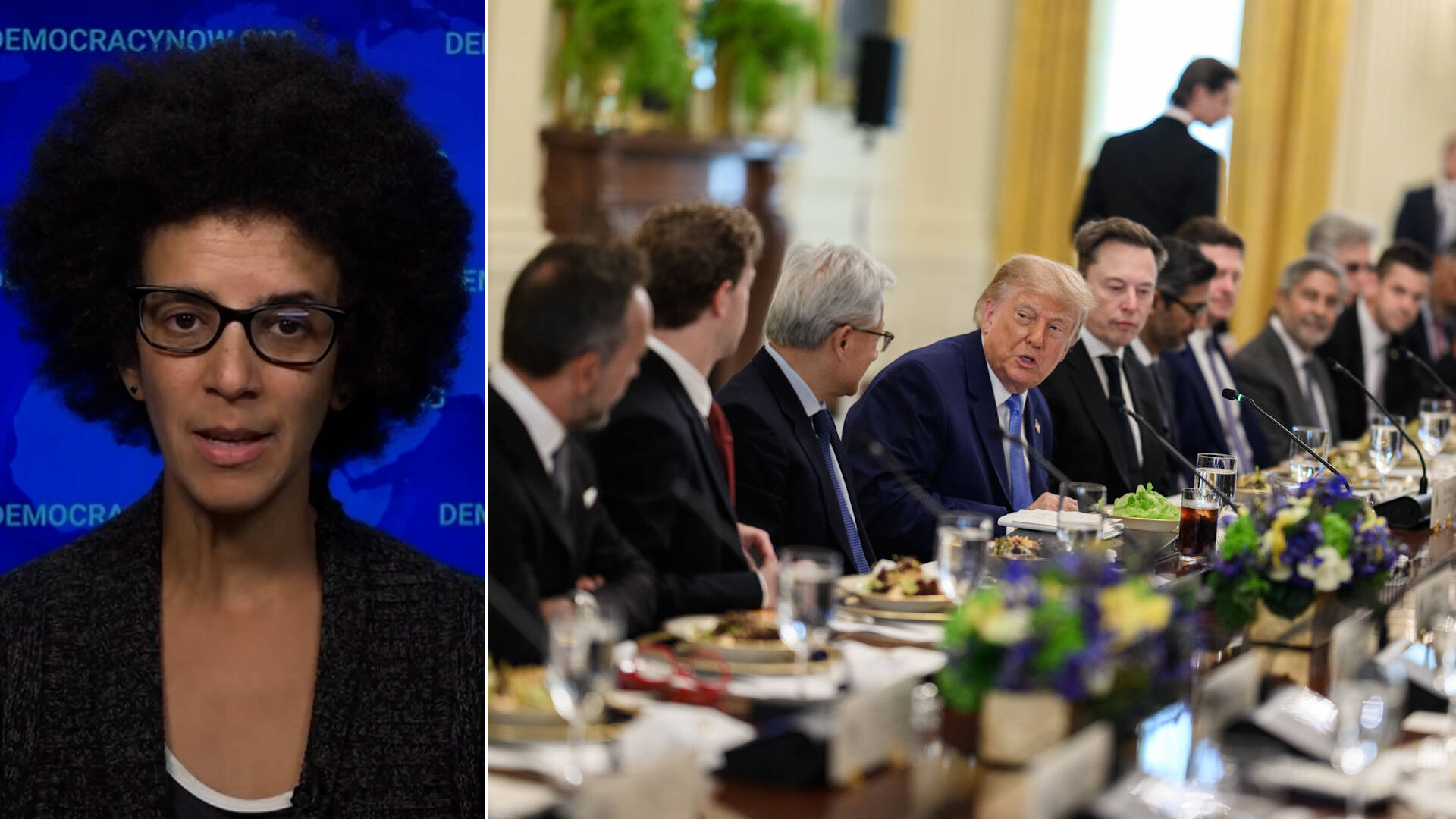
The Real Existential Risk Is AI CEOs Avoiding Oversight: “Alternative Nobel” Winner Timnit Gebru
We speak to the prominent AI researcher and leading critic of the AI industry, Timnit Gebru, who was recently awarded a 2026 Right Livelihood Award for her work investigating the harms and hype behind the global buildup of artificial intelligence. “Instead of discussing faulty, unreliable systems,” Gebru says tech leaders like SpaceXAI’s Elon Musk, OpenAI’s Sam Altman and Anthropic’s Dario Amodei are “marketing their systems as all-knowing, superpowerful, superintelligent,” and lobbying for “self-policing and self-regulation” to avoid being held “liable through existing laws.” Gebru expresses skepticism over increasingly widespread claims that AI algorithms pose an existential risk to humanity, warning that such claims are overblown and that “what is actually happening is regulatory capture.”
OpenAI targets workplace professionals as enterprise AI demand surges
‘These leaders recognize AI as the most consequential shift of their lifetime, and they’re asking us how to reinvent their companies around it’

Inside the fight to reclaim AI from Big Tech’s control
For years, Big Tech has set the global AI research agenda. Now, groups like Black in AI and Queer in AI are upending the field’s power dynamics to build AI that serves people.

"AI" is Automated Inequality
Tech bros still dominate the discussions about so-called "AI" with false claims. Even most "AI"-critical researchers spend much of their time meticulously debunking (always only a subset of) claims, leaving vast areas of the economic consequences of "AI" unexplored. (Even the "AI"-evangelist Economi

Study maps how ‘Big AI’ influences AI laws and oversight — Centre for Technomoral Futures
AI companies influence policy and regulation using similar techniques to Big Tobacco, Big Pharma and Big Oil, according to a new study by colleagues at University of Edinburgh, Trinity College Dublin, TU Delft and Carnegie Mellon University.

For Most of the World, Open-Source AI Is the Only Way Forward
Proprietary AI is both too expensive and too centralized in control for most countries and companies to rely upon.

Debates on the nature of artificial general intelligence
The term “artificial general intelligence” (AGI) has become ubiquitous in current discourse around AI. OpenAI states that its mission is “to ensure that artificial general intelligence benefits all of humanity.” DeepMind’s company vision statement notes that “artificial general intelligence…has the potential to drive one of the greatest transformations in history.” AGI is mentioned prominently in the UK government’s National AI Strategy and in US government AI documents . Microsoft researchers recently claimed evidence of “sparks of AGI” in the large language model GPT-4, and current and former Google executives proclaimed that “AGI is already here.” The question of whether GPT-4 is an “AGI algorithm” is at the center of a lawsuit filed by Elon Musk against OpenAI.

AI Ethics Are in Danger. Funding Independent Research Could Help (SSIR)
For technology to truly work in the public interest, we need to invest in building organizations that are free from corporate profit motives and that respect, integrate, and compensate communities with whom they work. We offer a new path forward for AI re <meta property=

Why AI companies can’t be trusted to self-regulate
From aviation to banking, high-risk industries are subject to independent oversight and meaningful penalties. AI companies should be no exception.
AI and the Big Five
Given the success of existing companies with new epochs, the most obvious place to start when thinking about the impact of AI is with the big five: Apple, Amazon, Facebook, Google, and Microsoft.

"AI makes it cheaper to contribute to Open Source, but it's not making life easier for maintainers. More contributions are flowing in, but the burden of evaluating them still falls on the same small group of people. That asymmetric pressure risks breaking maintainers." also relevant to slop science
