


Google's take on a Wi-Fi router makes it the communication hub for your home.
Google Launches OnHub Router, Promises Faster Wi-Fi And Simpler Setup | TechCrunch
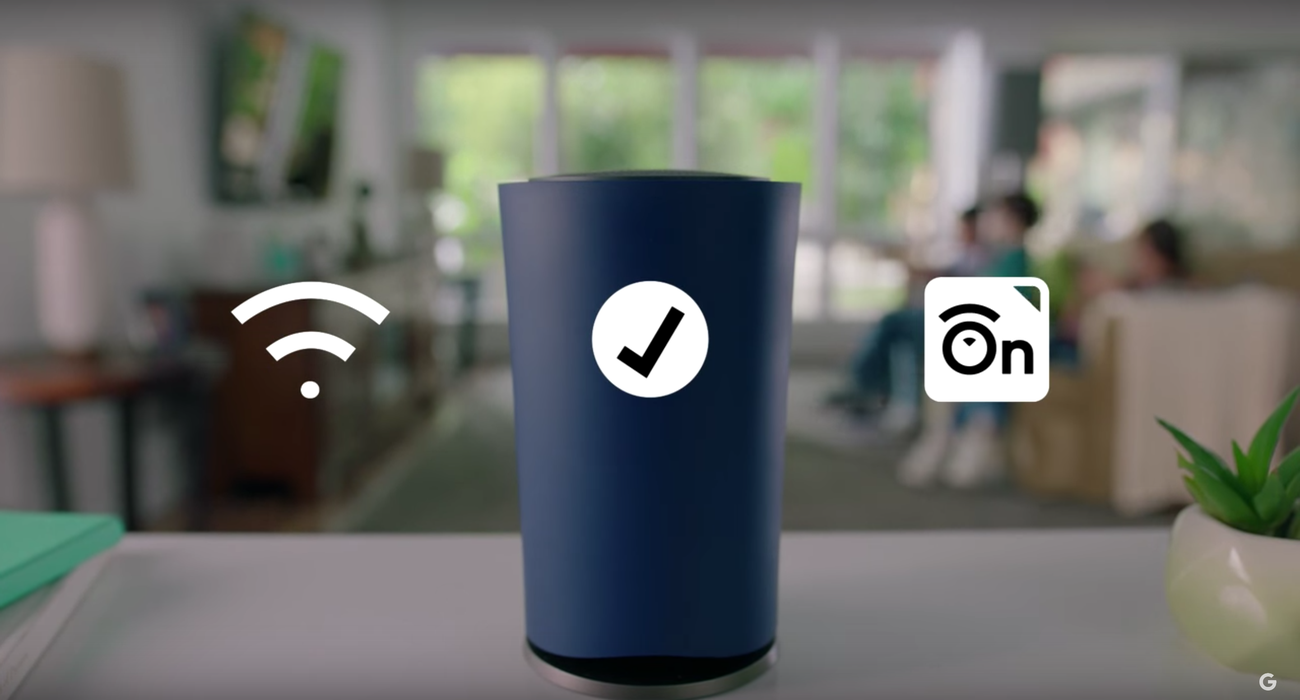
Google today surprised us by launching a router with the help of its partner TP-LINK. The $199.99 OnHub router promises to do away with many of the issues you've likely experienced with your existing router: Wi-Fi slowing to a crawl, videos buffering and connections randomly dropping out. That always meant unplugging the device, waiting a minute or so, plugging it back in, and then hoping for the best.

Google Announces a Router: OnHub - Slashdot
An anonymous reader writes: Google has announced they're working with TP-LINK to build a new router they call OnHub. They say it's designed for the way we tend to use Wi-Fi in 2015, optimizing for streaming and sharing in a way that older routers don't. The router has a cylindrical design and comes ...

Meet OnHub: a new router for a new way to Wi-Fi
Old routers weren't meant for the ways we stream and share today.
Make connections that Matter in Google Home
Learn more about Matter, our connected smart home technology launching later this year.

Chromecast Update Introduces An AirPlay-Like Android Mirroring Feature, Photo Backdrops And More | TechCrunch
Chromecast, Google's popular $35 dongle that plugs into your TV's HDMI port, letting you stream video and music to your television, received a number of updates today, Google announced this morning at its I/O developer conference. The most notable updates include support for mirroring your Android device's screen to your TV, a new, interactive background display feature called "Backdrop" and support for streaming from device to TV even when you're not on the same wireless network.

Google Rolls Out Android TV
Android is everywhere, including the living room, thanks to Google's latest smart TV debut.
Google launches first developer preview of Android Things, its new IoT platform | TechCrunch
Google today announced Android Things, its new comprehensive IoT platform for building smart devices on top of Android APIs and Google's own services.

[OpenWrt Wiki] Google Wifi
Google Wifi is a 2×2 802.11ac AP with a quad-core Qualcomm IPQ4019 SoC, 512 MB RAM, and 4 GB eMMC storage. Its stock firmware is based on ChromeOS, including a bootloader based on Coreboot and Depthcharge, and can be convinced to run non-Google-signed software (such as OpenWrt) by entering Developer Mode. The device is also known by its internal name “Google Wifi Gale”
End of support for Mozilla Hubs | Hubs Help
Mozilla has ended support for Mozilla Hubs on May 31st, 2024. You can no longer subscribe to Hubs, use the demo server, or create Hubs Cloud instances.
End of support for Mozilla Hubs | Hubs Help
Mozilla has ended support for Mozilla Hubs on May 31st, 2024. You can no longer subscribe to Hubs, use the demo server, or create Hubs Cloud instances.
End of support for Mozilla Hubs | Hubs Help
Mozilla has ended support for Mozilla Hubs on May 31st, 2024. You can no longer subscribe to Hubs, use the demo server, or create Hubs Cloud instances.
End of support for Mozilla Hubs | Hubs Help
Mozilla has ended support for Mozilla Hubs on May 31st, 2024. You can no longer subscribe to Hubs, use the demo server, or create Hubs Cloud instances.
End of support for Mozilla Hubs | Hubs Help
Mozilla has ended support for Mozilla Hubs on May 31st, 2024. You can no longer subscribe to Hubs, use the demo server, or create Hubs Cloud instances.
End of support for Mozilla Hubs | Hubs Help
Mozilla has ended support for Mozilla Hubs on May 31st, 2024. You can no longer subscribe to Hubs, use the demo server, or create Hubs Cloud instances.
Google Introduces New Open Format And Developer Tools For Working With BLE Beacons | TechCrunch
Google today introduced a number of new products around Bluetooth Low Energy (BLE) beacons in an effort to challenge Apple's iBeacon ecosystem. These new

Researchers Want To Turn Your Entire House Into a Co-Processor Using the Local Wi-Fi Signal - Slashdot
An anonymous reader shares an excerpt from a report via Ars Technica: Researchers are proposing an idea to make your computer bigger. They are suggesting an extreme and awesome form of co-processing. They want to turn your entire house into a co-processor using the local Wi-Fi signal. Why, you may b...
