

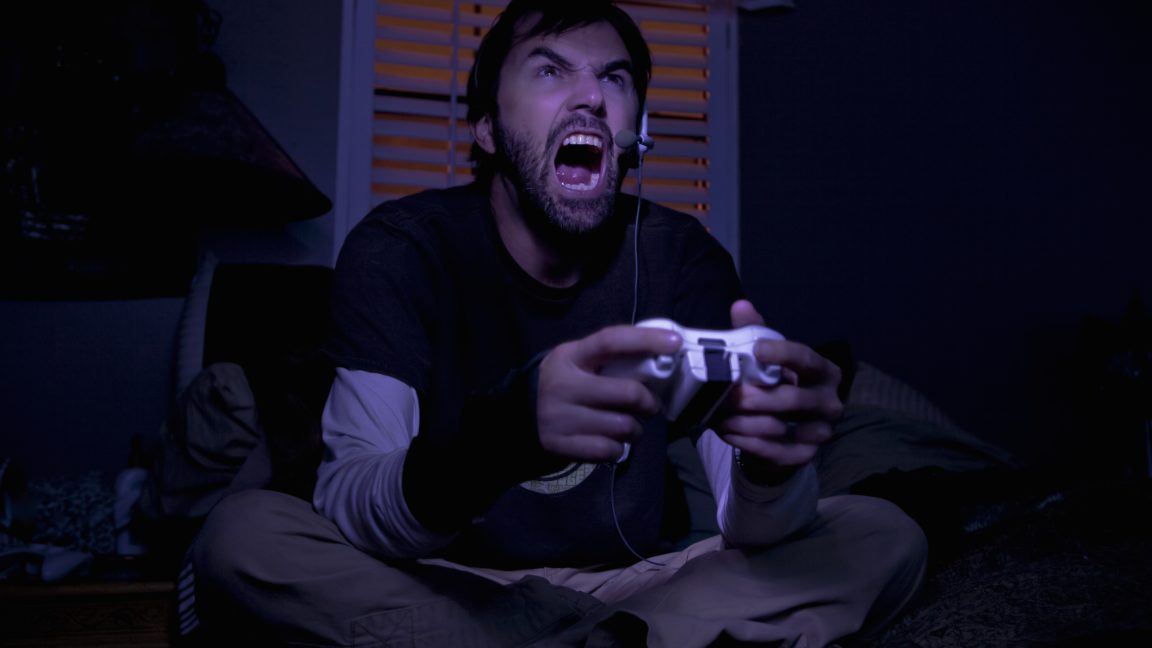
WHO listing renews debate over where to draw the line for "hazardous gaming."
Can a video game company tame toxic behaviour?
Scientists are helping to stop antisocial behaviour in the world's most popular online game. The next stop could be a kinder Internet.

r/StopGaming
StopGaming exists to help those who struggle with or have struggled with compulsive gaming or video game addiction.

Why do some gamers invert their controls? Scientists now have answers, but they’re not what you think
The phenomenal response to an article we published on this question led to detailed cognitive research – and the findings have implications that go way beyond gamers

Healthy Gamer - Mental Health for Modern Life
Healthy Gamer provides mental health support for the internet generation through coaching, content, and community.

Meet the Real Screen Addicts: the Elderly - Slashdot
Britain's National Centre for Gaming Disorders has treated 67 people over the age of 40 since opening in 2019. The oldest patient was a 72-year-old woman with a smartphone gaming obsession. Britons over 65 spent more than three hours a day online on smartphones, computers and tablets last year, acco...

5 top gaming investors explain how the pandemic is reshaping MMOs and social games | TechCrunch
Now that the COVID-19 pandemic has forced millions into isolation, video games are seeing a surge in usage as people seek entertainment and social

ADDICTION BY DESIGN: Machine Gambling in Las Vegas – Natasha Dow Schüll
Slot machines, revamped by evermore compelling digital and video technology, have unseated traditional casino games as the gambling industry’s revenue mainstay. Drawing on fifteen years of field research in Las Vegas, anthropologist Natasha Dow Schüll explores the dark side of machine gambling—a solitary, rapid, continuous form of play that has less to do with the competitive thrill of winning than with the pull of “the machine zone,” as gamblers call the trancelike state they enter.
Exploitative Game Design: Beyond the F2P Debate
The past few months have seen a torrent of articles about Free-to-Play business models, often discussed alongside issues of ethics in games (for example: 1, 2, 3, 4, 5). These pieces have addressed the effect on addiction-prone players or children, the possibility of corrupting artistic intent, the sheer amount of money being spent, and other advantages and dangers of F2P. While all of this is relevant, I fear that we’re focusing too much on F2P and glossing over the wider ethical issues in game design.
Opinion | Video Games Are Destroying the People Who Make Them (Published 2017)
The industry’s infamous “crunch” culture is taking a serious toll on workers.

There’s not enough videogames; everyone should be encouraged to make them (or, videogames are just art)
Indiepocalypse discourse is back in vogue again. Polygon published this article about how there’s too many videogames; Games Industry published this editorial about how we need to stop encour…

Gaming’s biggest trends of the past decade
16 significant gaming figures talk about the highs and the lows

Video Games Are Better Than Real Life
Many Americans have replaced work hours with game play — and ended up happier. Which wouldn’t surprise most gamers.

End the harms of gambling – Victorian Socialists
Gambling is an industry built on addiction and misery. We’re fighting to phase out all pokies and ban gambling industry advertising and political donations.
Over three billion people worldwide now play video games, study reports
By mid-2020, the number of people playing video games had grown to 3.1 billion, according to DFC Intelligence. Considering that in July the total population of the Earth exceeded 7.8 billion, just under 40% are familiar with games. Analysts point out that almost half of the accounted three billion are those who play only on […]

