
Mice left to explore new environments get DNA damage in their neurons.
Harvard scientists pinpoint critical step in DNA repair, cellular aging
The body’s ability to repair DNA damage declines with age, which causes gradual cell demise, overall bodily degeneration, and greater susceptibility to cancer. Experiments in mice suggest a way to thwart DNA damage.
Sleep Helps To Repair Damaged DNA In Neurons, Scientists Find - Slashdot
An anonymous reader quotes a report from The Guardian: Scientists have discovered that broken DNA builds up in brain cells in the daytime and repair work reverses the damage only during sleep. For an act so universal, sleep has enormous benefits. Found in organisms from flies to worms and jellyfish,...

Learning Outside the Brain: Integrating Cognitive Science and Systems Biology
Learning is commonplace in organisms such as ourselves and even in organisms as far distant as the bee and the octopus. Such learning is implemented by brains, or neuronal networks, and has been extensively studied within ethology, psychology, cognitive science, and neuroscience. Whether learning also takes place in nonneuronal settings has remained a matter of sustained controversy, too often dominated by ideological views. In this survey, I will explain how learning can be rigorously interpreted as a form of information processing and then explore the evidence for whether learning also takes place in organismal contexts outside the brain, such as physiology, development, and individual cells. I will try to explain why it is important to build bridges in this way between cognitive science and systems biology, why concepts and methods from various branches of engineering may be helpful in this task, and what the eventual impact may be on how we think about the organism.
Switching Off One Crucial Protein Appears to Reverse Brain Aging in Mice - Slashdot
A research team just discovered older mice have more of the protein FTL1 in their hippocampus, reports ScienceAlert. The hippocampus is the region of the brain involved in memory and learning. And the researchers' paper says their new data raises "the exciting possibility that the beneficial effec...
Flip of a single molecular switch makes an old brain young
The flip of a single molecular switch helps create the mature neuronal connections that allow the brain to bridge the gap between adolescent impressionability and adult stability. Now Yale researchers have reversed the process, recreating a youthful brain that facilitated both learning and healing in the adult mouse.
REACH to Rewire your Brain
Until recent years, the story of your brain was pretty discouraging: your brain set like concrete as you become an adult and neurons died and weren't replaced. But now neuroscience is rewriting a...

What happens when you spend a year using science to improve your brain
How plastic is the brain?

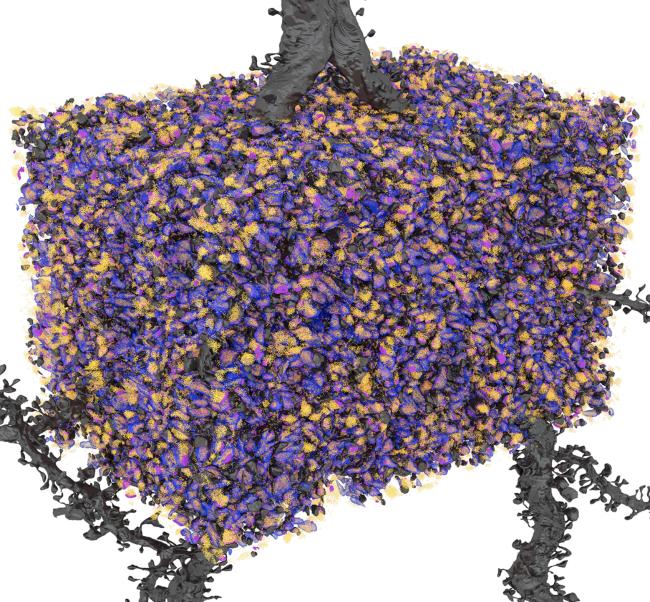
Study illuminates the structural features of memory formation at cellular and subcellular levels
NIH-funded study uses cutting-edge imaging techniques to reconstruct features underlying learning and memory in the mouse brain.
The Cognitive Debt of Digging Through Preprints
Your Brain on MIT Media Lab

Dopamine: Motivation, Salience and Learning - A Genetic Perspective
The "screw you" effect and other perils of informed volunteers
It's important to keep experimental subjects in the dark; this isn't hard when they're rats, but can be challenging when they're humans. An informed human

Problems of Proliferation — LessWrong
Scientific progress and its perils. TLDR: The vulnerable world hypothesis is likely correct. Once enormous amounts of cognitive labor start getting a…
Why boredom is anything but boring
Implicated in everything from traumatic brain injury to learning ability, boredom has become extremely interesting to scientists.
We Risk Programming Inequality into Our DNA - Slashdot
An anonymous reader writes:Imagine having a chip in your brain to boost your concentration, or pumping artificial blood into your veins to improve stamina. With gene editing, this may be possible. Scientists are pioneering the ability to tweak our DNA to wipe out disease and maybe even allow us to c...
First Brain-Wide Map of Decision-Making Charted In Mice - Slashdot
In a landmark collaboration across 22 labs, neuroscientists have created the first brain-wide map of decision-making in mice, tracking over 620,000 neurons across nearly 280 brain regions. They found that decision-making is distributed much more broadly than previously thought, involving not just "c...
Learning What Substance Is Suspected of Causing Alzheimer’s May Throw You Into an Existential Crisis
A surprisingly common substance was found to have a causal relationship with the kind of brain damage associated with Alzheimer's disease.