

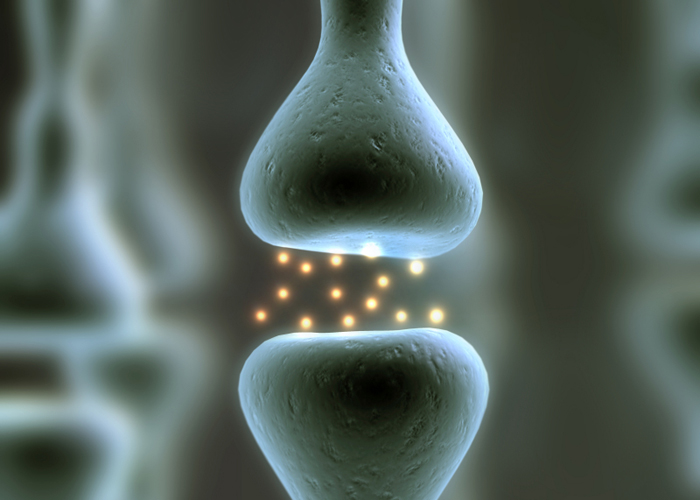
Neurons that talk to each other have proteins that mirror each other.
Neuroscientists Say They've Found An Entirely New Form of Neural Communication - Slashdot
Scientists think they've identified a previously unknown form of neural communication that self-propagates across brain tissue, and can leap wirelessly from neurons in one section of brain tissue to another -- even if they've been surgically severed. The discovery offers some radical new insights ab...

Open-source software reveals complete 3D architecture of brain cells
The neurons in our brain that underlie thought connect to each other using tiny branch-like structures on their surfaces known as dendritic spines. Now scientists at Columbia's Zuckerman Institute and ...

Biologists Discover Tiny Neural Computers in the Brain
Neuroscientists have learned that dendrites do more than just provide passive wiring in the brain. These nerve cell connectors also process information,

The Brain ‘Rotates’ Memories to Save Them From New Sensations | Quanta Magazine
Some populations of neurons simultaneously process sensations and memories. New work shows how the brain rotates those representations to prevent interference.
History of Neuroscience and AI: From neurons to the first artificial neural networks
NeuroAI’s Next Steps: Balancing Computation and Embodiment
Deep neural networks trained at scale now predict neural activity across sensory cortices, raising a question that divides neuroscience: does the convergence between artificial and biological representations constitute understanding, or does understanding require models of biological processes grounded in the embodied, evolved character of natural intelligence? In this Dual Perspectives article, Bing Brunton and Patrick Mineault articulate two research programs—Process and Convergence—to engage this question about the future of NeuroAI research. The conversation is organized around four questions that probe what scaled model–brain alignment reveals, what the brain is coupled to and evolved to do, what success beyond the lab looks like, and where the field should invest over the coming decade. Their exchanges reveal the distance between the two programs to be primarily about the level of analysis and priorities for what to build next. The conversation converges on shared ground: measure broadly, then distill to causal principles.
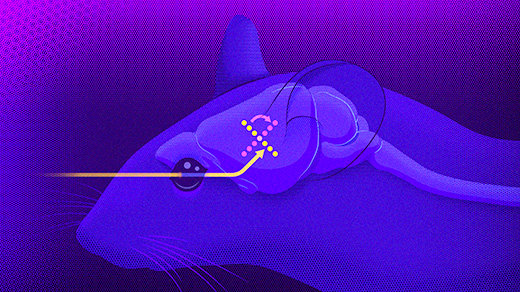
Watch a thought race across the surface of the brain | TechCrunch
Although neuroscientists have a general idea of what parts of the brain do what, catching them in the act is a difficult proposition. But UC Berkeley researchers have managed to do it, visualizing based on direct measurement the path of a single thought (or at least thread) through the brain.
Friend or Foe? Single Neurons in the Brain Control Social Interaction, Study Finds
The neurons, sprinkled across the frontal parts of the brain, are strikingly powerful. They tracked how players behaved—were they cooperative, or selfish?

Memory trace and timing mechanism localized to cerebellar Purkinje cells
The standard view of neural signaling is that a neuron can influence its target cell by exciting or inhibiting it. An important aspect of the standard view is that learning consists of changing the efficacy of synapses, either strengthening (long-term potentiation) or weakening (long-term depression) them. In studying how cerebellar Purkinje cells change their responsiveness to a stimulus during learning of conditioned responses, we have found that these cells can learn the temporal relationship between two paired stimuli. The cells learn to respond at a particular time that reflects the time between the stimuli. This finding radically changes current views of both neural signaling and learning., The standard view of the mechanisms underlying learning is that they involve strengthening or weakening synaptic connections. Learned response timing is thought to combine such plasticity with temporally patterned inputs to the neuron. We show here that a cerebellar Purkinje cell in a ferret can learn to respond to a specific input with a temporal pattern of activity consisting of temporally specific increases and decreases in firing over hundreds of milliseconds without a temporally patterned input. Training Purkinje cells with direct stimulation of immediate afferents, the parallel fibers, and pharmacological blocking of interneurons shows that the timing mechanism is intrinsic to the cell itself. Purkinje cells can learn to respond not only with increased or decreased firing but also with an adaptively timed activity pattern.

Neuroscientists show how neurons respond to sequences of familiar objects
The world grows increasingly more chaotic year after year, and our brains are constantly bombarded with images. A new study from Center for the Neural Basis of Cognition (CNBC), a joint project between ...

Making music together connects brains
When guitarists play together, networks of nerve cells are formed between their brains

The Neuroscience of Everybody's Favorite Topic
Why do people spend so much time talking about themselves?

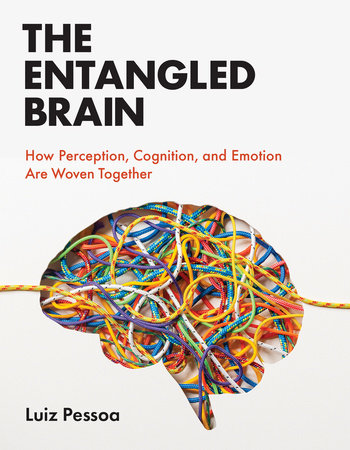
The Entangled Brain: How Perception, Cognition, and Emotion Are Woven Together
A new vision of the brain as a fully integrated, networked organ.Popular neuroscience accounts often focus on specific mind-brain aspects like addiction, c
A foundation model of vision, audition, and language for in-silico neuroscience | Research - AI at Meta
Cognitive neuroscience is fragmented into specialized models, each tailored to specific experimental paradigms, hence preventing a unified model of...
Kin 0.5.0 — A Bigger Brain, a Fuller Voice, and Your Kin 🎉 | Notion
This is one of our biggest steps yet: new ways to work with memory, a collective of Advisors we call Your Kin, smoother conversations, and a stronger voice.

Neuroscientists Roll Out First Comprehensive Atlas of Brain Cells - Slashdot
A slew of 17 studies reveals the first comprehensive list of all cell types in the primary motor complex, offering "a starting point for tracing cellular networks to understand how they control our body and mind and how they are disrupted in mental and physical disorders," reports ScienceDaily. From...