

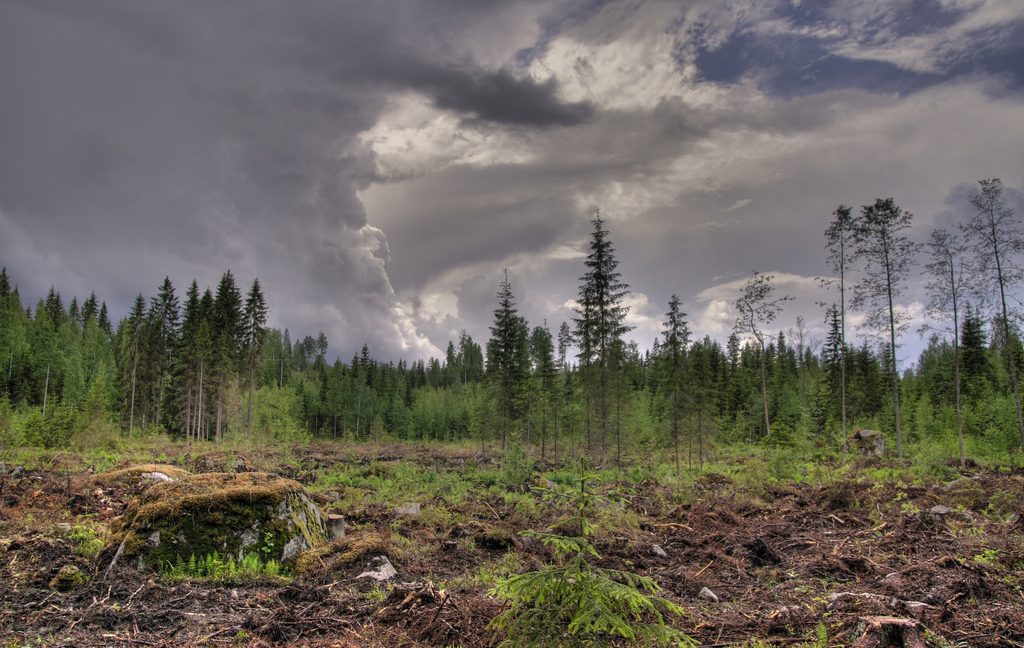
European national science academies report warns tepid emission cuts not enough.
Carbon Removal Technologies | YC Request for Startups
Climate change presents an existential threat to humanity. We are already seeing the effects and they are showing up faster and stronger than anticipated. A report by United Nations' scientific panel on climate change released this month expects the atmosphere-on our current trajectory-to warm up by 1.5 degrees Celsius by 2040. Even the effects of a 0.5 degrees increase will have far-reaching consequences. This research indicates that we are already past the tipping point; even if we significantly reduced emissions, climate change would continue (Source IPCC summary C3 section). We believe there's still time to make a change if we look both to renewal energy and CO2 removal.

Technological Optimism and the Unspoken Abandonment of Paris
On 7 October 2026, The Guardian published an article titled Scientists who put faith in technology are less likely to take climate action. The article reported on a study by the London School of Economics, which surveyed more than 9,000 scientists across 115 countries about their views on whether technology will largely solve the problems caused by climate change. The findings suggested that scientists expressing greater faith in technological solutions were less likely to engage in civic action or make significant changes to their own lifestyles.
Ex Oil-Engineer Turned Climate Whistleblower: We Face COLLAPSE | Aaron Bastani Meets Kevin Anderson
Home - ClimateAction.Tech
The climate crisis is happening all around us. As tech workers, we can use our skills to take and accelerate climate action.

Climate change: Five cheap ways to remove CO2 from the atmosphere
A new US study says that several low-cost technologies can be deployed right now to limit global warming.

We’re going to miss the 1.5 °C climate target. Now what?
The United Nations Environment Program released a report earlier this month saying the world – which is already experiencing roughly 1.3˚C of warming – will miss the 1.5˚C climate change target set by international negotiators over a decade ago.

6 Practical Skills You’ll Need To Survive In The Future
We’re not going to stop climate change, we should prepare accordingly

Climate change target of 2C is ‘dead’, says renowned climate scientist
Prof James Hansen says pace of global heating has been significantly underestimated, though other scientists disagree
How to solve climate change and make life more awesome
We already have all the tools we need to fix climate change. We just need to use them.

Our Planet Is Warming Faster Than We Realized
Climate scientists have come to the startling realization that — owing to inaccurate and sparse measurements prior to 2004 — we've been seriously

In Deep
The numbers are simply mind-blowing: up to £264 billion for a climate “solution” that will increase emissions. Has the government lost its mind?

Humans need to become smarter thinkers to beat climate denial | Dana Nuccitelli
Dana Nuccitelli: A new paper shows that climate myths consistently fail critical thinking tests

World Scientists’ Warning of a Climate Emergency 2022
We are now at “code red” on planet Earth. Humanity is unequivocally facing a climate emergency. The scale of untold human suffering, already immense, is ra

The Internet Eats Up Less Energy Than You Might Think (Published 2021)
New research by two leading scientists says some dire warnings of environmental damage from technology are overstated.

Heat-related urban mortality attributable to human-induced climate change in Europe in summer 2026
The summer of 2026 was characterised by a series of extreme heatwaves across Western Europe, with both monthly and annual temperature records broken repeatedly across many countries from May onwards. Several government agencies took the unprecedented step of issuing near-real-time estimates of the mortality associated with the most intense heat events, reflecting the severity of the threat to public health. In this study we combine probabilistic climate attribution with city- and age-specific temperature–mortality relationships to estimate heat-related mortality in 854 European cities during the summer months (June-August) and compare with counterfactual climate conditions representing a world without human-caused warming. We estimate 50,391 heat-related excess deaths across the 854 cities during the summer, with around two thirds of these attributable to anthropogenic climate change. These results highlight the threat from human-caused warming and the need for rapid emissions reductions alongside preparation and adaptation measures.

🌡️🔥Climate change isn't a distant threat—it's a public health crisis now. Our study shows heat-related deaths in many cities could surpass annual COVID-19 deaths in just 5–10 years at 3°C warming. Urgent action is needed! 👉 rdcu.be/d5rnL @natureportfolio.bsky.social #scientificreports

Rapid climate action is needed: comparing heat vs. COVID-19-related mortality
rdcu.be