


Babies’ pupils dilate when they have to make an inference—just like millennials.
Do newborn boys really tend to prefer a ‘mechanical object’ to a human face? Failure to assess the confounding effect of an exceptionally high caesarean section rate
We review a twenty year old paper on sex differences in human neonatal social perception, and identify a serious issue: a failure to assess whether the results were distorted by an exceptionally high Caesarean Section rate. This is in addition to a number of other methodological weaknesses, which together mean that there is too much ‘noise’ in the data to draw clear conclusions from the results. The paper’s stark conclusion to have ‘demonstrated’ biological sex differences is unsubstantiated and misleading, and it should no longer be considered a reliable reference point.
“Infantile amnesia” occurs despite babies showing memory activity
It looks like humans actively suppress our earliest memories.

Infantilizing babies helps them learn language
Pretend conversations early on lead to better vocabularies later.

Babies Are Prewired To Perceive the World - Slashdot
In an investigation of neural connectivity in 30 infants ranging from six to 57 days old (with an average age of 27 days), neuroscientists found that circuit wiring precedes, and thus may guide, regional specialization, shedding light on how knowledge systems emerge in the brain. An anonymous reader...

The myopia boom
Short-sightedness is reaching epidemic proportions. Some scientists think they have found a reason why.

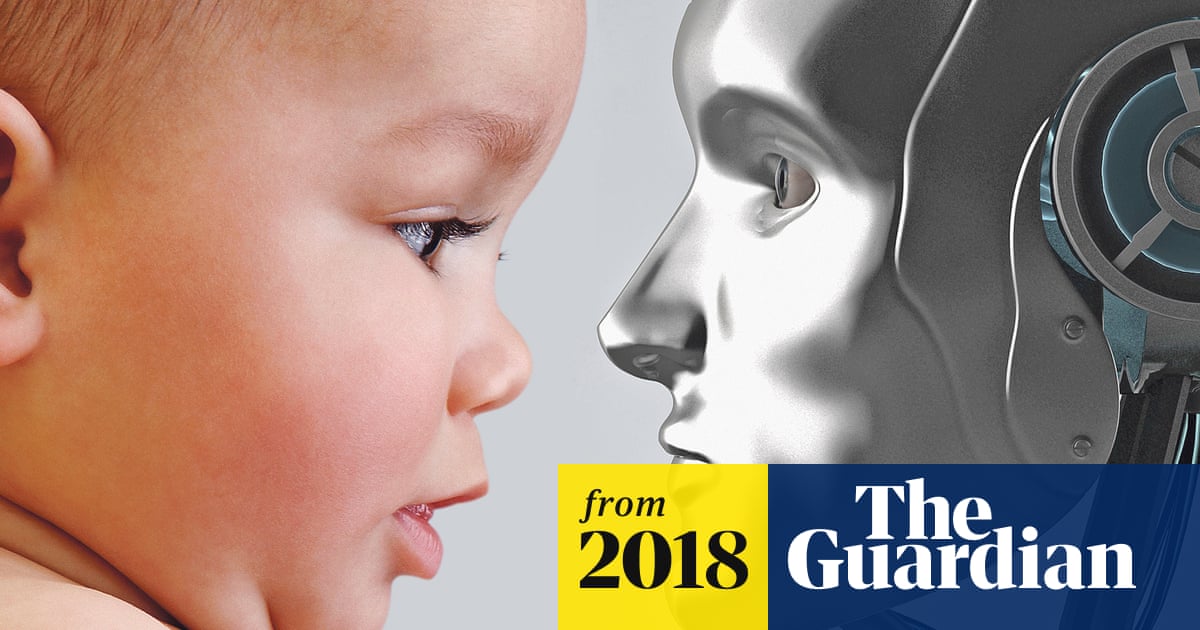
How babies learn – and why robots can’t compete
The long read: If we could understand how the infant mind develops, it might help every child reach their full potential. But seeing them as learning machines is not the answer
Newborn cognitive development: What are babies thinking and learning?
The newborn brain is busy processing information, searching for patterns, and learning. Here's a fascinating look at newborn cognitive development.

How Learning Braille Changes Brain Structure Over Time - Neuroscience News
A study of people learning to read braille reveals how white matter reorganizes itself across different brain regions and timeframes to meet the brain's needs.

Study: Names change how an infant's memory encodes objects
A new study shows that naming conventions will change how infants represent objects in their memories.

Gaslighting a Child Can Sound Like These 9 Phrases
A developmental psychologist calls out some phrases that might surprise you.

People who are blind from birth never develop schizophrenia – what this tells us about the psychiatric condition
Understanding why people born blind never develop schizophrenia could transform how we think about and treat one of medicine’s most baffling conditions.

How a flawed idea is teaching millions of kids to be poor readers
For decades, schools have taught children the strategies of struggling readers, using a theory about reading that cognitive scientists have repeatedly debunked. And many teachers and parents don't know there's anything wrong with it.

Computer Vision Syndrome
In no point in human history have people been staring at bright screens just a few feet from their face like they are today. Computer vision syndrome or CVS (no…

Pluralistic: There’s no such thing as “age verification” (19 May 2026) – Pluralistic: Daily links from Cory Doctorow
"Object permanence" is the ability to understand that even if you can't see something, it still exists. Most toddlers acquire a thorough sense of object permanence by the age of two. But when it comes to technopolitics, object permanence eludes even full-grown lawmakers. These motherfuckers would lose a game of peek-a-boo.
Babies Learning Language: My lab's AI policies and norms
Blog about fatherhood, langauge, developmental psychology, and cognitive science.
Metacognitive Myopia: A Major Obstacle on the Way to Rationality
The notion of metacognitive myopia refers to a conspicuous weakness of the quality control of memory and reasoning processes. Although people are often remarkably sensitive even to complex samples of information when making evaluative judgments and decisions, their uncritical and naive tendency to take the validity of sampled information for granted constitutes a major obstacle to rational behavior. After illustrating this phenomenon with reference to prominent biases (base-rate neglect, misattribution, perseverance), we decompose metacognitive myopia into two distinct but intertwined functions, monitoring and control. We offer explanations for why effectively monitoring the biases resulting from information sampling in an uncertain world is so difficult and why the control function is severely restricted by the lack of volitional control over mental actions. Because of these and other difficulties, metacognitive myopia constitutes a major obstacle to rational judgment and decision making.
