


Researchers suggest modeling chaotic circuits to demonstrate quantum supremacy.
Scientists Predict Quantum Jumps, Turning Physics on Its Head
We're one major step closer to useful quantum computers.

Harnessing Chaos: How the Brain Turns Randomness into Robust Memory | Columbia Engineering
AI systems reveal how random fluctuations in brain activity may help stabilize memories

Meet Willow, our state-of-the-art quantum chip
Our new quantum chip demonstrates error correction and performance that paves the way to a useful, large-scale quantum computer.

Experiments Suggest Humans Can Directly Observe the Quantum
Further exploration of "quantum weirdness" in the physics lab.

A Cryptography Engineer’s Perspective on Quantum Computing Timelines
The risk that cryptographically-relevant quantum computers materialize within the next few years is now high enough to be dispositive, unfortunately.

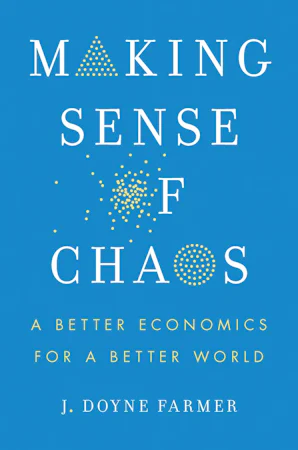
Making Sense of Chaos
From a pioneer in the field of complexity science and chaos theory, a plan for solving the world’s most pressing problems “Farmer convincingly argues t...
Finally, a Problem That Only Quantum Computers Will Ever Be Able to Solve | Quanta Magazine
Computer scientists have been searching for years for a type of problem that a quantum computer can solve but that any possible future classical computer cannot. Now they’ve found one.

Physicists Discover Entirely New Quantum States When Graphene Meets Itself
Strap yourselves in.

A Post-Quantum Future for Let's Encrypt
Let’s Encrypt is committed to a post-quantum-safe Web PKI. The path we’re planning to take is Merkle Tree Certificates (“MTCs”), a new approach that adds post-quantum authentication to the web without sacrificing the speed and reliability that have made TLS universal. This post is about these plans and why we believe MTCs are worth pursuing as a key to a post-quantum future. An increasingly urgent problem For much of the last several years, the conversation about post-quantum cryptography has been a conversation about encryption. The reasoning was straightforward: an attacker who records encrypted traffic today might be able to decrypt it years from now once quantum computers can break the underlying math. Authentication, the part of TLS that indicates a server is who it says it is, has been a less urgent problem. A quantum computer needs to forge a signature in real time, not retroactively, so threats to authentication hinge on the existence of a cryptographically relevant quantum computer (CRQC).

For The First Time Ever, Scientists Discover Fractal Patterns in a Quantum Material
This is weird.

DEF CON 33 - Post Quantum Panic: When Will the Cracking Begin, & Can We Detect it? - K Karagiannis
Neural Networks Are Already Clean
A working hypothesis about neurons, generalization, and the ecology of circuits.

Which Computational Universe Do We Live In? | Quanta Magazine
Cryptographers want to know which of five possible worlds we inhabit, which will reveal whether truly secure cryptography is even possible.

Quantum Leap: Google Claims Its New Quantum Computer Provides Evidence That We Live In A Multiverse
Google's quantum computer, Willow, suggests evidence for a multiverse by leveraging computations across parallel universes.
