


Can do basic character, object recognition.
Neural Computer: A New Machine Form Is Emerging
A research essay on Neural Computer: how it differs from agents, world models, and conventional computers; what runtime and CNC would mean; what current prototypes already show; and how software and hardware might change.
Neural Networks Are Already Clean
A working hypothesis about neurons, generalization, and the ecology of circuits.
Why are neural networks and cryptographic ciphers so similar?
Several neural network design principles are almost identical to cipher design principles.

History of Neuroscience and AI: From neurons to the first artificial neural networks
Adventures in Neural Rendering
In recent years, neural networks have started to find their way into many areas of rendering. While antialiasing and upscaling are probably the most well‑known uses, they’re far from the only ones—…

Intel launches its next-generation neuromorphic processor—so, what’s that again?
Intel's Loihi processors have electronics that behave a lot like neurons.

The Coming AI Cataclysm | Compact
In the decade since the neural architecture version of Google Translate and the invention of transformer architecture for neural networks, we have experienced the most rapid technological breakthroughs since at least World War II, and possibly ever.
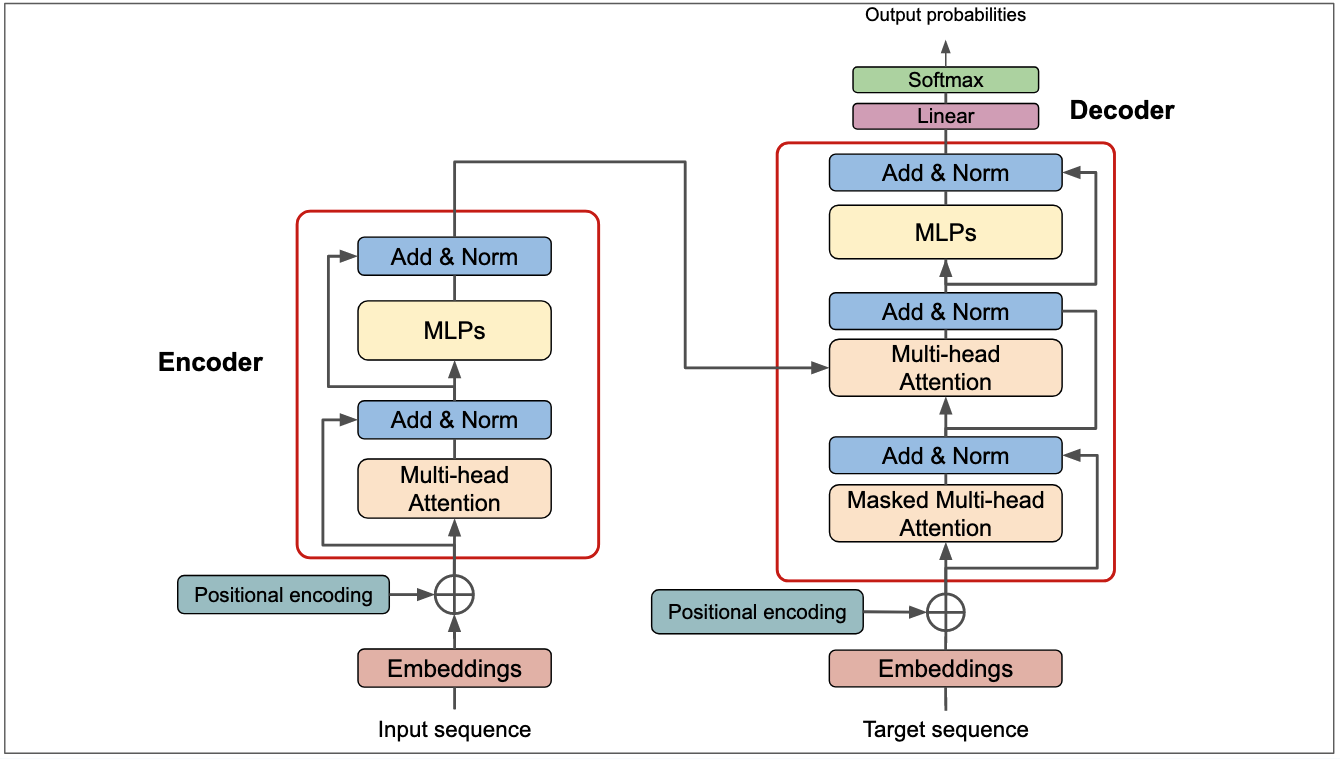
The Transformer Blueprint: A Holistic Guide to the Transformer Neural Network Architecture
A deep dive into Transformer, a neural network architecture that was introduced in the famous paper “attention is all you need” in 2017, its applications, impacts, challenges and future directions
Tutorial — Lasagne 0.2.dev1 documentation
This tutorial will walk you through building a handwritten digits classifier using the MNIST dataset, arguably the “Hello World” of neural networks. More tutorials and examples can be found in the Lasagne Recipes repository.
The brain in the machine: How AI could help explain how we think | IBM
Scientists are using large AI models to predict patterns of brain activity at scale, a development that researchers say is pushing neuroscience toward a new kind of digital imaging.

An Introduction to Transformers
The transformer is a neural network component that can be used to learn useful representations of sequences or sets of data-points. The transformer has driven recent advances in natural language processing, computer vision, and spatio-temporal modelling. There are many introductions to transformers, but most do not contain precise mathematical descriptions of the architecture and the intuitions behind the design choices are often also missing. Moreover, as research takes a winding path, the explanations for the components of the transformer can be idiosyncratic. In this note we aim for a mathematically precise, intuitive, and clean description of the transformer architecture. We will not discuss training as this is rather standard. We assume that the reader is familiar with fundamental topics in machine learning including multi-layer perceptrons, linear transformations, softmax functions and basic probability.


On Learning to Ride Your Brain
Your brain is already a bicycle, AI is a motorcycle, a regular computer is power tools

AI Models Need a Virtual Machine
Neural networks are more useful when placed in a suitable, specialized environment.

Ask HN: How to self-learn electronics? | Hacker News
I want to emphasize the importance of developing the intuition behind the theory. It's vital, and the lack of intuition is why so many people find a complex, theoretical topic difficult. If they had spent time developing their intuition, then they would not struggle so much to understand and remember the theory.
Nintil - Links (51)
The return of the US Aerospace industry Simulating a biological neuron requires an entire 5-8 layer neural network (1000 artificial neurons per neuron) ARM Chin…