

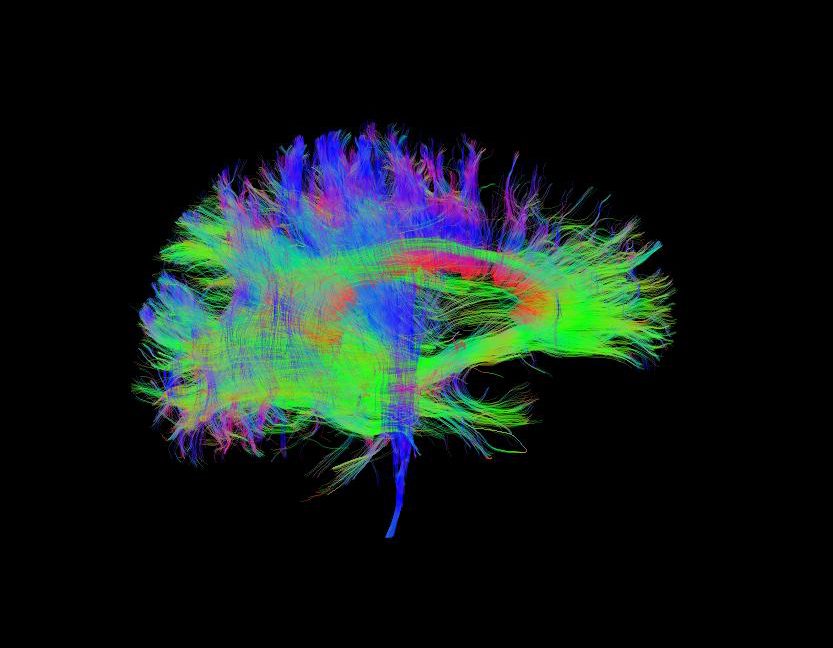
New work ties things in to the gene behind Fragile X Syndrome, a genetic disease.
Major autism study uncovers biologically distinct subtypes, paving the way for precision diagnosis and care
The research is a transformative step toward understanding the condition's genetic underpinnings and potential for personalized care.

AI-designed nucleases build on nature’s design
Researchers used AI to create variants of a CRISPR-Cas12-like nuclease, some of which show increased editing activity

Microbial-based treatment reverses autism spectrum social deficits in mouse models
An unconventional approach has successfully reversed deficits in social behaviors associated with autism spectrum disorders (ASD) in genetic, environmental and idiopathic mouse models of the condition. ...

Avoiding Ableist Language: Suggestions for Autism Researchers - Kristen Bottema-Beutel, Steven K. Kapp, Jessica Nina Lester, Noah J. Sasson, Brittany N. Hand, 2021
In this commentary, we describe how language used to communicate about autism within much of autism research can reflect and perpetuate ableist ideologies (i.e....

Prime editing-installed suppressor tRNAs for disease-agnostic genome editing
Precise genome-editing technologies such as base editing1,2 and prime editing3 can correct most pathogenic gene variants, but their widespread clinical application is impeded by the need to develop new therapeutic agents for each mutation. For diseases that are caused by premature stop codons, suppressor tRNAs (sup-tRNAs) offer a more general strategy. Existing approaches to use sup-tRNAs therapeutically, however, require lifelong administration4,5 or show modest potency, necessitating potentially toxic overexpression. Here we present prime editing-mediated readthrough of premature termination codons (PERT), a strategy to rescue nonsense mutations in a disease-agnostic manner by using prime editing to permanently convert a dispensable endogenous tRNA into an optimized sup-tRNA. Iterative screening of thousands of variants of all 418 human tRNAs identified tRNAs with the strongest sup-tRNA potential. We optimized prime editing agents to install an engineered sup-tRNA at a single genomic locus without overexpression and observed efficient readthrough of premature termination codons and protein rescue in human cell models of Batten disease, Tay-Sachs disease and cystic fibrosis. In vivo delivery of a single prime editor that converts an endogenous mouse tRNA into a sup-tRNA extensively rescued disease pathology in a model of Hurler syndrome. PERT did not induce detected readthrough of natural stop codons or cause significant transcriptomic or proteomic changes. Our findings suggest the potential of disease-agnostic therapeutic genome-editing approaches that require only a single composition of matter to treat diverse genetic diseases.
New, reversible CRISPR method can control gene expression while leaving underlying DNA sequence unchanged
Over the past decade, the CRISPR-Cas9 gene editing system has revolutionized genetic engineering, allowing scientists to make targeted changes to organisms' DNA. While the system could potentially be ...

Beyond Deficits:
The FCLA-SFGA Model and a Paradigm Shift in Autism Understanding

The Autistic Perspective on 'Cures' and 'Treatments':
Why Attempts to Remove Autism Constitute Erasure
Alexithymia Reframed:
Understanding Autistic Emotional Architecture as Overlay, Not Fusion

Stimming as High-Precision System:
The Phenomenology of Autistic Self-Regulation and Its Value to Humanity
RCCX Genetic Module Theory
NOTE: This page is modified from a summary of findings available at the RCCX and Illness website.

How DNA Editing Could Change Life on Earth
Researchers hope to use the powerful biological tool to alter the genetic destiny of species and eliminate diseases.

Is AI on the Spectrum?
Some key traits of generative AI bear a striking similarity to autism spectrum disorder. Why does this matter?

(PDF) Highly efficient genome editing using oocyte-specific z cas9 transgenic zebrafish
PDF | Since its first application, CRISPR/Cas9 rapidly becomes a routine technique to perform genome editing in a variety of biological systems. To... | Find, read and cite all the research you need on ResearchGate

The sudden rise of AuDHD: what is behind the rocketing rates of this life-changing diagnosis?
Just over a decade ago, autism and ADHD were thought to be mutually exclusive. But in recent years, all that has changed

Structure and evolution-guided design of minimal RNA-guided nucleases
The design of RNA-guided nucleases with properties not limited by evolution can expand programmable genome-editing capabilities. However, generating diverse multidomain proteins with robust enzymatic properties remains challenging. Here, we use a protein design strategy that couples a structure-guided inverse-folding model with evolution-informed residue constraints to generate active, divergent variants of TnpB, a minimal CRISPR-Cas12–like nuclease, termed SynTnpBs. High-throughput screening of artificial intelligence–generated variants yielded editors that retained or exceeded wild-type activity in bacterial, plant, and human cells. Cryo–electron microscopy–based structure determination of the most divergent variant revealed stabilizing contacts in the RNA–DNA interfaces across conformations, demonstrating the design potential of this approach. Together, these results establish a strategy for creating non-natural RNA-guided nucleases and conformationally active nucleic acid binders, enlarging the designable protein space. , Editor’s summary Enzyme design and engineering are challenging in part because there are few ways to improve catalytic activity but many ways to impair it. Evolution-aware approaches can leverage information from our collection of known natural sequences to guide the generation of diverse engineered enzymes that are more likely to retain function. Skopintsev et al . demonstrated engineering of an RNA-guided nuclease using inverse protein-folding models. Screening of candidates nominated by their approach revealed improvement of genome-editing activity. An experimental structure revealed how conformational dynamics are changed in the engineered enzymes, stabilizing the key RNA-DNA interface. —Michael A. Funk
