


Theory protects from "personal intuitions and culturally biased folk theories."
What the Gospel of Innovation Gets Wrong
Clayton M. Christensen’s popular theory of disruption is founded on panic, anxiety, and shaky evidence.

Reconstructing the Social Construction of Reality
ABSTRACT What is the relationship between legitimation and institutionalization? We take a fresh look at a more complex and nuanced landscape than has previously been documented. Our approach is to view legitimation and institutionalization as separate, though related, processes. We engage in theory building to develop a typology suggesting four different ways in which the social construction of reality can be achieved: instantiating (mutual causal emergence, coming into being), realizing (legitimating toward institutionalization), aspiring (legitimating from institutionalization) and missing (mutual causal suppression, unrealized potential). Our typology contributes a new foundational framework for the sociology of knowledge for better explicating socially constructed reality, not only in periods of stability but also in the uncertainty of liquid times and states.

We Interrupt This Program . . .
During liminal periods of all kinds, social hierarchies may be reversed or temporarily dissolved, continuity of tradition may become…

Differences Between Tight and Loose Cultures: A 33-Nation Study
The differences across cultures in the enforcement of conformity may reflect their specific histories. , With data from 33 nations, we illustrate the differences between cultures that are tight (have many strong norms and a low tolerance of deviant behavior) versus loose (have weak social norms and a high tolerance of deviant behavior). Tightness-looseness is part of a complex, loosely integrated multilevel system that comprises distal ecological and historical threats (e.g., high population density, resource scarcity, a history of territorial conflict, and disease and environmental threats), broad versus narrow socialization in societal institutions (e.g., autocracy, media regulations), the strength of everyday recurring situations, and micro-level psychological affordances (e.g., prevention self-guides, high regulatory strength, need for structure). This research advances knowledge that can foster cross-cultural understanding in a world of increasing global interdependence and has implications for modeling cultural change.
Weirding Diary: 9
I'm noticing a resurgence of interest in classical systems theory that mildly worries me. I suspect it is being driven by an infectious desire to theorize the…

Matt Darling (@besttrousers)
“Darling’s thesis is the first compelling explanation I’ve seen for the vibecession…What surprises me, though, is how comparatively little attention this theory has gotten”. I am being silenced.
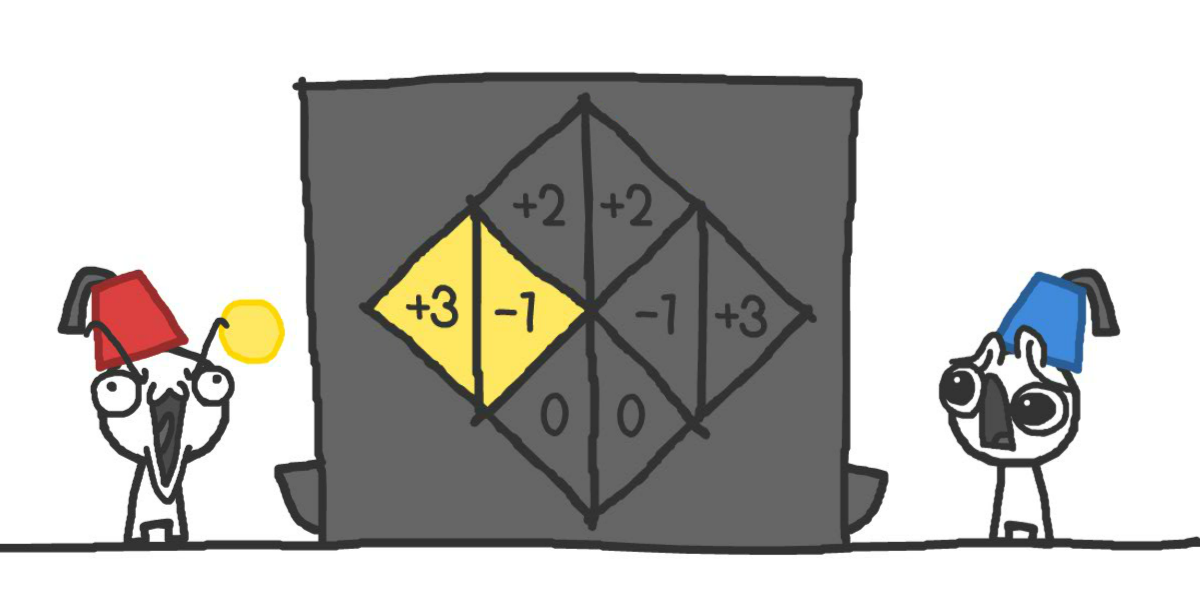
The Evolution of Trust
an interactive guide to the game theory of why & how we trust each other
Hyperstition
A hyperstition is a self-fulfilling idea that becomes real through its own existence.[1] The price of Bitcoin,[2] Roko's Basilisk,[3] accelerationism,[4] and the QAnon conspiracy theory[5] have all been described as hyperstitions. Self-fulfilling prophecies are a kind of hyperstition where predictions are made about the future that become true by being known.[6] The concept was coined by Nick Land in 1995 as a portmanteau of hyper- and superstition,[7] during his time at the Cybernetic Culture Research Unit developing the philosophy of accelerationism.[3][8]
What Theory is Not, Theorizing Is
Imitation and Extinction: The Case Against Reality | Los Angeles Review of Books
LARB publishes daily without a paywall as part of our mission to make rigorous, incisive, and engaging writing on every aspect of literature, culture, and the arts freely accessible to the public. Help us continue this work with your tax-deductible donation today!

New paradigm for psychology just dropped
OR: the ideas your mother warned you about

Alienation, Idealization, and Modeling
Models allow us to expose, explore, and excavate our assumptions. This is especially true for the sorts of assumptions that concern scholars of marginalization and resistance, who aim to show how ...

Half of social-science studies fail replication test in years-long project
Results from massive, ‘eagerly awaited’ initiative reinforce concerns about the credibility of science — but raise hope for solutions.

Truth in Inconvenience
What do ZIRP, the AI panic, and the meaning crisis have in common?

Truth in Inconvenience
What do ZIRP, the AI panic, and the meaning crisis have in common?
When we lose shared experiences, we lose humanity Isolationism is the number one issue Isolationism leads to ignorance, ignorance leads to fear, fear leads to hate

Sam Clemente
People are biking by and slowing down as they pass, others walking by stop for a moment to listen, the kids are running around while a big family sits down to dinner The people in cars are oblivious to the purest human experience happening as they drive by