

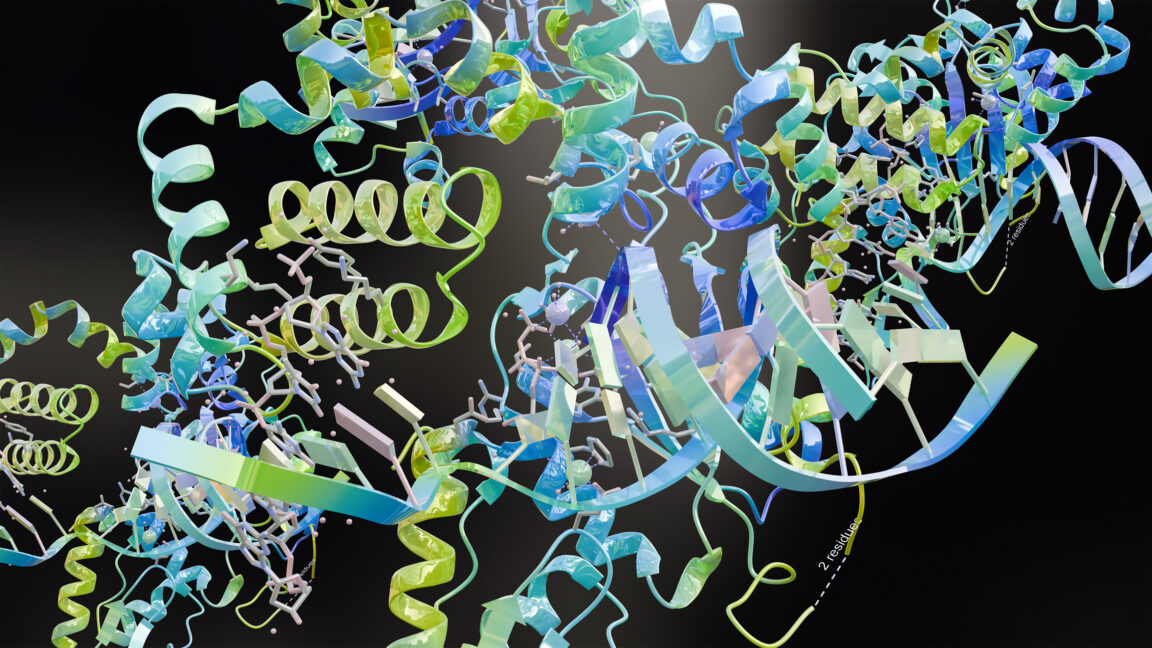
Intended to help with biosecurity, it works with a popular AI protein design tool.
Strengthening biosecurity in the era of AI
AI is reshaping biology, unlocking breakthroughs while raising new risks. Learn how smarter safeguards can strengthen biosecurity without slowing innovation.

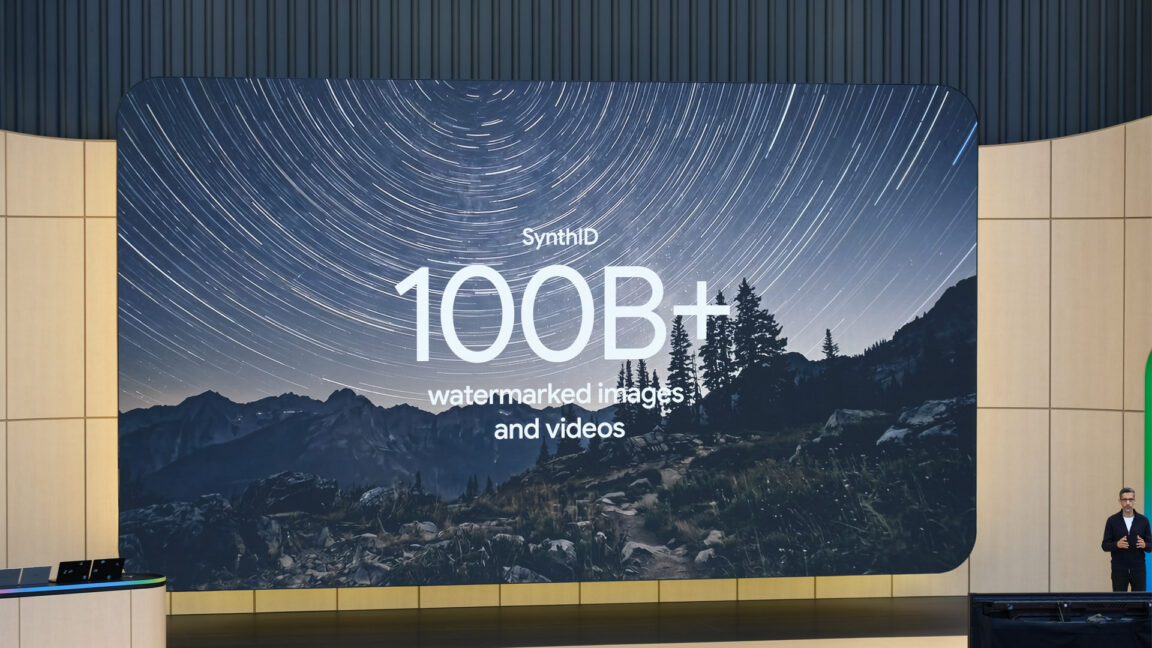
Google's SynthID AI watermarking tech is being adopted by OpenAI, Nvidia, and more
AI content is getting good, but SynthID might be able to help tell truth from fiction.
Google joins AI watermarking coalition as deepfakes hit mainstream tech platforms
Google said it will look to use a project from Adobe called Content Credentials, which adds metadata that indicates AI editing and allows viewers to verify images, videos, audio and documents.
Google made a watermark for AI images that you can’t edit out
For now, SynthID works only in Google’s ecosystem — but it could someday be all over the internet

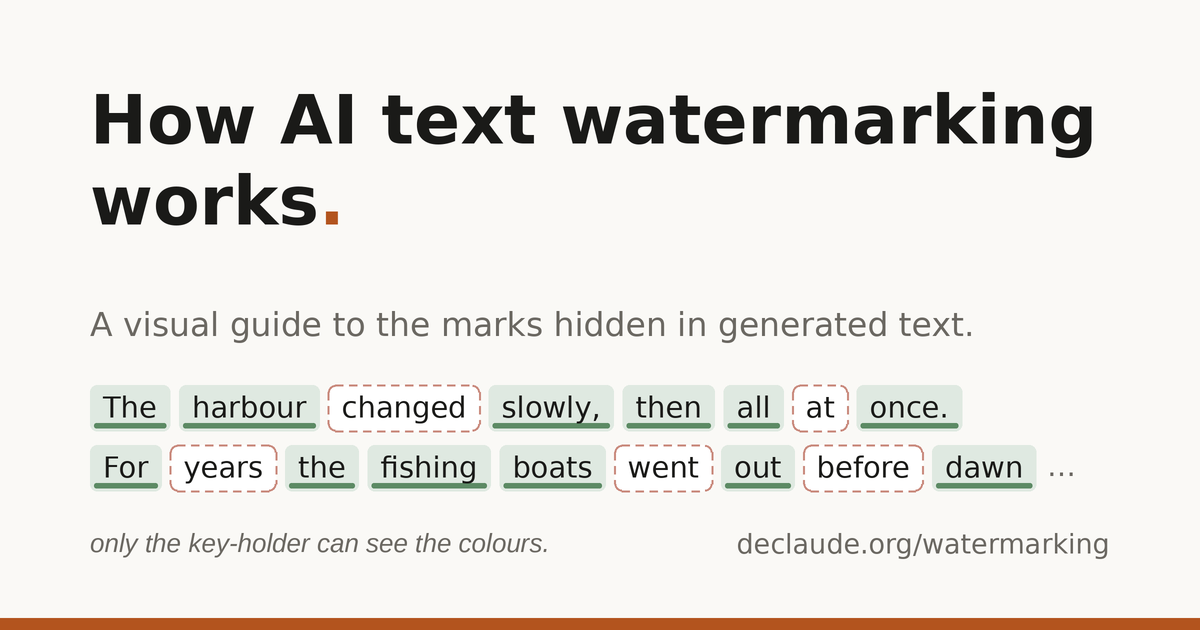
How AI text watermarking works
A gentle visual guide to how a statistical mark hides inside generated text, and what erases it.
Biohub releases a world model of protein biology
Open AI models used for a wide range of scientific applications, including accelerating the design of therapeutic molecules.
Dean W. Ball on Twitter / X
Ok two more:1. AI will enable the design of custom enzymes that can catalyze industrial processes and chemical manufacturing faster than existing methods. In some cases this will make existing chemicals cheap enough that it becomes possible to use them for totally new use… https://t.co/jL3bNm0s9w— Dean W. Ball (@deanwball) October 9, 2026
Watermarks aren’t the silver bullet for AI misinformation
Digital watermarks are easily broken and abused.

Identifying AI-generated images with SynthID
Today, in partnership with Google Cloud, we’re beta launching SynthID, a new tool for watermarking and identifying AI-generated images. It’s being released to a limited number of Vertex AI customers using Imagen, one of our latest text-to-image models that uses input text to create photorealistic images. This technology embeds a digital watermark directly into the pixels of an image, making it imperceptible to the human eye, but detectable for identification. While generative AI can unlock huge creative potential, it also presents new risks, like creators spreading false information — both intentionally or unintentionally. Being able to identify AI-generated content is critical to empowering people with knowledge of when they’re interacting with generated media, and for helping prevent the spread of misinformation.

AI watermarking has a decentralisation problem
With AI watermarking inference providers mark their output as AI generated. But for the system to become useful, lots of independent providers need to collaborate together in a decentralised system without overarching governance.
No. 022: Palomar proof registry, autonomous protein design, synthetic consensus - The Hallway Track
The Hallway Track No. 022 - How AI is affecting the practice of science
Import AI 475: Swarm scaling; Google DeepMind watermarks biology; and the AI science economy
Who chooses what AI gets to do?

Meta made its own AI detection system. It should have just used Google’s
Content Seal has a lot of catching up to do.

Measuring AI’s capability to accelerate biological research in the wet lab
OpenAI introduces a real-world evaluation framework to measure how AI can accelerate biological research in the wet lab. Using GPT-5 to optimize a molecular cloning protocol, the work explores both the promise and risks of AI-assisted experimentation.
AI* watermarking/labeling/non-AI authentication

* I’m neither “pro-AI” nor “anti-AI.” I’ve been blocked for being perceived as both. —Actually, I’m honestly more anti-AI than pro-AI thus far, aside from specialized models and specific use cases, but I’m willing to consider information that’s new to me
Google figures out how to watermark AI-designed proteins

Japanese publishers are fighting imposter news sites with a cryptographic signature
AI watermarking has a decentralisation problem

Apple’s new iPhone camera mode promises to prove your photo isn’t AI
human.json

Instagram’s AI detection is a mess (again)