

Compare AI model performance on AA-Omniscience: Knowledge and Hallucination Benchmark. A benchmark measuring factual recall and hallucination across various economically relevant domains.
“Hallucinating” AI models help coin Cambridge Dictionary’s word of the year
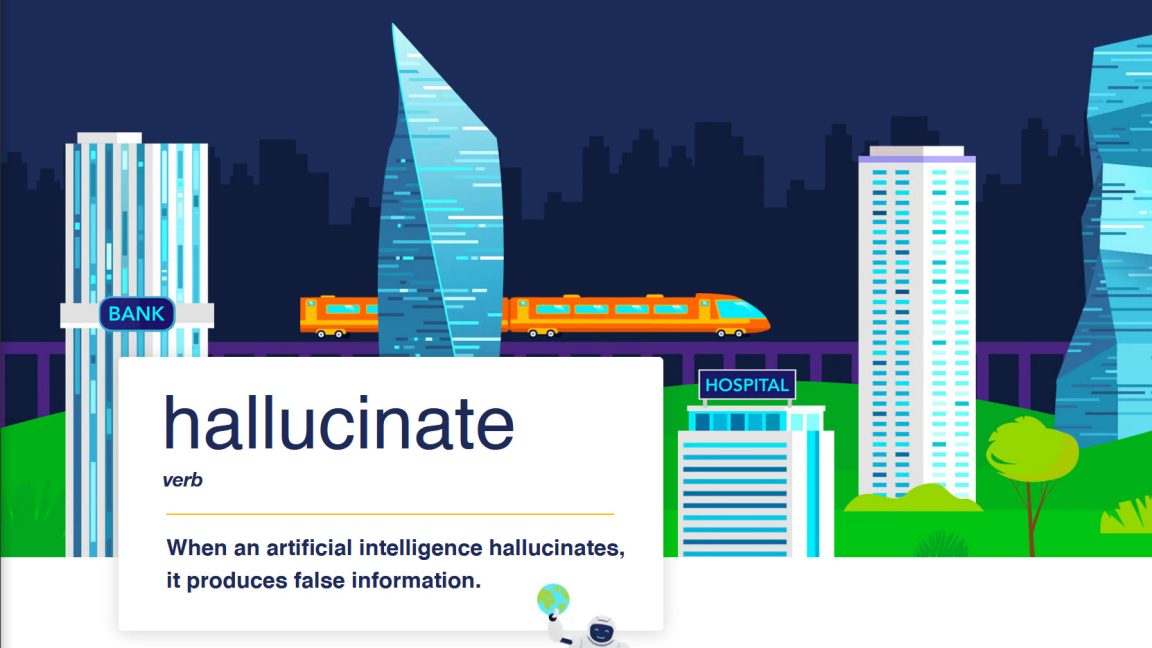
Cambridge: "When an artificial intelligence hallucinates, it produces false information."
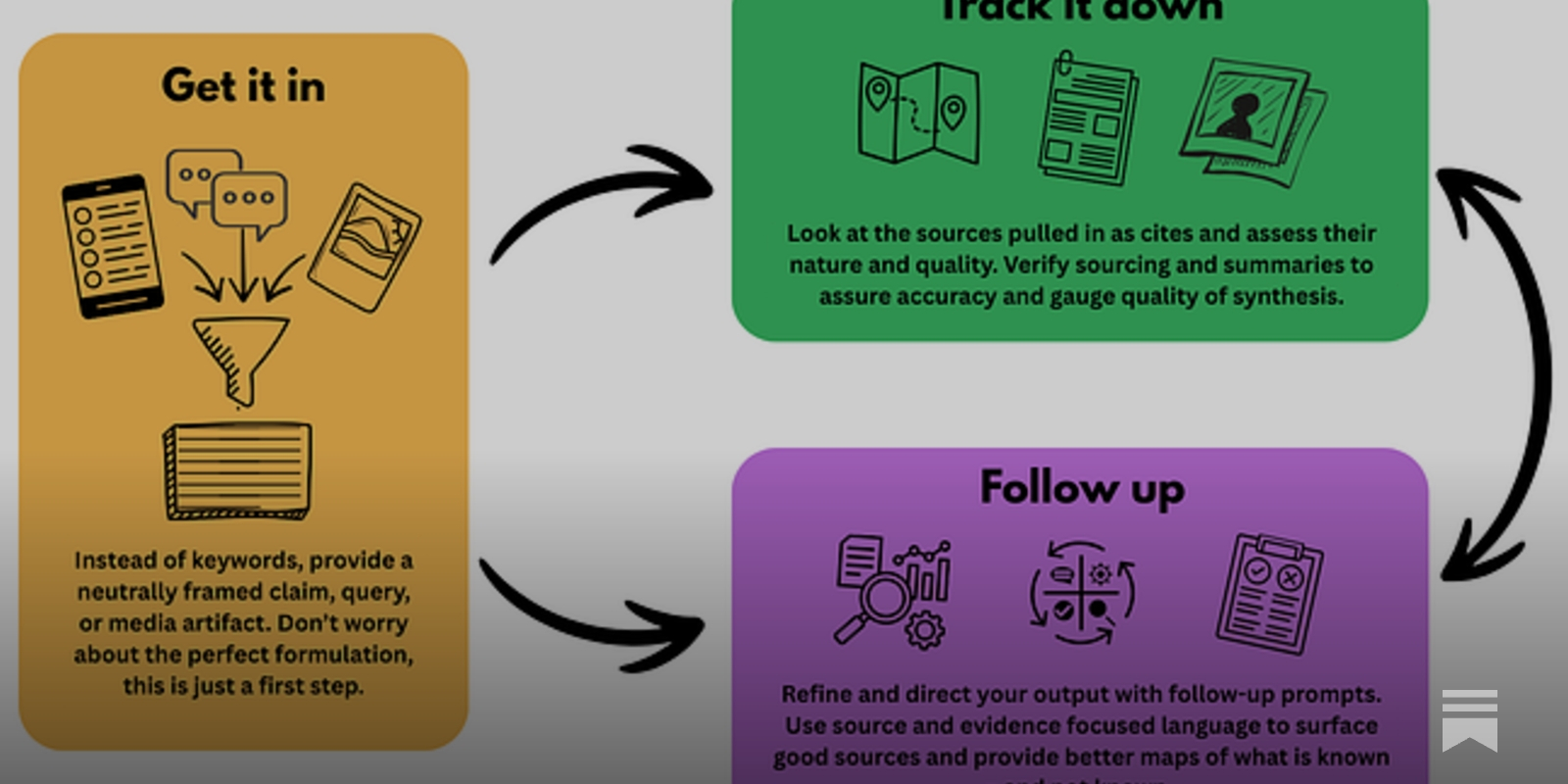
We're not taking the fact-checking powers of AI seriously enough. It's past time to start.
Some notes on the Nobel Prize hallucination that wasn't
OpenAI admits AI hallucinations are mathematically inevitable, not just engineering flaws
In a landmark study, OpenAI researchers reveal that large language models will always produce plausible but false outputs, even with perfect data, due to fundamental statistical and computational limits.

A Definition of AGI
The lack of a concrete definition for Artificial General Intelligence (AGI) obscures the gap between today's specialized AI and human-level cognition. This paper introduces a quantifiable framework to address this, defining AGI as matching the cognitive versatility and proficiency of a well-educated adult. To operationalize this, we ground our methodology in Cattell-Horn-Carroll theory, the most empirically validated model of human cognition. The framework dissects general intelligence into ten core cognitive domains-including reasoning, memory, and perception-and adapts established human psychometric batteries to evaluate AI systems. Application of this framework reveals a highly "jagged" cognitive profile in contemporary models. While proficient in knowledge-intensive domains, current AI systems have critical deficits in foundational cognitive machinery, particularly long-term memory storage. The resulting AGI scores (e.g., GPT-4 at 27%, GPT-5 at 57%) concretely quantify both rapid progress and the substantial gap remaining before AGI.

What are AI hallucinations? Why AIs sometimes make things up
When AI systems try to bridge gaps in their training data, the results can be wildly off the mark: fabrications and non sequiturs researchers call hallucinations.

What are AI hallucinations? Why AIs sometimes make things up
When AI systems try to bridge gaps in their training data, the results can be wildly off the mark: fabrications and non sequiturs researchers call hallucinations.
Why Language Models Hallucinate
Like students facing hard exam questions, large language models sometimes guess when uncertain, producing plausible yet incorrect statements instead of admitting uncertainty. Such "hallucinations" persist even in state-of-the-art systems and undermine trust. We argue that language models hallucinate because the training and evaluation procedures reward guessing over acknowledging uncertainty, and we analyze the statistical causes of hallucinations in the modern training pipeline. Hallucinations need not be mysterious -- they originate simply as errors in binary classification. If incorrect statements cannot be distinguished from facts, then hallucinations in pretrained language models will arise through natural statistical pressures. We then argue that hallucinations persist due to the way most evaluations are graded -- language models are optimized to be good test-takers, and guessing when uncertain improves test performance. This "epidemic" of penalizing uncertain responses can only be addressed through a socio-technical mitigation: modifying the scoring of existing benchmarks that are misaligned but dominate leaderboards, rather than introducing additional hallucination evaluations. This change may steer the field toward more trustworthy AI systems.
Why Language Models Hallucinate
Like students facing hard exam questions, large language models sometimes guess when uncertain, producing plausible yet incorrect statements instead of admitting uncertainty. Such "hallucinations" persist even in state-of-the-art systems and undermine trust. We argue that language models hallucinate because the training and evaluation procedures reward guessing over acknowledging uncertainty, and we analyze the statistical causes of hallucinations in the modern training pipeline. Hallucinations need not be mysterious -- they originate simply as errors in binary classification. If incorrect statements cannot be distinguished from facts, then hallucinations in pretrained language models will arise through natural statistical pressures. We then argue that hallucinations persist due to the way most evaluations are graded -- language models are optimized to be good test-takers, and guessing when uncertain improves test performance. This "epidemic" of penalizing uncertain responses can only be addressed through a socio-technical mitigation: modifying the scoring of existing benchmarks that are misaligned but dominate leaderboards, rather than introducing additional hallucination evaluations. This change may steer the field toward more trustworthy AI systems.
People are not friction
The Gell-Mann Amnesia Effect of AI is a pretty well documented phenomenon: The Gell-Mann amnesia effect is a cognitive bias describing the tendency of individuals to critically assess media reports in a domain they are knowledgeable about, yet continue to trust reporting in other areas despite recognizing similar potential inaccuracies.
AI Comes for Academics. Can We Rely on It?
By now, the fact that artificial intelligence can hallucinate is, I hope, well known. There are countless examples of platforms like ChatGPT giving the wrong answer to a straightforward question or

AI hallucinations are getting worse – and they're here to stay
An AI leaderboard suggests the newest reasoning models used in chatbots are producing less accurate results because of higher hallucination rates. Experts say the problem is bigger than that

Titans + MIRAS: Helping AI have long-term memory
Ali Behrouz, Student Researcher, Meisam Razaviyayn, Staff Researcher, and Vahab Mirrokni, VP and Google Fellow, Google Research

What does good AI memory feel like? - Cameron
Thoughts about co-3, my thinking partner
Standards around generative AI
Accuracy, fairness and speed are the guiding values for AP’s news report, and we believe the mindful use of artificial intelligence can serve these values and over time improve how we work.
Memorize details from AI research papers
The second brain of AI researchers for machine learning, computer vision and natural language processing paper reviews.
Don't Use Deep Research (Until You Watch This) | Gemini, OpenAI, and Perplexity Deep Research