

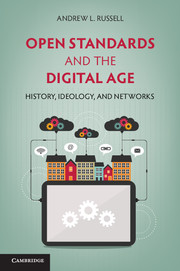
Cambridge University Press, 2014 Available in hardcover, paperback, and e-book formats: Cambridge University Press How did openness become a foundational value for the networks of the twenty-first …
The Evolution Of Open | blarg
This started its life as a pair of posts to the Mozilla governance forum, about the mismatch between private communication channels and our principles of open development. It’s a little long-winded, but I think it broadly applies not just to Mozilla but to open source in general. This version of it interleaves those two posts into something I hope is coherent, if kind of rambly. Ultimately the only point I want to make here is that the nature of openness has changed, and while it doesn’t mean we need to abandon the idea as a principle or as a practice, we can’t ignore how much has changed or stay mired in practices born of a world that no longer exists.
The Paradox of Open
Numerous organisations and initiatives have been launched with a belief in openness and free knowledge. Their proponents placed their bets on the combined power of networked information services and new governance models for the production and sharing of content and data. We – as members of this broad movement – were among those who believed it possible to leverage this combination of power and opportunity to build a more democratic society, unleashing the power of the internet to create universal access to knowledge and culture. For us, such openness meant not only freedom, but also presented a path to justice and equality.
The Politics of Open Infrastructures: Power, Governance, and Justice in Digital Knowledge Practices
This volume examines how openness is designed, governed, contested and lived in contemporary digital knowledge infrastructures. From open source software and internet standards, to citizen science platforms, public sector data systems and alternative computing practices, the book shows that infrastructures are never neutral technical backbones.

Open Access
The Internet lets us share perfect copies of our work with a worldwide audience at virtually no cost. We take advantage of this revolutionary opportunity whe...

The Open Machine // The Open Machine
The Open Machine is a cultural research studio that invokes unlikely alliances across technology and culture to advance ethical, open forms of coordination. We conduct research to produce media, events, and frameworks that capture and project the patterns that emerge.

Open Source Explained — Open Indie
Musings on the concept of ‘open source’, in the broadest possible definition of the term. Also an invitation to become a participant in ...

Reframing “Open Source AI” with Meredith Whittaker: AI Impact Summit 2026
The Ethos of Open Source – Mitchell Baker
A couple of months ago I started posting about how I want to build a better world through technology and how I’ll be doing that outside of Mozilla going forward. The original post has many references to “open” and “open source.” It’s easy to think that we all understand open source and we just need to apply it to new settings. I feel differently: we need to shape our collective understanding of the ethos of open source.
The Meaning of Open
There are a lot of misconceptions about what open means, when it is the right strategy to apply, and the fundamental tradeoffs that go…
Open Source is Broken
The Open Source movement, as championed by the OSI, prizes absolute openness above all other concerns...

Open Source is Broken
The Open Source movement, as championed by the OSI, prizes absolute openness above all other concerns...
Publishing Beyond the Market: Open Access, Care, and the Commons
<I>Publishing Beyond the Market</I> argues that the move to open access should focus less on the free accessibility of research outputs and more on who controls the publications and infrastructures for scholarly communication. By deploying theoretical literature on science and technology studies, care ethics, and the commons, the book critically interrogates open access and reimagines a more ethical future for researcher-led publishing. A case study of Plan S—the multifunder European policy for open access publishing—explores its tendency to rehearse all the failures of commercialisation. Through critical engagement with the open access landscape, the book reveals the shortcomings of market-centric and policy-based approaches to open access book and journal publishing, particularly their tendency to reinforce conservatism, commercialism, and private control of publishing.<BR /><BR /> Going forward, <I>Publishing Beyond the Market</I> explores the importance of collectivity and democratic governance within the transition to open access publishing. It suggests that developing a commons-based, scholar-led publishing landscape through a series of presses that are each managed by working academics could offer a productive counterpoint to marketised systems of open access and subscription publishing. In weaving themselves together in order to "scale small" these publishing initiatives would act as a counter-hegemonic project based on mutual reliance and care. By illustrating how these projects build toward a commons-based publishing future, and how they may complement other approaches to publishing within university presses and libraries, the book culminates in an argument for the infrastructures, policies, and forms of governance needed to nurture such a collective vision.

The open authorial principle: supporting networks of authors in creating externalisable designs
As part of the Digital Library's transition to Open Access, new features for researchers are available in the Premium Edition. Click here to learn more.
