


A scientist-driven nonprofit accelerating discovery by promoting innovation and transparency in life science communication through preprints and open peer review.
Coordinating Research Assessment And Publishing Reform: Action Groups – ASAPbio
Connect with focused ASAPbio groups working on specific aspects of scientific communication, from preprint review to community engagement.
Center for Open Science
At the Center for Open Science, our mission is to increase openness, integrity, and reproducibility of scholarly research. Promoting these practices within the research funding and publishing communities accelerates scientific progress

ScienceOpen
Ideal for sharing early results, building dialogue, and gaining recognition — all while staying flexible for future publication.
The Story behind the Science: Preprints of pandemic potential—how bioRxiv and medRxiv brought preprints to the life sciences
ABSTRACT The bioRxiv and medRxiv preprint servers brought preprinting to the life sciences and played a critical role in disseminating COVID research during the pandemic. Here, I reflect on the birth of bioRxiv and medRxiv and the crucial role so many members of the community played, our experience during the pandemic, and the launch of the new non-profit organization set up to oversee the servers. The pandemic was a stress test for bioRxiv and medRxiv that demonstrated their value and robustness. Under the umbrella of openRxiv, they are now poised to become long-term infrastructure underpinning a new publishing ecosystem.

Making sense of preprints by adding context – The Publish Your Reviews initiative - LSE Impact
Improving scientific publishing is often framed as an issue of openness and speed and less often as one of context. In this post, Ludo Waltman and Jessica Polka make the case for a more contextualised approach to open access publishing and preprinting, and introduce the Publish Your Reviews initiative. Launched today by ASAPbio, the initiative

Introducing Hypothesis commenting on bioRxiv and medRxiv: an updated way to engage with preprints - openRxiv
An important part of our mission at openRxiv is to collaborate with other organizations to improve science communication and promote interoperability. Preprints are just one part of the research workflow, and we want to ensure they are effectively integrated with the tools and communities that drive scientific progress. Today, we’re excited to share about another…
Guest Post - Do we need (r)evolution in peer review? - The Scholarly Kitchen
Whether peer review needs revolution or evolution may be the wrong question. The more pressing one is whether the academic community is prepared to let scientific ideas be published, contested, and refined in public, rather than behind closed doors.

Empowering science communities with open, democratic, researcher-owned infrastructure.
We’re building communities and tech for publishing, curating, sharing, and discussing research online using ATProto and other decentralized protocols.

Empowering science communities with open, democratic, researcher-owned infrastructure.
We’re building communities and tech for publishing, curating, sharing, and discussing research online using ATProto and other decentralized protocols.
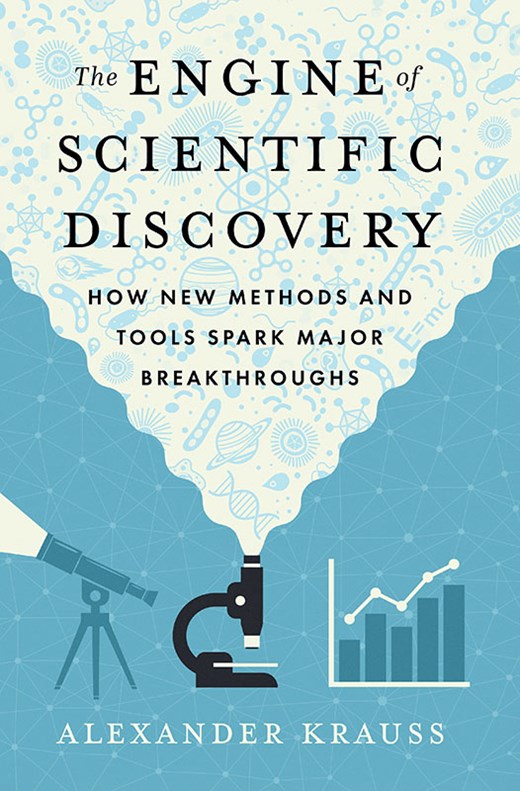
The Engine of Scientific Discovery: How New Methods and Tools Spark Major Breakthroughs
Abstract. How do we spark new scientific discoveries? Why do some breakthroughs seem even accidental? And most importantly, how can we accelerate them and
Reinventing Discovery
How the internet and powerful online tools are democratizing and accelerating scientific discovery

eLife Pathways home page
Moving beyond legacy publishing requires interoperable open-source infrastructure. With Wellcome’s support, we are evolving eLife’s technology to anchor a collaborative network, partnering with the open science community to reshape the communication and assessment of global research.

Meet Biomni – an AI-powered biomedical co-scientist
In creating a comprehensive, AI-enabled research agent for the biomedical sciences, Stanford researchers hope to speed innovation by eliminating the tedium of scientific legwork.

Claude for Life Sciences
Discover how Claude accelerates life sciences research with new scientific connectors, skills, and improved performance for drug discovery and clinical work.
I'm convinced that open social protocols like #atproto have a crucial role to play in the future of science. Excited to share MOSAIC - our best effort at articulating the thesis, why it matters, and how to build and fund it (in collab w/ @exgenesis.ingroup.social ) 🧵

MOSAIC — Modular Open Science, AI & Collective Intelligence
mosaic-program.orgGreat post! There is a clear parallel to how the @atproto.science ecosystem can disrupt the extractive science publishing industry & bring on millions of researchers with a new cooperative research stack. The system is ripe for disruption - see also @edhagen.net's post in the thread linked below >

Joe Basser
Who wants to make money in the Atmosphere? 🙋♂️
