


May Beaubrun MEd, BCBA brings awareness to the issues experienced by Black families with children with autism.
Disparities in Autism Ascertainment in Black Children
Tune in to learn about disparities in autism diagnosis and access to supports.

Our Babies Aren’t 'Bad'—Understanding Autism in Black Children
Too many Black children—especially our Black boys—are being labeled as “bad." Let's get understanding of autism in Black children.

Black Women and the Care Agenda | National Partnership for Women & Families
Black women are family caregivers – and they need flexibility and economic supports to make the best decisions for themselves and their families

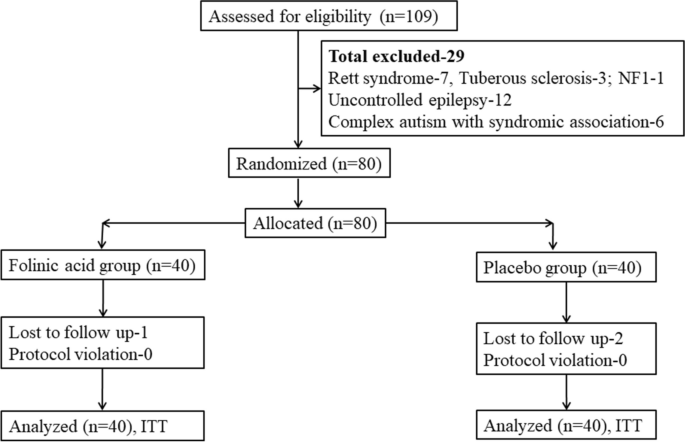
RETRACTED ARTICLE: Efficacy of oral folinicacid supplementation in children with autism spectrum disorder: a randomizeddouble-blind, placebo-controlled trial
Oral folinic acid has shown potential to improve symptoms in childrenwith autism spectrum disorder (ASD). However, randomized controlled trials (RCTs)are limited. This double-blind, placebo-controlled RCT aimed to compare changes inChildhood Autism Rating Scale (CARS) scores in children with ASD aged 2–10 years,among folinic acid (2 mg/kg/day, maximum of 50 mg/day) and placebo groups at24 weeks, in comparison with baseline. Both the groups received standard care (ABAand sensory integration therapy). Secondary objectives included changes inbehavioral problems measured by the Child Behavior Checklist (CBCL) and serum levelsof anti-folate receptor autoantibodies and folic acid, correlated with changes inautism symptom severity. Out of the 40 participants recruited in each group, 39 and38 participants completed the 24-week follow-up in the folinic acid and placebogroups, respectively. The change in CARS score was higher in the folinic acid group(3.6 ± 0.8) compared to the placebo group (2.4 ± 0.7, p < 0.001). Changes in CBCL total score and CBCL internalizingscore were also better in the folinic acid group (19.7 ± 9.5 vs. 12.6 ± 8.4 and15.4 ± 7.8 vs. 8.5 ± 5.7, p < 0.001 for both).High-titer anti-folate receptor autoantibodies were positive in 32/40 and 33/40cases in the folinic acid and placebo groups, respectively (p = 0.78). In the placebo group, improvement in CARS score wascomparable regardless of autoantibody status (p = 0.11), but in the folinic acid group, improvement was morepronounced in the high-titer autoantibody group (p = 0.03). No adverse reactions were reported in either group.
The Missed Neurodiversity: advocate for recognition and resources for gifted individuals - BC Association of Clinical Counsellors
Note: This article includes additional questions and answers and supplementary resources from the Member Profile interview with Debbie Clelland, RCC, published in the Fall 2021 issue of BCACC’s Insights magazine. “When […]
Avoiding Ableist Language: Suggestions for Autism Researchers - Kristen Bottema-Beutel, Steven K. Kapp, Jessica Nina Lester, Noah J. Sasson, Brittany N. Hand, 2021
In this commentary, we describe how language used to communicate about autism within much of autism research can reflect and perpetuate ableist ideologies (i.e....

Second Version of Google Glass as a Wearable Socio-Affective Aid: Positive School Desirability, High Usability, and Theoretical Framework in a Sample of Children with Autism
Background Computerized smartglasses are being developed as an assistive technology for daily activities in children and adults with autism spectrum disorder (ASD). While smartglasses may be able to help with educational and behavioral needs, their usability and acceptability in children with ASD is largely unknown. There have been reports of negative social perceptions surrounding smartglasses use in mainstream populations, a concern given that assistive technologies may already carry their own stigma. Children with ASD may also have a range of additional behavioral, developmental, and social challenges when asked to use this emerging technology in school and home settings. Objective The usability and acceptability of Glass Enterprise Edition (Glass), the successor to Google Glass smartglasses, were explored in children with ASD and their caregivers. Methods Eight children with ASD and their caregivers were recruited to attend a demonstration session with Glass smartglasses the week they were publicly released. The children had a wide range of ability, including limited speech to speaking, and represented a full range of school ages (6 to 17 years). Children and caregivers were interviewed about their experience of using the smartglasses and whether they would use them at school and home. Results All 8 children succeeded in using Glass and did not feel stressed (8/8, 100%) or experience any overwhelming sensory or emotional issues during the session (8/8, 100%). All 8 children (8/8, 100%) endorsed that they would be willing to wear and use the device in both home and school settings. Caregivers felt the experience was fun for the children (8/8, 100%), and most caregivers felt the experience was better than they had expected (6/8, 75%). Conclusions A wide age and ability range of children with ASD used Glass immediately after it was released and found it to be usable and acceptable. Despite concerns about potential stigma or social acceptability, all of the children were prepared to use the technology in both home and school settings. Encouragingly, most caregivers noted a very positive response. There were no behavioral, developmental, or social- or stigma-related concerns during or after the session. Smartglasses may be a useful future technology for children with ASD and are readily accepted for use by children with ASD and their caregivers.

Beyond Deficits:
The FCLA-SFGA Model and a Paradigm Shift in Autism Understanding
Why “Autism Is Not A Spectrum” – But Not For the Reasons You May Have Heard
By Dr Chloe Farahar | Autistic Researcher, Project Manager for Learning Disability and Autism at Kent and Medway Mental Health NHS Trust, and Founder of Aucademy CIC The Spectrum Was Never Fit For …

Autistic People Care Too Much, Research Says » NeuroClastic
Autistic people care too much. Autism research pathologizes autistic people when autistic people stick to their morals and are selfless people

The Autistic Perspective on 'Cures' and 'Treatments':
Why Attempts to Remove Autism Constitute Erasure
Defining autistic burnout through experts by lived experience: Grounded Delphi method investigating #AutisticBurnout
Although commonly described on social media by autistic people, there is little recognition of autistic burnout in the academic literature. Anecdotally, autistic burnout is described as a debilitating condition that severely impacts functioning, is linked to suicidal ideation and is driven by the stress of masking and living in an unaccommodating neurotypical world. We sought to define autistic burnout using the Grounded Delphi method. Autistic adults, experts by the lived experience of autistic burnout (n = 23), co-produced and agreed to a definition intended for clinicians and the autistic and autism communities. A thick description and conceptual framework were developed from the open-ended round 1 survey, with a high majority of agreement reached in the round 3 survey. Autistic burnout was defined as a highly debilitating condition characterised by exhaustion, withdrawal, executive function problems and generally reduced functioning, with increased manifestation of autistic traits – and distinct from depression and non-autistic burnout. Further work is needed to differentiate autistic burnout from other conditions and to build clinician understanding of the accompanying complexity to be considered in treatment planning. Lay abstract Autistic burnout has been commonly described in social media by autistic people. There is little mention of autistic burnout in the academic literature. Only one recent study has used interviews and reviews of social media descriptions to try to understand autistic burnout. Anecdotally, autistic burnout is a very debilitating condition that reduced people’s daily living skills and can lead to suicide attempts. It is suggested that autistic burnout is caused by the stress of masking and living in an unaccommodating neurotypical world. We wanted to create a definition of autistic burnout that could be used by clinicians and the autism community. We used the Grounded Delphi method, which allowed autistic voice to lead the study. Autistic adults who had experienced autistic burnout were considered as experts on the topic, in the co-production of this definition. The definition describes autistic burnout as a condition involving exhaustion, withdrawal, problems with thinking, reduced daily living skills and increases in the manifestation of autistic traits. It is important for future research that there is a specific description of the condition. In practice, it is important for clinicians to be aware that autistic burnout is different from depression. Psychological treatments for depression potentially could make autistic burnout worse. Further awareness of autistic burnout is needed, as well as further research to prove this condition is separate from depression, chronic fatigue and non-autistic burnout.
Defining autistic burnout through experts by lived experience: Grounded Delphi method investigating #AutisticBurnout
Although commonly described on social media by autistic people, there is little recognition of autistic burnout in the academic literature. Anecdotally, autistic burnout is described as a debilitating condition that severely impacts functioning, is linked to suicidal ideation and is driven by the stress of masking and living in an unaccommodating neurotypical world. We sought to define autistic burnout using the Grounded Delphi method. Autistic adults, experts by the lived experience of autistic burnout (n = 23), co-produced and agreed to a definition intended for clinicians and the autistic and autism communities. A thick description and conceptual framework were developed from the open-ended round 1 survey, with a high majority of agreement reached in the round 3 survey. Autistic burnout was defined as a highly debilitating condition characterised by exhaustion, withdrawal, executive function problems and generally reduced functioning, with increased manifestation of autistic traits – and distinct from depression and non-autistic burnout. Further work is needed to differentiate autistic burnout from other conditions and to build clinician understanding of the accompanying complexity to be considered in treatment planning. Lay abstract Autistic burnout has been commonly described in social media by autistic people. There is little mention of autistic burnout in the academic literature. Only one recent study has used interviews and reviews of social media descriptions to try to understand autistic burnout. Anecdotally, autistic burnout is a very debilitating condition that reduced people’s daily living skills and can lead to suicide attempts. It is suggested that autistic burnout is caused by the stress of masking and living in an unaccommodating neurotypical world. We wanted to create a definition of autistic burnout that could be used by clinicians and the autism community. We used the Grounded Delphi method, which allowed autistic voice to lead the study. Autistic adults who had experienced autistic burnout were considered as experts on the topic, in the co-production of this definition. The definition describes autistic burnout as a condition involving exhaustion, withdrawal, problems with thinking, reduced daily living skills and increases in the manifestation of autistic traits. It is important for future research that there is a specific description of the condition. In practice, it is important for clinicians to be aware that autistic burnout is different from depression. Psychological treatments for depression potentially could make autistic burnout worse. Further awareness of autistic burnout is needed, as well as further research to prove this condition is separate from depression, chronic fatigue and non-autistic burnout.
“Having All of Your Internal Resources Exhausted Beyond Measure and Being Left with No Clean-Up Crew”: Defining Autistic Burnout
Background: Although autistic adults often discuss experiencing “autistic burnout” and attribute serious negative outcomes to it, the concept is almost completely absent from the academic and clinical literature. Methods: We used a community-based participatory research approach to conduct a thematic analysis of 19 interviews and 19 public Internet sources to understand and characterize autistic burnout. Interview participants were autistic adults who identified as having been professionally diagnosed with an autism spectrum condition. We conducted a thematic analysis, using a hybrid inductive–deductive approach, at semantic and latent levels, through a critical paradigm. We addressed trustworthiness through multiple coders, peer debriefing, and examination of contradictions. Results: Autistic adults described the primary characteristics of autistic burnout as chronic exhaustion, loss of skills, and reduced tolerance to stimulus. They described burnout as happening because of life stressors that added to the cumulative load they experienced, and barriers to support that created an inability to obtain relief from the load. These pressures caused expectations to outweigh abilities resulting in autistic burnout. Autistic adults described negative impacts on their health, capacity for independent living, and quality of life, including suicidal behavior. They also discussed a lack of empathy from neurotypical people and described acceptance and social support, time off/reduced expectations, and doing things in an autistic way/unmasking as associated in their experiences with recovery from autistic burnout. Conclusions: Autistic burnout appears to be a phenomenon distinct from occupational burnout or clinical depression. Better understanding autistic burnout could lead to ways to recognize, relieve, or prevent it, including highlighting the potential dangers of teaching autistic people to mask or camouflage their autistic traits, and including burnout education in suicide prevention programs. These findings highlight the need to reduce discrimination and stigma related to autism and disability. Lay summary Why was this study done? Autistic burnout is talked about a lot by autistic people but has not been formally addressed by researchers. It is an important issue for the autistic community because it is described as leading to distress; loss of work, school, health, and quality of life; and even suicidal behavior. What was the purpose of this study? This study aimed to characterize autistic burnout, understand what it is like, what people think causes it, and what helps people recover from or prevent it. It is a first step in starting to understand autistic burnout well enough to address it. What did the researchers do? Our research group—the Academic Autism Spectrum Partnership in Research and Education—used a community-based participatory research approach with the autistic community in all stages of the study. We analyzed 9 interviews from our study on employment, 10 interviews about autistic burnout, and 19 public Internet sources (five in-depth). We recruited in the United States by publicizing on social media, by word of mouth, and through community connections. When analyzing interviews, we took what people said at face value and in deeper social context, and looked for strong themes across data. What were the results of the study? The primary characteristics of autistic burnout were chronic exhaustion , loss of skills , and reduced tolerance to stimulus . Participants described burnout as happening because of life stressors that added to the cumulative load they experienced, and barriers to support that created an inability to obtain relief from the load. These pressures caused expectations to outweigh abilities resulting in autistic burnout . From this we created a definition: Autistic burnout is a syndrome conceptualized as resulting from chronic life stress and a mismatch of expectations and abilities without adequate supports. It is characterized by pervasive, long-term (typically 3+ months) exhaustion, loss of function, and reduced tolerance to stimulus. Participants described negative impacts on their lives, including health , capacity for independent living , and quality of life , including suicidal behavior. They also discussed a lack of empathy from neurotypical people. People had ideas for recovering from autistic burnout including acceptance and social support , time off/reduced expectations , and doing things in an autistic way/unmasking . How do these findings add to what was already known? We now have data that autistic burnout refers to a clear set of characteristics, and is different from workplace burnout and clinical depression. We have the start of a model for why autistic burnout might happen. We know that people have been able to recover from autistic burnout and have some insights into how. What are the potential weaknesses in the study? This was a small exploratory study with a convenience sample. Although we were able to bring in some diversity by using three data sources, future work would benefit from interviewing a wider range of participants, especially those who are not white, have higher support needs, and have either very high or very low educational attainment. More research is needed to understand how to measure, prevent, and treat autistic burnout. How will these findings help autistic adults now or in the future? These findings validate the experience of autistic adults. Understanding autistic burnout could lead to ways to help relieve it or prevent it. The findings may help therapists and other practitioners recognize autistic burnout, and the potential dangers of teaching autistic people to mask autistic traits. Suicide prevention programs should consider the potential role of burnout. These findings highlight the need to reduce discrimination and stigma around autism and disability.
Question for ethicists: Is an Expression of Concern enough when authors claim to have trained ML to diagnose autism from facial appearance, using a collection of facial images that were scraped from the Intertubes without niceties like "formal diagnosis" or "consent"? pubpeer.com/publications/F138C3793F91B979…
PubPeer - ASD2-TL∗ GTO: Autism spectrum disorders detection via transf...
pubpeer.com