


[3 media attachments] Dear friends, Please gather around for a long post about #WSocial and how they are responding to critiques. I have noticed a trend: W Social leaders and staunch supporters are describing any critical posts about the company as "targeted disinformation." Its CEO said they will soon have a technical solution in place for this. Oh?!? 🔗: https://mu.social/profile/anna.wsocial.eu/post/3mtqufy6g4s2r I suppose the "targeted disinformation" claims are about recent posts by the likes of me and @pallenberg about troubling hate speech that is allowed on W Social. Claims backed by hard evidence, in the form of screenshots and video captures. (I am increasingly doing screen recordings of problematic posts and interactions by W Social people because they have a tendency to delete evidence - like an infamous comment on a video by the Instutute for Remigration). ⬇️ ⬇️ ⬇️ Discrediting sources, renaming evidence as "disinformation" and creating a victim narrative has a long, storied history. ⬆️ ⬆️ ⬆️ But I'm digressing. I speak up about W Social because: - Mainstream media runs PR fluff about them; - Horrid hate speech on the platform is completely unmoderated. W Social is currently showing the limits of free speech absolutism. Its CEO wrote: "We don’t need W to become another echo chamber." Reminds you of something? Atmosphere user @echna.bsky.social astutely remarked that "W Social is on an X speedrun, without ever having been like Twitter." 🔗: https://mu.social/profile/echna.bsky.social/post/3mtqlknzork2t Bluesky, #Blacksky, and #Northsky have mechanisms in place to report hate speech - and I am super thankful for that. As of today, I cannot report to W Social posts by their users that contain hate speech. The W Social moderation list's only purpose is to make a distinction between verified users and bots. Compare it with Blacksky's moderation list and be amazed (see screenshots). What's the big deal about the lack of content moder…
We're getting the social media crisis wrong
The bigger problem isn't disinformation. It's degraded democratic publics

We're getting the social media crisis wrong
The bigger problem isn't disinformation. It's degraded democratic publics
Disinformation and grievance narratives
Synthese - Disinformation is often defined as misleading content intended to instill false beliefs. But this definition is too narrow. We need to focus instead on its broader epistemic effects....

Verification Handbook | DataJournalism.com
This book equips journalists with the knowledge to investigate on disinformation and media manipulation.

Data Feminism for AI
Attacks on women and trans people are not happening in a vacuum. Communications scholars W. Lance Bennett and Marianne Kneuer recently argued that we are witnessing the intensification of "illiberal public spheres" around the world (Bennett and Kneuer, 2023). These are characterized by a set of anti-democratic communications tactics that include the denigration and exclusion of minoritized people, targeted attacks on the press and political institutions, and transgression of norms of civil discourse. Such tactics are enabled and amplified by the social media platforms owned by Big Tech, whose business model elevates attention above all other metrics, such that they profit richly off extremism, threats, spectacle, and lies. The success of this corporate partnership with right-wing extremism is evident in the proliferation of book bans (Magnusson, 2024), the demonization of DEI and critical race theory (Crenshaw, 2022), and mob tactics to doxx, intimidate, misrepresent, and otherwise silence people that study misinformation, speak out against racial and gender violence, or rule against insurrectionists (Edmonds, 2024). At the same time, we have seen the continued work of feminists, including Latin American, Indigenous, and abolitionist feminists in the US and globally, doing the work of imagining alternate worlds (Cullors, 2021; Davis, 2022; Ricaurte, 2019; Simpson, 2017). This paper represents our own first attempt to imagine a more equitable, sustainable, feminist world for AI research.
So maybe now we can agree that having an unchecked research integrity militia who unfortunately has the ear of the press and increasingly that of the the publishers, but who fiercely rejects any… | Ioana A. Cristea
So maybe now we can agree that having an unchecked research integrity militia who unfortunately has the ear of the press and increasingly that of the the publishers, but who fiercely rejects any minimal ethics or code of conduct, is a (growing) problem? Also, that 1. problems have to be investigated before deciding they are are legitimate and serious; 2. this investigation is not social media, blogs and the press; 3. this investigation should not be on the front page of journals and Retraction Watch; 4. there are degrees of seriousness and some things can just be corrected or are simply not very consequential (no, it's not a house of bricks where we have to check every brick, that's a dumb analogy), so being absolutely hysterical and overdramatic about any lie, inaccuracy or mistake is purposeful at worse and should be ignored at best and 5. it is not only unnecessary, but harmful, to also go into other, non-academic things the person did or does to complete "investigations" that you (press, sleuth, blogger, etc) do not have the tools and information to do completely and accurately (this fixation would be called harassment in the before times). Others will justly write about what the institutions did or did not do, but what I want to say is that we really should end it with the blank credit we give to any and all allegations that come from the establish research integrity truth fighters.

Capturing our Attention
What are the harms of misinformation? It’s widely believed that it causes false belief, including false beliefs in quite bizarre claims. I argue that this threat is greatly exaggerated: while plaus...

Facts and Myths about Misperceptions
Misperceptions threaten to warp mass opinion and public policy on controversial issues in politics, science, and health. What explains the prevalence and persistence of these false and unsupported beliefs, which seem to be genuinely held by many people? Though limits on cognitive resources and attention play an important role, many of the most destructive misperceptions arise in domains where individuals have weak incentives to hold accurate beliefs and strong directional motivations to endorse beliefs that are consistent with a group identity such as partisanship. These tendencies are often exploited by elites who frequently create and amplify misperceptions to influence elections and public policy. Though evidence is lacking for claims of a “post-truth” era, changes in the speed with which false information travels and the extent to which it can find receptive audiences require new approaches to counter misinformation. Reducing the propagation and influence of false claims will require further efforts to inoculate people in advance of exposure (for example, media literacy), debunk false claims that are already salient or widespread (for example, fact-checking), reduce the prevalence of low-quality information (for example, changing social media algorithms), and discourage elites from promoting false information (for example, strengthening reputational sanctions).

The Role of Media in Political Polarization| Inoculation Can Reduce the Perceived Reliability of Polarizing Social Media Content
Little research is available on psychological interventions that counter susceptibility to polarizing online content. We conducted 3 studies (n1 = 472, n2 = 193, n3 = 772) to evaluate whether psychological resistance against polarizing social media content can be conferred, using the Bad News game, a “technique-based inoculation” intervention that simulates a social media feed. We investigate (1) whether technique-based inoculation can reduce susceptibility to content designed to fuel intergroup polarization; (2) whether technique-based inoculation can offer cross-protection against misinformation techniques that people were not inoculated against; and (3) whether political ideology plays a role in how people engage with anti-misinformation interventions. In Studies 1 and 3 (but not Study 2), we found that technique-based inoculation significantly reduces the perceived reliability of polarizing content and offers partial cross-protection against untreated misinformation techniques. We found no effect for attitudinal certainty and news-sharing intentions. Finally, we report preliminary evidence that people may choose to engage with politically congruent news topics within the intervention.
Fake news spreads like an epidemic. Here’s how to stop it.
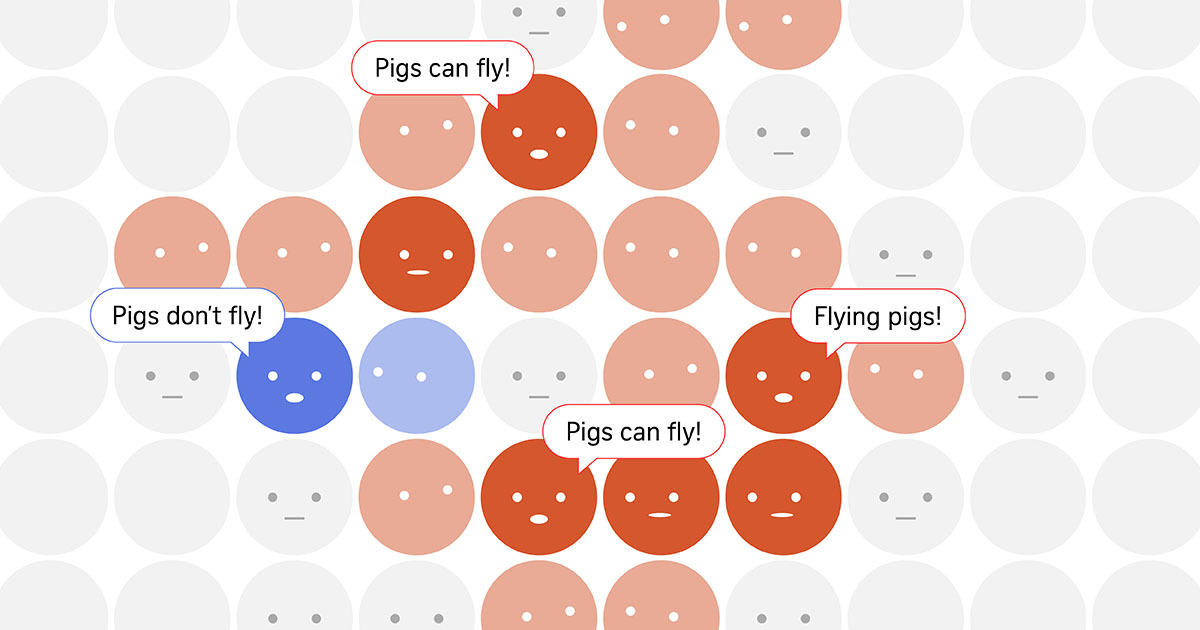
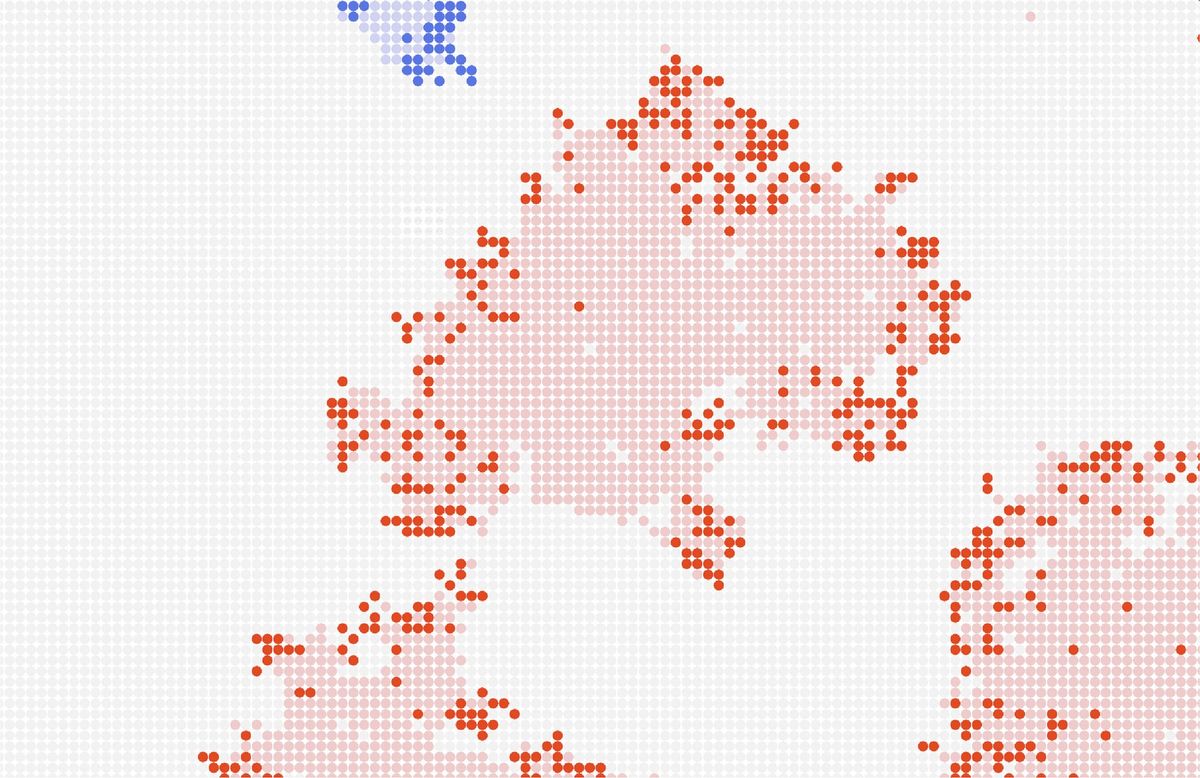
Researchers study fake news the same way they study the spread of disease. When misinformation “goes viral”, it is not just a metaphor. It is what’s actually happening. via @straits_times str.sg/viz-misinformation
Ingmar Rentzhog (@ingmar.wsocial.eu)
Criticism and scrutiny are welcome. But why so much hostility? Why assume the worst about our motives? I honestly don’t understand. If we share the goal of better social media, let’s talk about how to get there.

Let's normalize debunking each other
The spread of misinformation has become an epidemic, but information hygiene can help.
Debunking: A Meta-Analysis of the Psychological Efficacy of Messages Countering Misinformation
This meta-analysis investigated the factors underlying effective messages to counter attitudes and beliefs based on misinformation. Because misinformation can lead to poor decisions about consequential matters and is persistent and difficult to correct, debunking it is an important scientific and public-policy goal. This meta-analysis ( k = 52, N = 6,878) revealed large effects for presenting misinformation ( ds = 2.41–3.08), debunking ( ds = 1.14–1.33), and the persistence of misinformation in the face of debunking ( ds = 0.75–1.06). Persistence was stronger and the debunking effect was weaker when audiences generated reasons in support of the initial misinformation. A detailed debunking message correlated positively with the debunking effect. Surprisingly, however, a detailed debunking message also correlated positively with the misinformation-persistence effect.

Unveiling the waves of mis- and disinformation from social media
In the digital era, social media platforms have become the focal point for public discourse, with a significant impact on shaping societal narratives. However, they are also rife with mis- and disinformation, which can rapidly disseminate and influence public opinion. This paper investigates the propagation of mis- and disinformation on X, a social media platform formerly known as Twitter. We employ a multidimensional analytical approach, integrating sentiment analysis, wavelet analysis, and network analysis to discern the patterns and intensity of misleading information waves. Sentiment analysis elucidates the emotional tone and subjective context within which information is framed. Wavelet analysis reveals the temporal dynamics and persistence of disinformation trends over time. Network analysis maps the intricate web of information flow, identifying key nodes and vectors of virality. The results offer a granular understanding of how false narratives are constructed and sustained within the digital ecosystem. This study contributes to the broader field of digital media literacy by highlighting the urgent need for robust analytical tools to navigate and neutralize the infodemic in the age of social media.
How to rage bait Americans
Some thoughts on #WSocial, how they have been responding to criticism and why I believe they are showing the limits of free speech absolutism. I agree with @echna.bsky.social that "W Social seems to be on an X speedrun - without ever having been like Twitter." 🔗: aseachange.com/@elena/statuses/01M0SDV98GRDW…
![[3 media attachments] Dear friends,
Please gather around for a long post about #WSocial and how they are responding to critiques.
I have noticed a trend: W Social leaders and staunch supporters are ...](https://cdn.bsky.app/img/feed_thumbnail/plain/did:plc:vggsjzvhakoa7l2m2mguqv4w/bafkreihcldgcq7zjkfhikbwpjeqo6qqqw443ywuxo6rl2y6xh55tsszjim)
Elena Rossini on GoToSocial ⁂ (@elena@aseachange.com)
aseachange.com