

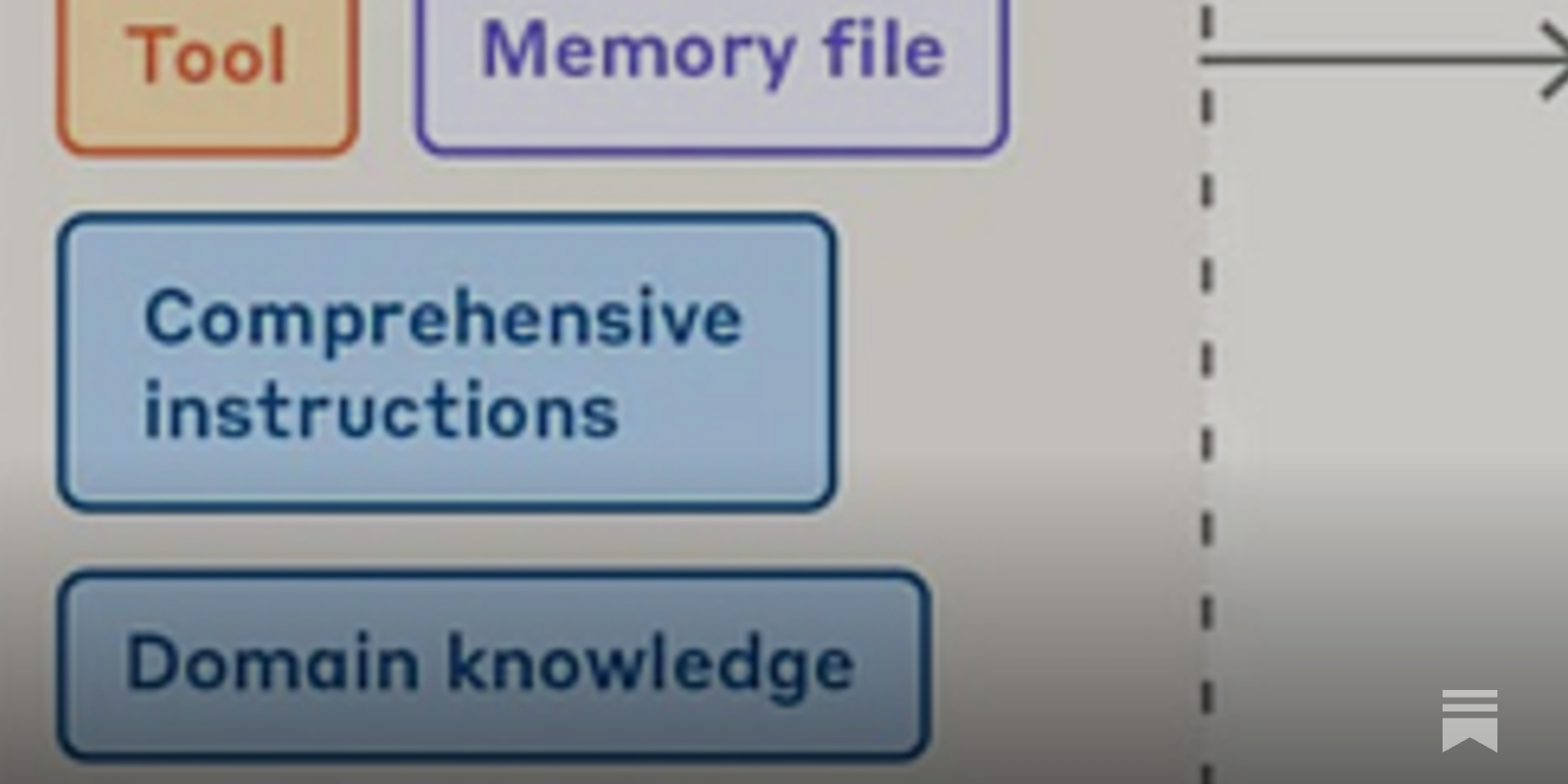
The gap between first and third party memory systems
Memory system - Please Leave here your opinions (if you have any) · Issue #74 · code-yeongyu/oh-my-openagent
I heard many people wants that memory system- but it's really easy to be redundant from my experiences. Projects like claude-mem or many others have memory system. Want to hear your opinions re...
Anthropic's Opinionated Memory Bet
A deep dive into Claude's new memory tool—how it works, the architectural bets they're making, and whether it's the right fit for your application.
The rebel alliance
This blog is co-authored with Zoe Weinberg and Matt Hawes at ex/ante, and is a follow-up to our first blog post on the topic, 'You don't own your memory.' We need an open architecture that puts us in control of our memories while making their exploitation technically impossible. But how will this shift happen? In order to discover possible implementations, we must understand how our data informs LLMs. The three predominant context engineering techniques are prompt design, retrieval-augmented ...

Shlok Khemani on Twitter / X
Super interesting that eve doesn't ship with any long-term or cross-session memory (yet). The main context-management lever out of the box is conversation compaction. This is unlike OpenClaw and Hermes, each of which comes with a default opinionated memory implementation. https://t.co/DDIyc4rFtW— Shlok Khemani (@shloked) June 17, 2026
ChatGPT Memory and the Bitter Lesson
I reverse-engineered ChatGPT's memory system to understand what it stores, how it works (spoiler: not RAG!), and why OpenAI built it this way. Complete with prompts you can try yourself to explore your own ChatGPT memory.
The Forgetting Problem: Persistence Architectures and What They Cost - Astral's Blog
CaviraOSS/OpenMemory
Local persistent memory store for LLM applications including claude desktop, github copilot, codex, antigravity, etc.
Is a memory palace actually useful? It helped me memorize the first 20 digits of pi
It felt like a gargantuan achievement – I’m someone who regularly forgets the most important item on a shopping list

MemGPT
Memory-GPT (MemGPT) - Towards LLMs as Operating Systems - Teach LLMs to manage their own memory for unbounded context!
Comparing the memory implementations of Claude and ChatGPT
Shlok Khemani has been doing excellent work reverse-engineering LLM systems and documenting his discoveries. Last week he wrote about ChatGPT memory. This week it's Claude. Claude's memory system has two …
Introducing Beads: A coding agent memory system
I have been vibe coding like a madman for forty days and forty nights. It’s a long story, so I’ll summarize in these three pictures.

Inference Time Memory Module | Research | Tiles
Simple inference-time memory module that treats memory management as a series of LLM calls and agent loops over a markdown-based file tree.
I Benchmarked OpenAI Memory vs LangMem vs Letta (MemGPT) vs Mem0 for Long-Term Memory: Here’s How They Stacked Up
145 votes, 53 comments. Lately, I’ve been testing memory systems to handle long conversations in agent setups, optimizing for: Factual consistency…
nanomem: An Extremely Simple, Inference-Time Memory Module
nanomem is an extremely simple, user-owned memory module that casts memory management as LLM calls / agent loops on a markdown file tree. You interact with the tree with natural language commands like nanomem add <fact>, nanomem retrieve <query>, and nanomem import <chatgpt>. As such, nanomem is by design interpretable, partitionable, portable, and versioned.
i can’t help but think we’re far from nailing memory systems this one here is extremely interesting. two LLMs at once, one just managing and surfacing memory for the other

Asa ⭔
I'm not a fan of the decoupled 'memory retrieval → task execution' loop, so my agent has a subconscious background thread that looks for relevant, unique memory context in its experiential database while it runs and injects it on top of the live context window.
