Many of us are sheltering-in-place, practicing social solidarity by physically distancing, and shifting to majority online work and organizing in midst of the global coronavirus pandemic. For many folks that means adjusting to different work spaces and work-flows, ones where virtual meetings have become a regular and expected activity. On the one hand, being able to work from home or participate in virtual meetings represents a very clear form of privilege, in that you have work to do and don't have to do it in higher-risk settings like caregiving and essential retail. But within our online meeting spaces, other forms of privilege and associated power dynamics play out in ways that undermine our work and marginalize important voices and perspectives.
A few simple tips for better online meetings (COVID-19 edition)
One of the implications of the COVID-19 virus (Coronavirus Disease) has been that many in-person events and meetings are getting cancelled…

What our latest research says about our Virtual First model
We’ve been a Virtual First company for over two years. Our model is a unique approach to work that is deliberately not hybrid. Instead, remote work is the primary experience for our employees but we still come together for planned gatherings and collaboration as we believe that there is no substitute for in-person connection. And rather than forcing our employees back to the office, we think about it differently: by offering flexibility and being able to tap into a broader talent pool with a distributed workforce, we’re facilitating an environment where our employees can be their best, most productive selves at work, which ultimately helps us better serve our customers.
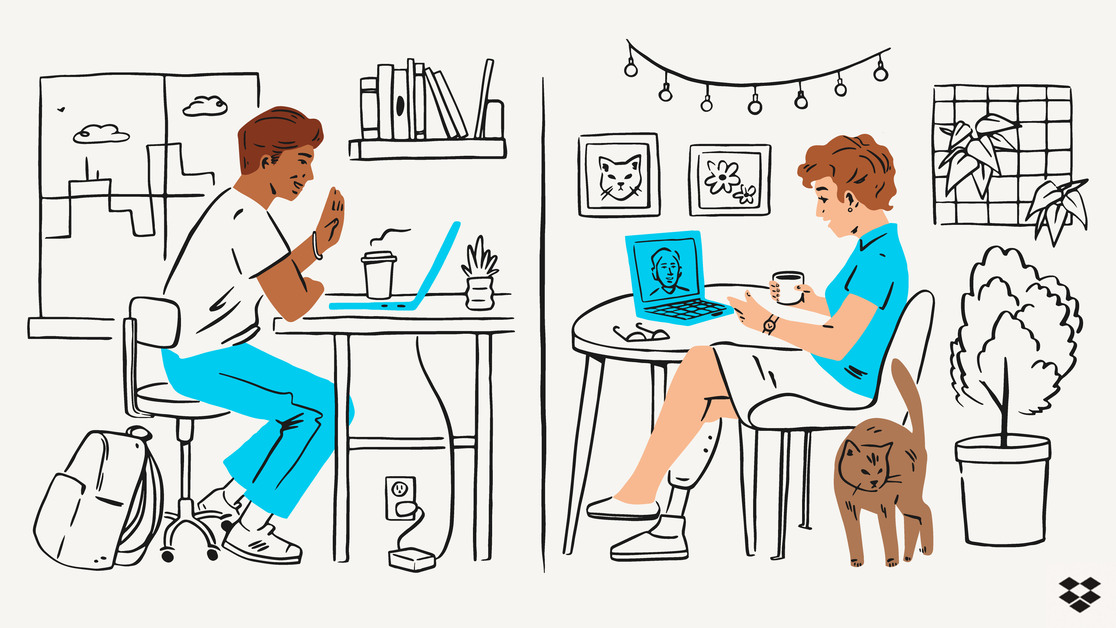
On-Together: Virtual Co-Working
Virtual co-working with friends or strangers all over the world! Digital pals hang out at the bottom of the screen while you work, study, and get stuff done. Includes productivity tools, hangout spots, breaktime games, and more!

On-Together: Virtual Co-Working
Virtual co-working with friends or strangers all over the world! Digital pals hang out at the bottom of the screen while you work, study, and get stuff done. Includes productivity tools, hangout spots, breaktime games, and more!
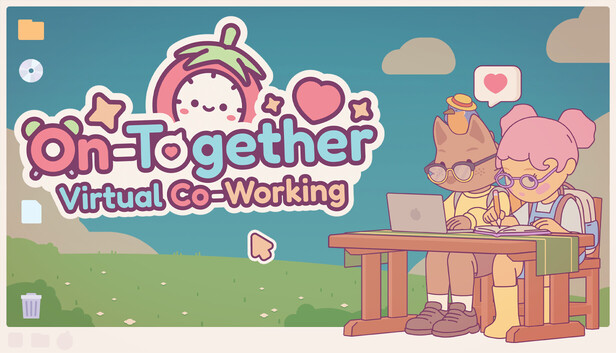
meet.coop - The Online Meeting Cooperative
Online meeting and conferencing tools, powered by renewable energy running on cooperatively owned and managed infrastructure.
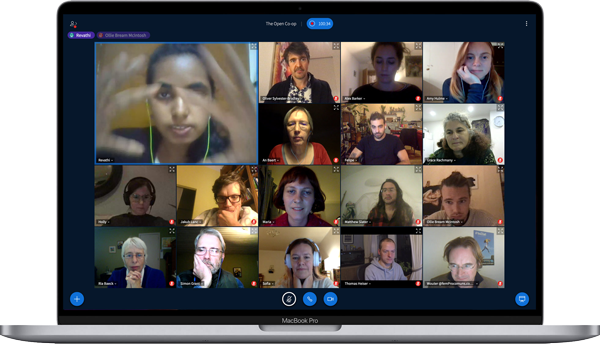
DWeb Virtual Meetup: Decentralized Tech to Resist Authoritarianism
DWeb Virtual Meetup (July 2025) on decentralized technologies and approaches people are using to resist authoritarianism. Speakers demonstrated tools in use today around the world that combat censorship, promote privacy, and strengthen p2p movements. SPEAKERSKsenia Ermoshina, eQualitie (09:37)Brendan "b5" O'Brien, Iroh (24:52)Johan Michalove, mutua and FireAid (36:25)Ana Jamborcic, Socialroots (46:56)Facilitated by DWeb Senior organizer, mai ishikawa sutton
The inequities of our remote gathering tools
As we’ve been transitioning our in-person communities to virtual ones, our modes of interaction are now firmly established in tiny…

Preventing harassment and increasing group participation through social norms in 2,190 online science discussions | PNAS
Theories of human behavior suggest that people’s decisions to join a group and their subsequent behavior are influenced by perceptions of what is s...

Digital inequality in communication during a time of physical distancing: The case of COVID-19
In times of physical distancing, such as during the COVID-19 pandemic, people are likely to turn to digital communication to replace in-person interactions. Yet, persisting digital inequality suggests that not everyone will be equally able or disposed to increasing digital communication during a public health crisis. Using survey data from a national sample of U.S. participants (N = 2,925) that we collected during the early months of the pandemic, we analyzed how sociodemographics, living arrangements, and Internet experiences and skills relate to increases and decreases in various digital communication methods. We find that people privileged in their socioeconomic status, their Internet skills and online experiences are more likely to increase and less likely to decrease digital communication during the pandemic. The findings illustrate how digital inequalities can put already disadvantaged groups at greater risk of diminished social contact during a public health crisis. We discuss the theoretical implications of our findings for digital inequality research, the practical implications for inclusive crisis responses, and directions for future research.

Flocks, Pods, and Gaggles: Bringing people together in-person and online – MIT Media Lab
We love well-designed in-person workshops—they are undeniably magical. Conversations that happen spontaneously between sessions, or bonding over a shared meal,…
Distributed teams are rewriting the rules of office(less) politics | TechCrunch
When we think about designing our dream home, we don’t think of having a thousand roommates in the same room with no doors or walls. Yet in today’s

Distributed teams are rewriting the rules of office(less) politics | TechCrunch
When we think about designing our dream home, we don’t think of having a thousand roommates in the same room with no doors or walls. Yet in today’s
Smart Events, Smarter Communities: Leveraging AI to Power Engagement
This session is about practical, usable stuff — no fluff.

Home - Sococo | Online Workplace for Distributed Teams
Sococo is the online workplace where distributed teams come to work together each day, side-by-side. No matter where team members might be. Down the hall, across campus, or halfway around the world – working in your organization’s online office is even more productive than being on the same floor or in the same room.
Live asynchronously.
Last year I turned off all my notifications. I stopped booking meetings. I started living asynchronously. Now instead of being interrupted throughout the day — or rushing from one meeting to the next — I sit down and get work done. I work a lot. I co...