

Governance software that makes it easy to start, run and connect co-ops and other democratic organizations. Forged in co-op principles.
DASL: Governance of the DASL Project
The goal of the DASL Project is to develop content-addressing primitives and the technologies that build on them, with a view towards enabling unbundled software and protocol architectures that best align with and promote democratic systems.

Modular Politics: Toward a Governance Layer for Online Communities
Governance in online communities is an increasingly high-stakes challenge, and yet many basic features of offline governance legacies--juries, political parties, term limits, and formal debates, to name a few--are not in the feature-sets of the software most community platforms use. Drawing on the paradigm of Institutional Analysis and Development, this paper proposes a strategy for addressing this lapse by specifying basic features of a generalizable paradigm for online governance called Modular Politics. Whereas classical governance typologies tend to present a choice among wholesale ideologies, such as democracy or oligarchy, Modular Politics would enable platform operators and their users to build bottom-up governance processes from computational components that are modular and composable, highly versatile in their expressiveness, portable from one context to another, and interoperable across platforms. This kind of approach could implement pre-digital governance systems as well as accelerate innovation in uniquely digital techniques. As diverse communities share and connect their components and data, governance could occur through a ubiquitous network layer. To that end, this paper proposes the development of an open standard for networked governance.

Binding Chaos: Mass Collaboration on a Global Scale
The world is long overdue for a completely new system of governance. If there was ever a need for political representation or a paternalistic and opaque authority, it has been removed by technology. Every political system we have tried has proven incapable of protecting human rights and dignity. Every political system we have tried has devolved into oligarchy. To effect the change we require immediately, to give individuals control and responsibility, to bring regional systems under regional governance, allow global collaboration and protect the heritage of future generations, we need a new political model.
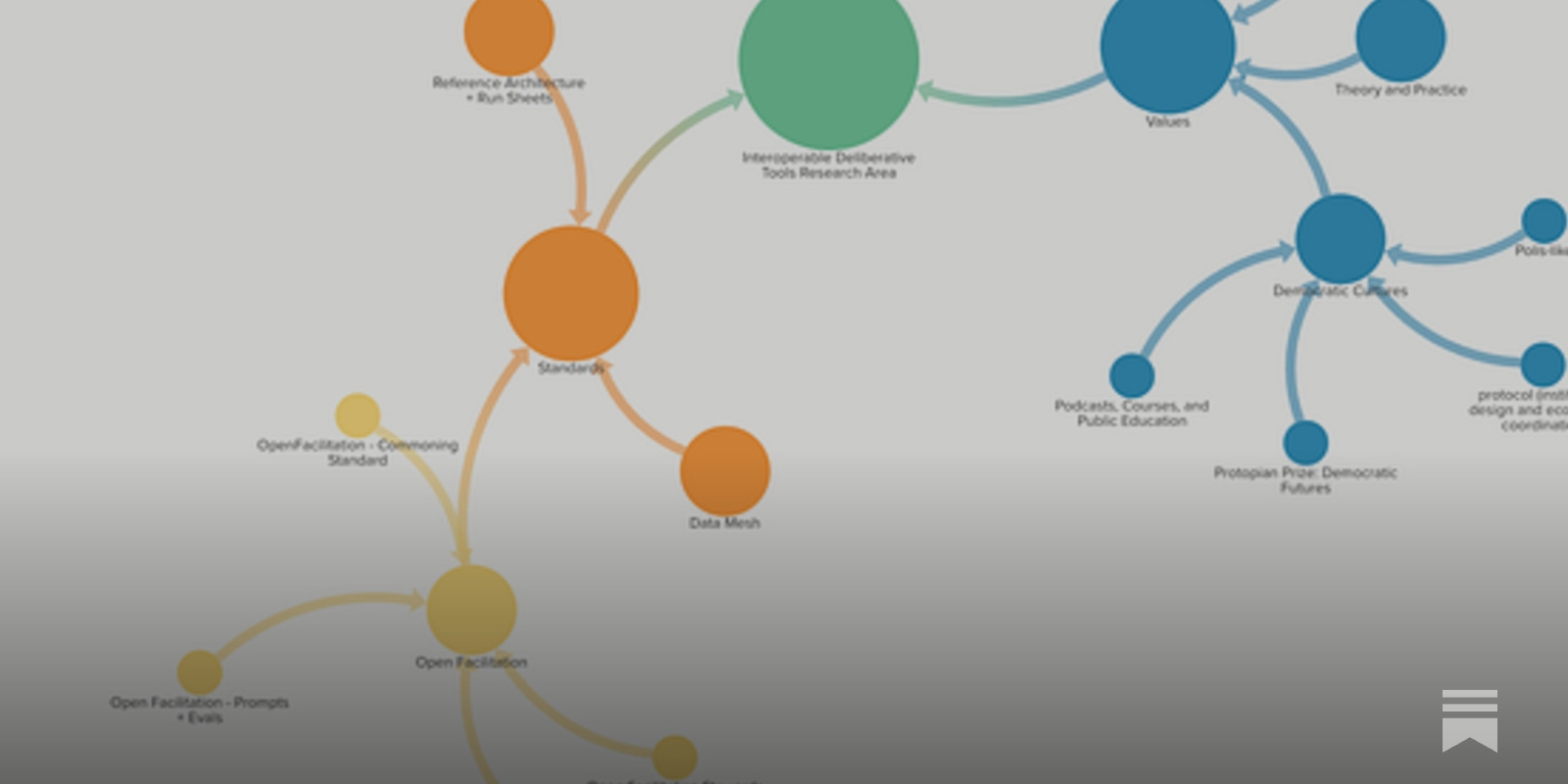
Project Update: Interoperable Deliberative Tools in 2026
The 2026 deliberative tools and interoperability working group updates you've been waiting for
‘Investor Assemblies’ Are the Answer to ESG
Three academics propose “investor assemblies” as a response to the crisis in corporate governance.

adhocracy+/Participation software must be open source - a plea for democratic software
Adhocracy is open source software. This article argues that investment software must be open source and explains the reasons why we are convinced of it.

A Polycentric Governance Lens on Data Infrastructures
Computer Supported Cooperative Work (CSCW) - Funding policies for data infrastructure promote open data sharing to drive positive social impact. However, concerns regarding the long-term management...

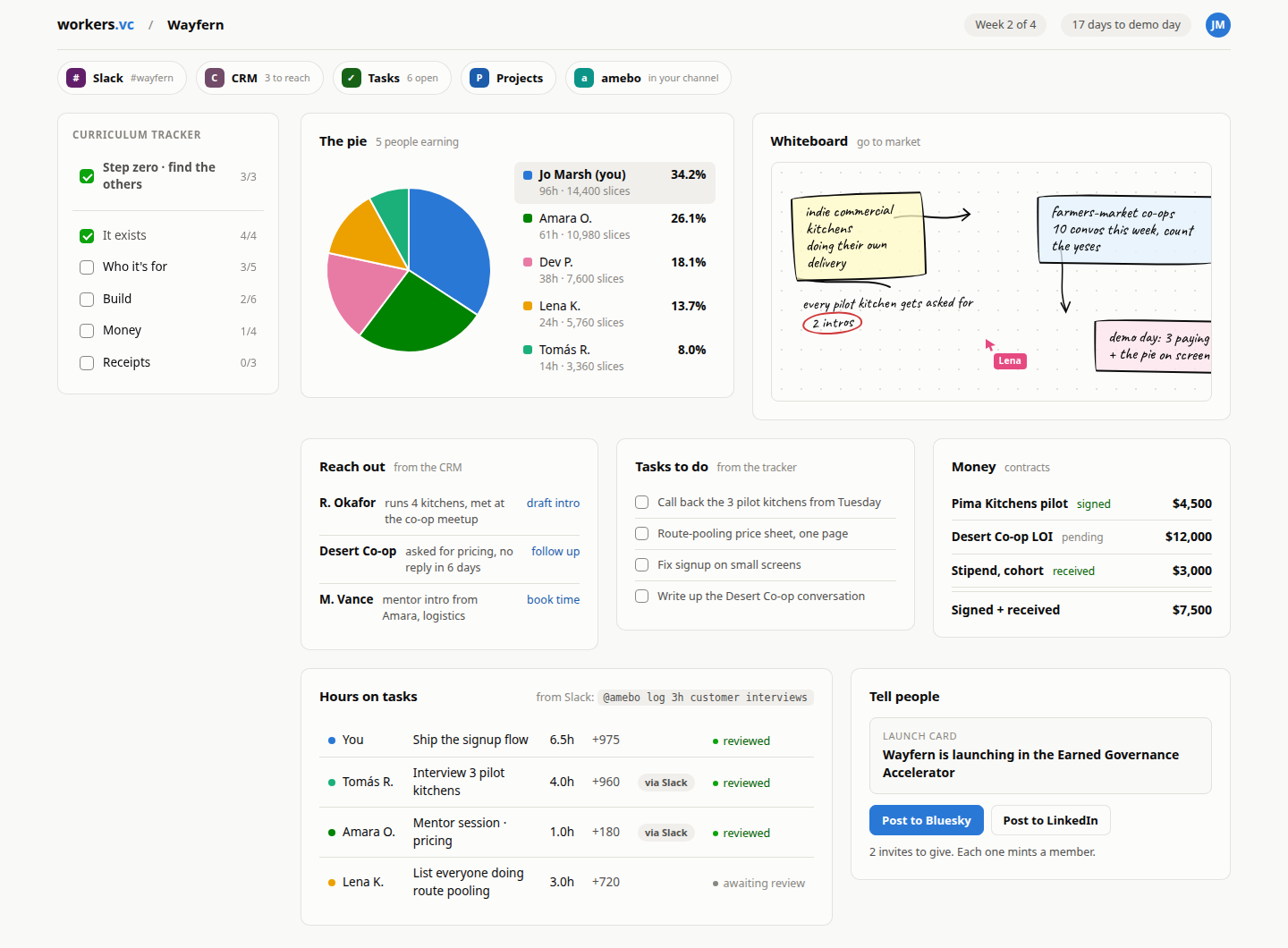
Workers.vc · Earned Governance Accelerator
A 4-week alpha cohort where teams put hours on tasks and the work becomes verifiable equity and voting weight.
Digital Democracy in Decentralised Autonomous Organisations
Decentralised autonomous organisations (DAOs) are institutional technologies that enable democratic governance innovation. They inherit key democratic principles such as procedural transparency and immutable records from being based on blockchain technology. This paper conducts a systematic literature review to examine governance mechanisms and challenges of digital democracy in DAOs. While issues like power concentration and coordination failures exist in current implementations, we argue that the concept of DAOs offers new opportunities for transparent governance and participatory decision-making. As testbeds for governance experiments, we find that DAOs have the potential to reshape democratic processes and foster innovative governance models in the digital era. Calling for interdisciplinary collaboration, further research is needed around Sybil-resistant voting mechanisms, ideological path dependencies and deliberation mechanisms.

Decentralized Deliberation Stack (DDS)
A W3C Community Group working draft for an open stack for sovereign, verifiable, interoperable, and resilient deliberation.
blacksky-algorithms/assembly.blacksky.community
Blacksky People’s Assembly – a space for public deliberation and collective decision-making.
Collective Governance Directory
A collection of links to publicly available governance documents, published by the collectives that use them.
"people’s councils are exercises in critical pedagogy, of learning together about situated problems and about what needs to be done... the logic of the assembly emerges in situations where people realise they can’t rely on whichever institution or sovereign force claims legitimacy over an issue."
AI, Decomputing and the Interregnum
zenodo.orgIt is a shame that "democratization" in software has come to mean broader access to products instead of participation in democratic processes — there is talk of LLMs democratizing software production, but I have yet to see social, collective and democratic processes govern the design of software.
Organizing

Governance, collaboration, how to work together without being awful.
Conflict Systems
Spaces as Layers - Nick's Blog
web.archive.org
Axioms for Organizers by Fred Ross, Sr. | Fred Ross, Sr.
The Tyranny of Stuctureless
cdn.fastly.steamstatic.com

