

The team that built X’s Community Notes talks about their design process and the philosophy behind their approach to combatting false information on the platform.
Writing design docs – Ceejbot's notes
How to figure out what to do and tell your colleagues at the same time
COMMUNITY-BASED, HUMAN-CENTERED DESIGN
We propose a radical change in design from experts designing for people to people designing for themselves, leveraging the creativity of communities to solve their own problems. People in communiti…

Beyond Community Notes: A Framework for Understanding and Building Crowdsourced Context Systems for Social Media
Social media platforms are increasingly adopting features that display crowdsourced context alongside posts, a technique pioneered by X's Community Notes. These systems -- which we term Crowdsourced Context Systems (CCS) -- have the potential to reshape the information ecosystem as major platforms embrace them as alternatives to professional fact-checking. To understand the features and implications of these systems, we conduct a systematic literature review of existing CCS research (n=56) and analyze real-world CCS implementations. Based on our analysis, we develop a framework with two components. First, we present a theoretical model to conceptualize and define CCS. Second, we identify a design space encompassing six aspects: participation, inputs, curation, presentation, platform treatment, and transparency. We also surface normative implications of different CCS design and implementation choices. Our work integrates theoretical, design, and ethical perspectives to establish a foundation for future human-centered research on Crowdsourced Context Systems.

communitycheck/design at main · rosestt/communitycheck
A design specification for attaching representative public opinion data to viral social media posts — correcting the gap between what people think and what they think others think. - rosestt/commun...
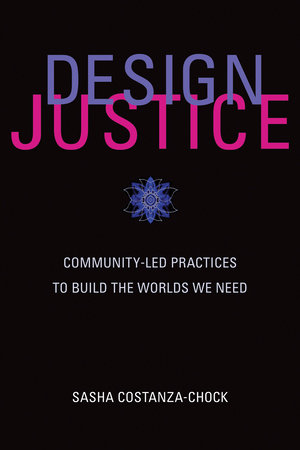
Design Justice: Community-Led Practices to Build the Worlds We Need
Community-Led Practices to Build the Worlds We Need
open-community-notes/004-labeling at master · johnwarden/open-community-notes
Community Notes on AT Protocol. Contribute to johnwarden/open-community-notes development by creating an account on GitHub.
Where Tech Companies Build Communities
The customizable, scalable community platform powering over 22,000 communities. Create knowledge through conversation.
open-community-notes/003-aids at master · johnwarden/open-community-notes
Community Notes on AT Protocol. Contribute to johnwarden/open-community-notes development by creating an account on GitHub.
An introduction to radical participatory design: decolonising participatory design processes
Outside of community-led design projects, most participatory design processes initiated by a company or organisation maintain or even strengthen power imbalances between the design organisation and the community on whose purported behalf they are designing, further increasing the absencing experience. Radical participatory design (RPD) is a radically relational answer to the coloniality inherent in participatory design where the community members’ disappointment is greater due to the greater expectations and presencing potential of a ‘participatory design’ process. We introduce the term RPD to show how research and design processes can be truly participatory to the root or core. Instead of treating participatory design as a method, a way of conducting a method, or a methodology, we introduce RPD as a meta-methodology, a way of doing any methodology. We explicitly describe what participation means and compare and contrast design processes based on the amount of participation, creating a typology of participation. We introduce ‘designer as community member’, ‘community member as designer,’ and ‘community member as facilitator’ models and provide characteristics for the meta-methodology of RPD.

An introduction to radical participatory design: decolonising participatory design processes
Outside of community-led design projects, most participatory design processes initiated by a company or organisation maintain or even strengthen power imbalances between the design organisation and the community on whose purported behalf they are designing, further increasing the absencing experience. Radical participatory design (RPD) is a radically relational answer to the coloniality inherent in participatory design where the community members’ disappointment is greater due to the greater expectations and presencing potential of a ‘participatory design’ process. We introduce the term RPD to show how research and design processes can be truly participatory to the root or core. Instead of treating participatory design as a method, a way of conducting a method, or a methodology, we introduce RPD as a meta-methodology, a way of doing any methodology. We explicitly describe what participation means and compare and contrast design processes based on the amount of participation, creating a typology of participation. We introduce ‘designer as community member’, ‘community member as designer,’ and ‘community member as facilitator’ models and provide characteristics for the meta-methodology of RPD.
Permissioned Data Shapes: Community-Moderated Content - Nick's Blog
A community can own spaces the way a person does: a club's members post to each other under a dedicated community DID, with a feed space for content, a moderation space for notes, a labels space for filtering, and a single app view as the only window into any of it.
Read the Principles — Design Justice Network
Design mediates so much of our realities and has tremendous impact on our lives, yet very few of us participate in design processes. In particular, the people who are most adversely affected by design decisions — about visual culture, new technologies, the planning of our communities, or the structure of our political and economic systems — tend to have the least influence on those decisions and how they are made.

Bluenotes: Community Notes for ATProto
I'll briefly demonstrate Bluenotes, a fork of the Bluesky with Community Notes. Then I'll discuss a proposed "Open Community Notes" standard and lexicon for Community Notes on ATProto, and discuss challenges such as preserving contributor anonymity and defending against manipulation.
Note-Taking and Personal Knowledge Management — Unattributed
Bridge heading into the smokey landscape. License: CC-0 I read Brennan Kenneth Brown's What have note-taking PKMs accomplished, really?...

Design Justice: Community-Led Practices to Build the Worlds We Need
An exploration of how design might be led by marginalized communities, dismantle structural inequality, and advance collective liberation and ecological su
Community notes over papers is another example of a new kind of annotation that goes far beyond merely a "mention" and can be easily incorporated into protocol powered research ecosystems like #ATScience
