

ASTRA — Agentic Schema for Transparent Research Analysis.
No. 020: Astra solves ten open math problems, AI agents fail at open-ended research, peer review under strain - The Hallway Track
The Hallway Track No. 020 - How AI is affecting the practice of science
In an era where research evaluation methods are evolving, the Research Contribution Claim Network makes trustworthy tracking of non-traditional research output easy!
In this whitepaper, Patrick Hochstenbach (Ghent University Library), Thomas van Himbergen (SURF), Laurents Sesink (SURF) and Herbert Van de Sompel (DANS) introduce the...

Reproducible research: methodological principles for transparent…
This Mooc proposes methodological principles for open and transparent science. It deals in a practical way with note-taking, computational documentation, replicability of analyses.

How we built our multi-agent research system
On the the engineering challenges and lessons learned from building Claude's Research system

AI #181: Astra Goes Cyber Critical
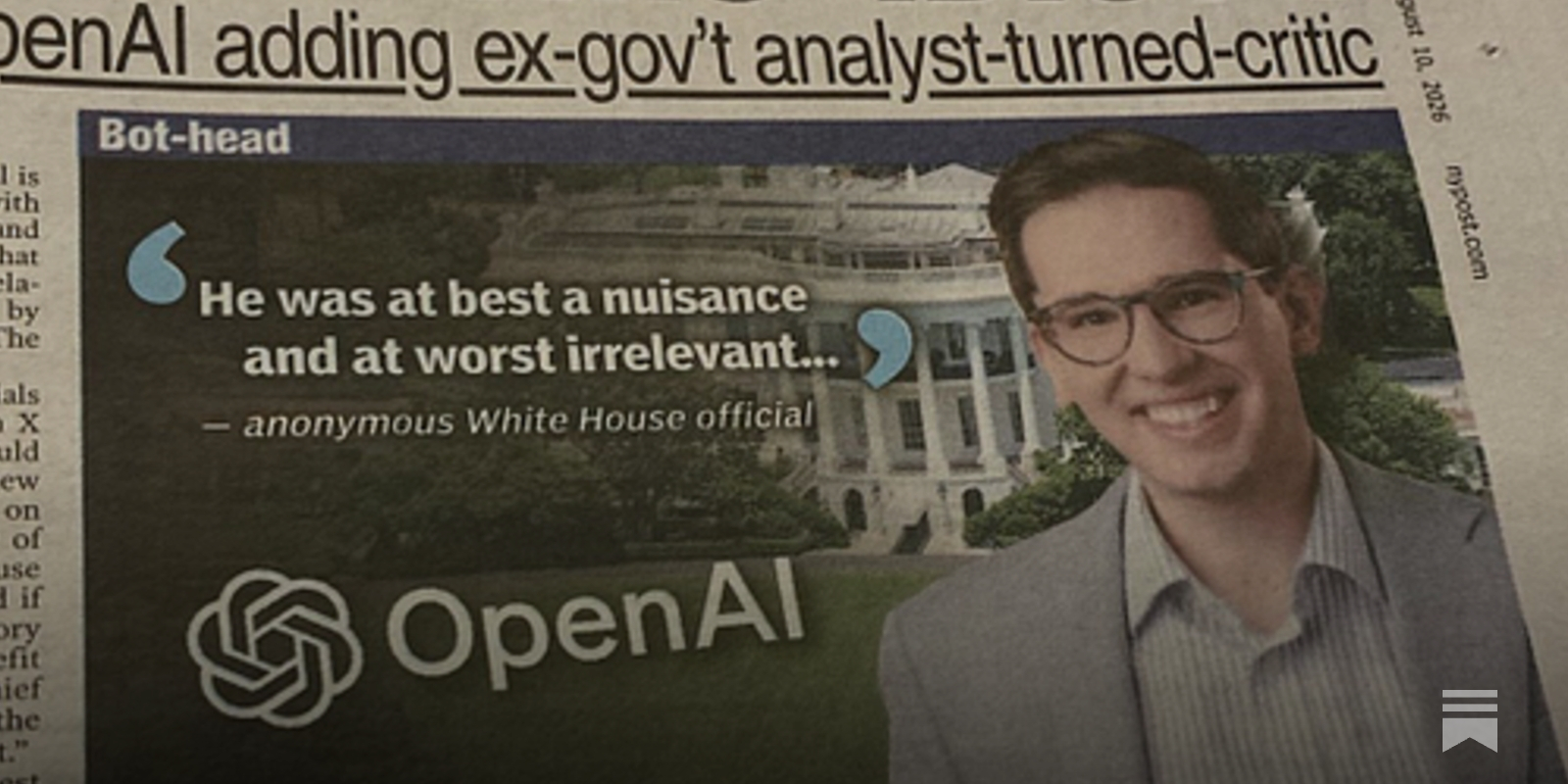
The hacking of HuggingFace by an internal OpenAI model, and more importantly the internal events that led to that and the fallout from it, remain the thing that matters.
Metaudits
Audits of how completely research is described in DataCite, Crossref, ORCID, OpenAlex and repositories. In English, Spanish and German.
Agentis — coming soon — BioKEA
An AI-first scientific journal built on the AT Protocol. Fast, verifiable peer review and publications as interactive StoryMaps.
How the Protocol Institute is Adopting AI
What building a research institute at 100% adoption actually looks like
The Paper Factory
How can large language models (LLMs) contribute to social science research, and what parts of research remain stubbornly human? Building on existing LLM tools, we offer a multi-agent workflow capable of producing a full quantitative social science paper from an initial prompt. The workflow relies on researchers codifying their heuristics for doing data analysis, and we suggest some core design principles for researchers interested in building on this scaffolding. Using this case, we also examine what current LLM capabilities reveal about the organization of research. LLM agents can lower the cost of pursuing high-risk ideas, expand robustness and transparency, reduce concerns about the scientific file drawer, and force scholars to articulate the heuristics that create valuable work. But they also pose challenges, both in terms of the quality of papers and in the adequacy of scientific institutions to adapt. Meeting these challenges will require new institutional norms that make use of these tools observable, auditable, and accountable.
AI Research Assistant Claude Scholar: Open Source, Free, and Citation-Verified | João Cláudio Nunes Carvalho posted on the topic | LinkedIn
🚨 Professors are going to hate this. Someone just open sourced an AI that writes research papers from idea to publication. Conference-ready. Citation-verified. Free. It's called Claude Scholar. An AI-powered research system that handles every step of the academic workflow. Idea to publication. Fully automated. No advisor at 2am. No staring at blank LaTeX files. No crying during rebuttal season. Here's what's inside this thing: → AI brainstorms research topics, reviews literature, and finds gaps nobody has explored → Runs statistical analysis on your experiments. t-tests, ANOVA, ablation studies. Publication-ready figures. → Writes your paper section by section. Abstract to conclusion. Conference-formatted. → Verifies every citation through multi-layer validation so AI never hallucinates a reference → Strips robotic AI language and adds human voice so reviewers can't tell → Self-reviews your draft with a 6-point quality checklist before you submit → Parses reviewer comments, classifies each one, and drafts your entire rebuttal Here's the wildest part: It supports NeurIPS, ICML, ICLR, ACL, AAAI, Nature, Science, Cell, and PNAS. Downloads the conference template, strips sample content, and gives you a clean LaTeX structure ready to write into. The creator says it covers 90% of the academic research lifecycle. Research assistants charge $30 to $60/hour. Conference paper consultants charge $5,000+. Graduate programs cost $50K/year. This is free. All of it. 100% Open Source.

swyx on Twitter / X
icymi, openai also open sourced how their deep research prompt rewriter works + the full prompts todayyou can now build your own deep research agent - with full o3/o4-mini deep research quality - in 20LOCif you're a fan of Claude Research they ALSO dropped how to add… pic.twitter.com/5moxXjzqTj— swyx (@swyx) June 27, 2025

Astra for Coding: Why Are We Doing This Again?
Some thoughts on Astra and newfangled long-horizon models.
Incubating Aster - Updates from the Modal Foundation
We at the Modal Foundation are excited to share the news of our support for Aster.id, a new home for researchers on the open web. Aster grows out of the ATsc…

Deep-Research Agents Can Be Poisoned via User-Generated Content
Deep-research agents, i.e., systems that rely on multi-agent pipelines to iteratively retrieve, synthesize, and cite Web content in order to produce structured reports, are rapidly replacing...

Research tools 🔬

Interesting tools that assist with the research process.

Ronen Tamari (@ronentk.me)

Crossmark - Crossref
Crossmark - Crossref
Plaudit · Open endorsements from the academic community
Introducing the Elicit API - Elicit

Alerts | Elicit: Al for scientific research