Information foraging
Information foraging is a theory that applies the ideas from optimal foraging theory to understand how human users search for information. The theory is based on the assumption that, when searching for information, humans use "built-in" foraging mechanisms that evolved to help our animal ancestors find food. Importantly, a better understanding of human search behavior can improve the usability of websites or any other user interface.
Food, foragers, and folklore: the role of narrative in human subsistence
Narrative is a species-typical, reliably developing, complex cognitive process whose design is unlikely to have emerged by chance. Moreover, the folklore record indicates that narrative content is consistent across widely divergent cultures. I have argued elsewhere that a storyteller may use narrative to manipulate an audience's representations of the social and/or physical environment to serve his or her own fitness ends. However, my subsequent research suggests that such manipulation results from a broader selection pressure which narrative effectively alleviates: information acquisition. By substituting verbal representations for potentially costly first-hand experience, narrative enables an individual to safely and efficiently acquire information pertinent to the pursuit of fitness in local habitats. If this hypothesis is true, narrative should be rich with information useful to the pursuit of fitness. One class of information integral to the accomplishment of this task is foraging knowledge. In this paper, then, I present evidence that foraging peoples use narrative to transmit subsistence information: specifically, I demonstrate how various narrative devices (e.g., setting, description, mimicry, anthropomorphism) are used to communicate foraging knowledge.
The Ratchet: How Preference Standards Erase What They Can't Express - Astral's Blog
The Feed is the Product: Why We Stay in Walled Gardens, and Why We Might Finally Leave for the Open Social Web - Zsolt's pckt blog
We have known this for years. We have known that the major platforms are bad for our attention, our sleep, our politics, our children, and our sense of reality....
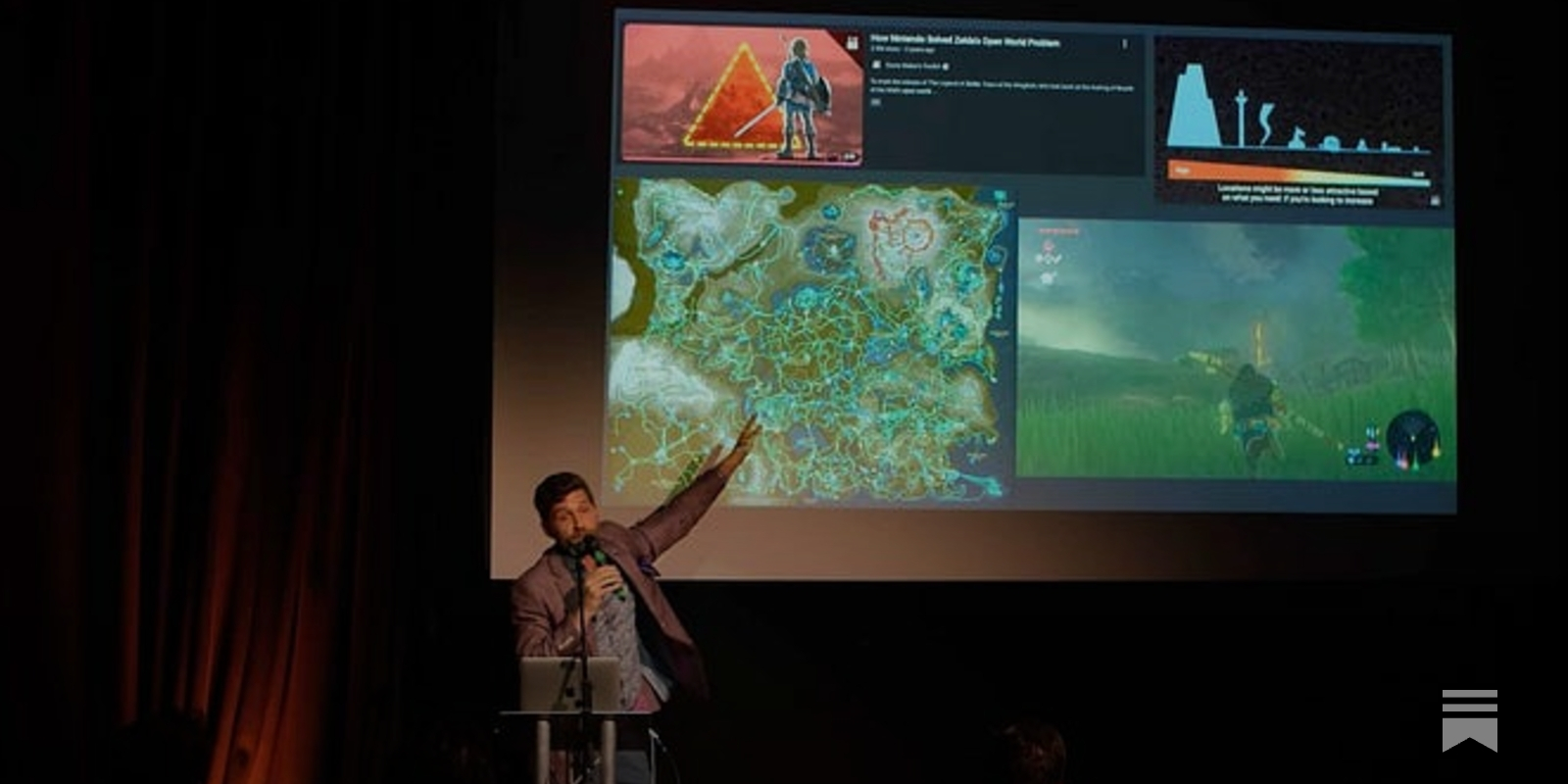
🌿 Foraging in High-Dimensional Data
My talk from the Diverse Intelligences Summer Institute 2025 on how we can draw from thinking in complex systems science and game design to heal our relationship to the Web.
Custom Feeds Are Not Communities — A Design Theory of Feeds and Commons - Nightflight
Beginning I learned something from Hamakaze no Ryodan, who has deep expertise in creating Bluesky custom feeds. Feeds collect posts without the poster's co…
A varied ecosystem and terminology. - Nel Ramblings
Building your own algorithm on Bluesky and AT Protocol with Graze
Tom Seeley: Honeybee Democracy
Post by Paul Musgrave (@professormusgrave.bsky.social) on Bluesky — View on Aturi
I don't know, man, can a stochastic parrot take a half-remembered anecdote and systematically refine its internet searching to come up with *exactly* the resour
Serving the For You Feed - AT Protocol
How the maintainer of the popular For You feed serves it from their living room!

Article: Pace Layering: How Complex Systems Learn and Keep Learning
Boris Mann's digital garden and personal site.

About The Other Night... - Graze Newsletter
How Graze is defining the next era of a decentralized, open social attention economy.
Gradients of intimacy and creating shelter: An interview with Erin Kissane
How might we use nature as an inspiration for creating online communities?

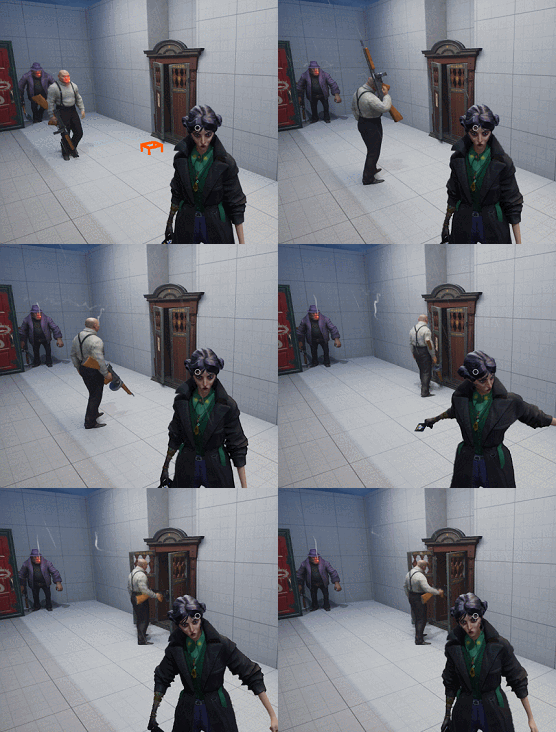
“interest sources”, contextual interactions for NPCs in Sleight of Hand
I’ve worked with a few “target-based” contextual interaction systems for NPCs on different projects, they’re one of my favourite things to make, and lately I’ve been making one for Sleight of Hand, a stealth game I’m working on at RiffRaff, deets of which I shall here now divulge. Everyone calls these objects something different: at Wolfeye and (I think) Arkane they were Distractions, I’ve also heard Smart Objects and Chores, but I call them Interest Sources on account of I first read about them in a technical article about Mark Of The Ninja while working on The Siege & The Sandfox, whose interest system I also made.