Push and pull Docker images on the AT Protocol. Same Docker, decentralized.
Seamark - Distributed Container Registry
Push and pull Docker images on the AT Protocol. Same Docker, decentralized.
The World's Largest Public Container Registry | Docker
Docker Hub is the world's largest registry for images, models, and MCP servers, with curated content and governance that developers and teams can rely on.
evan.jarrett.net/at-container-registry
A container registry that uses the AT Protocol for manifest storage and S3 for blob storage.
Watchtower
A container-based solution for automating Docker container base image updates.
The Industry-Leading Container Runtime | Docker
Read about our industry-leading Docker container runtimes. Docker Engine allows containerized apps to run consistently on any infrastructure — from anywhere.

Hosting an AT Protocol PDS without containerization - Charlotte Som
A simple setup guide for a PDS without requiring Docker or Caddy
Docker: Accelerated Container Application Development
Docker is a platform designed to help developers build, share, and run container applications. We handle the tedious setup, so you can focus on the code.

Self-hosting - AT Protocol Docs - AT Protocol
Self-hosting components of the AT Protocol Stack.
Publish docker images · cloudendpoints/esp@ec6a70d
Extensible Service Proxy. Contribute to cloudendpoints/esp development by creating an account on GitHub.
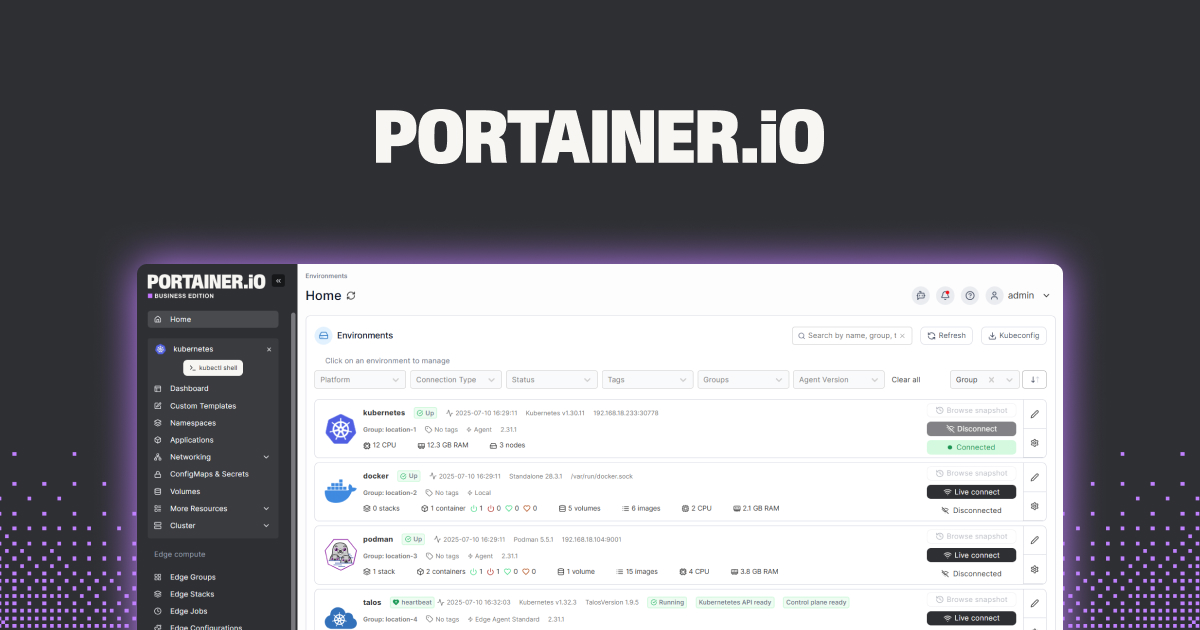
Portainer.io - Enterprise Kubernetes & Docker Container Management Platform
Operational control for Kubernetes and Docker without specialist overhead. Govern multi-cluster infrastructure or deploy OT software at scale.
ngerakines/atproto-tools - Docker Image
A comprehensive collection of Rust components for creating AT Protocol applications. This workspace provides essential building blocks for identity management, record operations, OAuth 2.0 authentication flows, HTTP client operations, XRPC services, and real-time event streaming.
How eBPF is shaping the future of Linux and platform engineering
When Docker burst onto the scene in 2013, Linux containers seemed like an overnight success. But the evolution to containers—and microservices and Kubernetes—was actually decades in the making, based on kernel primitives in the Linux operating system. Docker used these primitives, namely cgroups and namespaces, as building blocks to create a lightweight, easy-to-use software packaging format. Linux containers had been used by Google and others for many years, but Docker made them easily accessible to mainstream developers.

at://alternatives | AT protocol alternatives for popular products
Discover AT Protocol alternatives for popular products and services. Browse decentralized apps that give you control over your data, identity, and social connections.
Docker Sandboxes: Run Agents in YOLO Mode, Safely | Docker
Learn from Docker experts to simplify and advance your app development and management with Docker. Stay up to date on Docker events and new version