


Our world is getting crazier by the day. Our old maps and compasses weren’t made for this complexity. While new tools may open up amazing possibilities, they also make it easier to lose ourselves – especially when they don’t belong to us, and make us vulnerable to other people’s hidden choices and unsavory intentions about what is worth attending to.

Making Space for a Handmade Web | Figma Blog
There’s a resurgence of small, handcrafted sites challenging the current trajectory of the internet. Joining the movement is as simple as making your own.

Introducing Ringspace: A Proposal for the Human Web
For months, I've been working on a project to demonstrate how we can preserve humanity on the web. It's finally ready for testing.

Home Page
We are an international community of communities bound by a common interest in persistent infrastructure. So far, we have welcomed agencies that manage communities spanning entertainment, standards, the built environment, natural history collections, scholarly communications, and research data.
WayFinder Philosophy | WayFinders Network
Wayfinding is a way of navigating through the uncertainty and complexity of the modern world

Rethink: Web - Open Space
When we struggle to explain the inherent qualities of a medium, we tend to defer to analogies and metaphors. This is especially true of the internet. Clouds, highways, streams, and real estate are just a few examples of the concepts employed to represent this intangible invention. Staring into a screen, it’s easy to imagine an […]

A scouting movement for the web
I’ve been thinking about ‘a scouting movement for the web’ for a while: a practical movement focused on skills, creativity and the internet. I finally got around to doing a talk o…

Home - DWeb for Creators - Gray Area
DWeb for Creators is an online course that empowers artists, designers, archivists, gallerists, curators, and others with the knowledge and tools necessary for exploring the decentralized web. Participants in this course engage with technologies like blockchain and mesh networks; examine case studies in curation, publishing, data sovereignty, and community building; and apply decolonial approaches to world building as they envision the future of DWeb technologies.
My journey to the heart of the forgotten internet
Slowly but surely, huge swaths of the internet are vanishing. But the artefacts of the early web are still out there, and they have lessons for the future.

co/infra
Free, public infrastructure for the open social web, run as a community cooperative. - co/infra

The Atmosphere . Building the open social web

Architecture and the Internet: Designing places in cyberspace
Cyberspace, as the information space is called, has become accessible in the past decade through the World Wide Web. And although it can only be experienced through the mediation of computers, it is quickly becoming an alternative stage for everyday economic, cultural, and other human activities. As such, there is a potential and a need to design it according to place–like principles. Making places for human inhabitation is, of course, what architects, landscape architects, and town planners have been doing in physical space for thousands of years. It is curious, therefore, that Cyberspace designers have not capitalized on the theories, experiences, and practices that have been guiding physical place–making. While most 3D environments closely mimic physical spaces, they are, by and large, devoid of the essential characteristics that differentiate a ‘place’ from mere ‘space.’ And only rarely are they sensitive to, and take advantage of, the peculiarities of Cyberspace. We believe that this state of affairs is temporary, characteristic of early adoption stages of new technologies. As the Web matures, and as it assumes more fully its role as a destination rather than as means of communication, there will be a growing need to design it according to place–making principles. By looking at physical architecture as a case study and metaphor for organizing space into meaningful places, this paper explores the possibility of organizing Cyberspace into spatial settings that not only afford social interaction, but, like physical places, also embody and express cultural values. At the same time, because Cyberspace lacks materiality, is free from physical constraints, and because it can only be ‘inhabited’ by proxy, these ‘places’ may not necessarily resemble their physical counterparts.
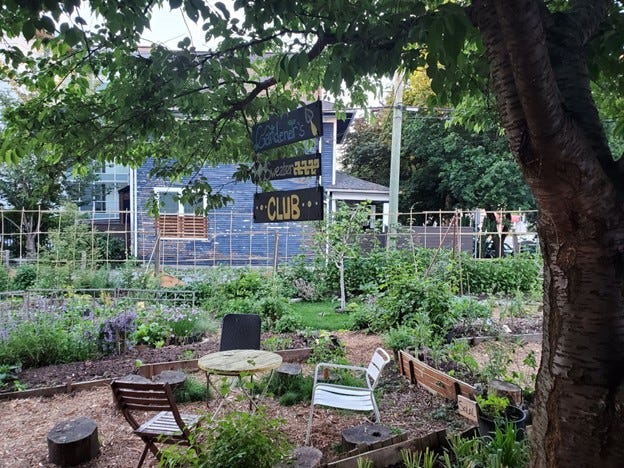
From Volunteer Gardening to Building Next-Gen Distributed Web Apps: My Journey to Holochain App…
A story about discovering community, a mind-warping internet paradigm and a global network of unconventional software engineers.
Home - Nos: The Human Network
A decentralised mesh of communities and individuals built by and for the people. Nos is social media for humans, not algorithms.

01 - Decentralized Web: An Introduction - Resource Guide
This resource guide was created to accompany Session 01 of the Webinar Series Imagining a Better Online World: Exploring the Decentralized Web. This session introduced essential DWeb concepts to library workers through demonstrations, resources, and examples of decentralized technologies in action. A video recording of this session has been archived by the Internet Archive and it can be viewed here.
