

epistemic garden - mapping how ideas spread online
We're building tools to help communities understand their information landscape and protect against harmful coordinated narratives.
The rise of community-curated knowledge networks
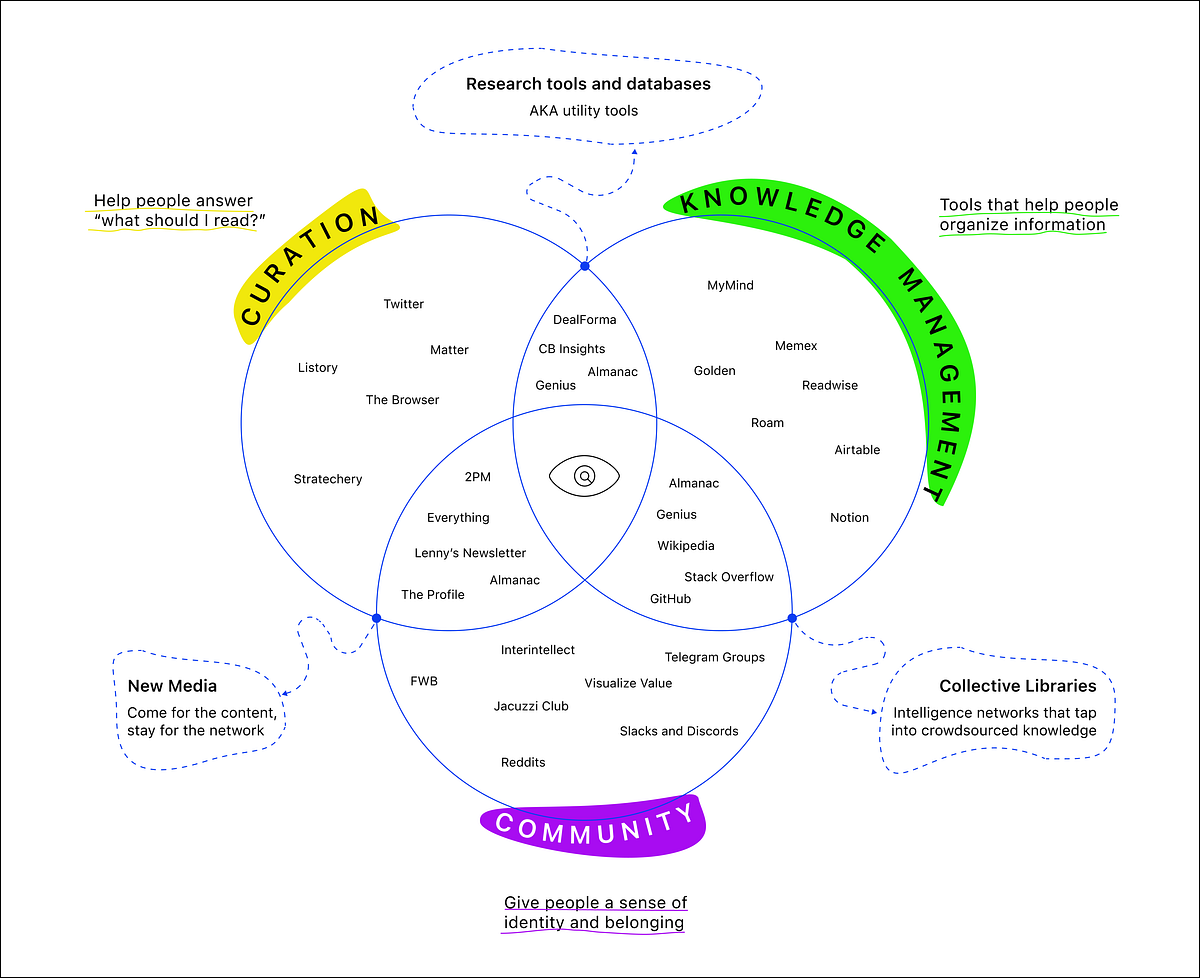
The Internet put thousands of years of human thought at our fingertips, and enabled billions of people to create content. At least 2.5…
Thoughts on Communities | unDraw Blog
Even with the best intentions and people eager to join, most attempts to create communities fail and will continue to do so.

Home Page
We are an international community of communities bound by a common interest in persistent infrastructure. So far, we have welcomed agencies that manage communities spanning entertainment, standards, the built environment, natural history collections, scholarly communications, and research data.
From Social Network to Sense Making
Toward Wayfinding Infrastructure for the Living Web · Atlas Research Group
Our world is getting crazier by the day. Our old maps and compasses weren’t made for this complexity. While new tools may open up amazing possibilities, they also make it easier to lose ourselves – especially when they don’t belong to us, and make us vulnerable to other people’s hidden choices and unsavory intentions about what is worth attending to.

Collective Flourishing
Our tools for navigating the future haven't kept pace with its growing complexity. Creating new systems that integrate a deep understanding of people, profound advances in modelling and foresight, and expressive interfaces could help us see, reason, and choose a better future together.
Everything is miscellaneous : the power of the new digital disorder
Includes bibliographical references (p. [235]-257) and index; Prologue : information in space -- The new order of order -- Alphabetization and its discontents -- The geography of knowledge -- Lumps and splits -- The laws of the jungle -- Smart leaves -- Social knowing -- What nothing says -- Messiness as a virtue -- The work of knowledge -- Coda : misc; Philosopher Weinberger shows how the digital revolution is radically changing the way we make sense of our lives. Human beings constantly collect, label, and organize data--but today, the shift from the physical to the digital is mixing, burning, and ripping our lives apart. In the past, everything had its one place--the physical world demanded it--but now everything has its places: multiple categories, multiple shelves. Everything is suddenly miscellaneous. Weinberger charts the new principles of digital order that are remaking business, education, politics, science, and culture. He examines how Rand McNally decides what information not to include in a physical map (and why Google Earth is winning that battle), how Staples stores emulate online shopping to increase sales, why your children's teachers will stop having them memorize facts, and how the shift to digital music stands as the model for the future.--From publisher description; From A to Z, Everything Is Miscellaneous will completely reshape the way you think - and what you know - about the world. Includes information on alphabetical order, Amaxon.com, animals, Aristotle, authority, Bettmann Archive, blogs (weblogs), books, broadcasting, British Broadcasting Corporation (BBC), business, card catalog, categories and categorization, clusters, companies, Colon Classification, conversation, Melvil Dewey, Dewey Decimal Classification system, Encyclopaedia Britannica, encyclopedia, essentialism, experts, faceted classification system, first order of order, Flickr.com, Google, Great Books of the Western World, ancient Greeks, health and medical information, identifiers, index, inventory tracking, knowledge, labels, leaf and leaves, libraries, Library of Congress, links, Carolus Linnaeus, lumping and splitting, maps and mapping, marketing, meaning, metadata, multiple listing services (MLS), names of people, neutrality or neutral point of view, New York Public Library, Online Computer Library Center (OCLC), order and organization, people, physical space, everything having place, Plato, race, S.R. Ranganathan, Eleanor Rosch, Joshua Schacter, science, second order of order, simplicity, social constructivism, social knowledge, social networks, sorting, species, standardization, tags, taxonomies, third order of roder, topical categorization, tree, Uniform Product Code (UPC), users, Jimmy Wales, web, Wikipedia, etc

The Stack Overflow Age
I want to catch you all up on some stuff but mostly I want to tell the story of Stack Overflow in a not-completely-disorganized way.

Governing Together: Toward Infrastructure for Community-Run Social Media
Decentralizing the governance of social computing systems to communities promises to empower them to make independent decisions, with nuance and in accordance with their values. Yet, communities do not govern in isolation. Many problems communities face are common, or move across their boundaries. We therefore propose designing for "inter-community governance:" mechanisms that support relationships and interactions between communities to coordinate on governance issues. Drawing from workshops with 24 individuals on decentralized, community-run social media, we present six challenges in designing for inter-community governance surfaced through ideas proposed in workshops. Together, these ideas come together as an ecosystem of resources, infrastructures, and tools that highlight three key principles for designing for inter-community governance: modularity, forkability, and polycentricity. We end with a discussion of how the ideas proposed in workshops might be implemented in future work aiming to support community governance in social computing systems broadly.

The evolution of expert communities
A look at how online forums grow, thrive, and then decay.

What the Hell is Going On? - David Perell
David shares how the new age of information abundance is transforming commerce, education, and politics. Read here.

Where Tech Companies Build Communities
The customizable, scalable community platform powering over 22,000 communities. Create knowledge through conversation.
How large language models can reshape collective intelligence
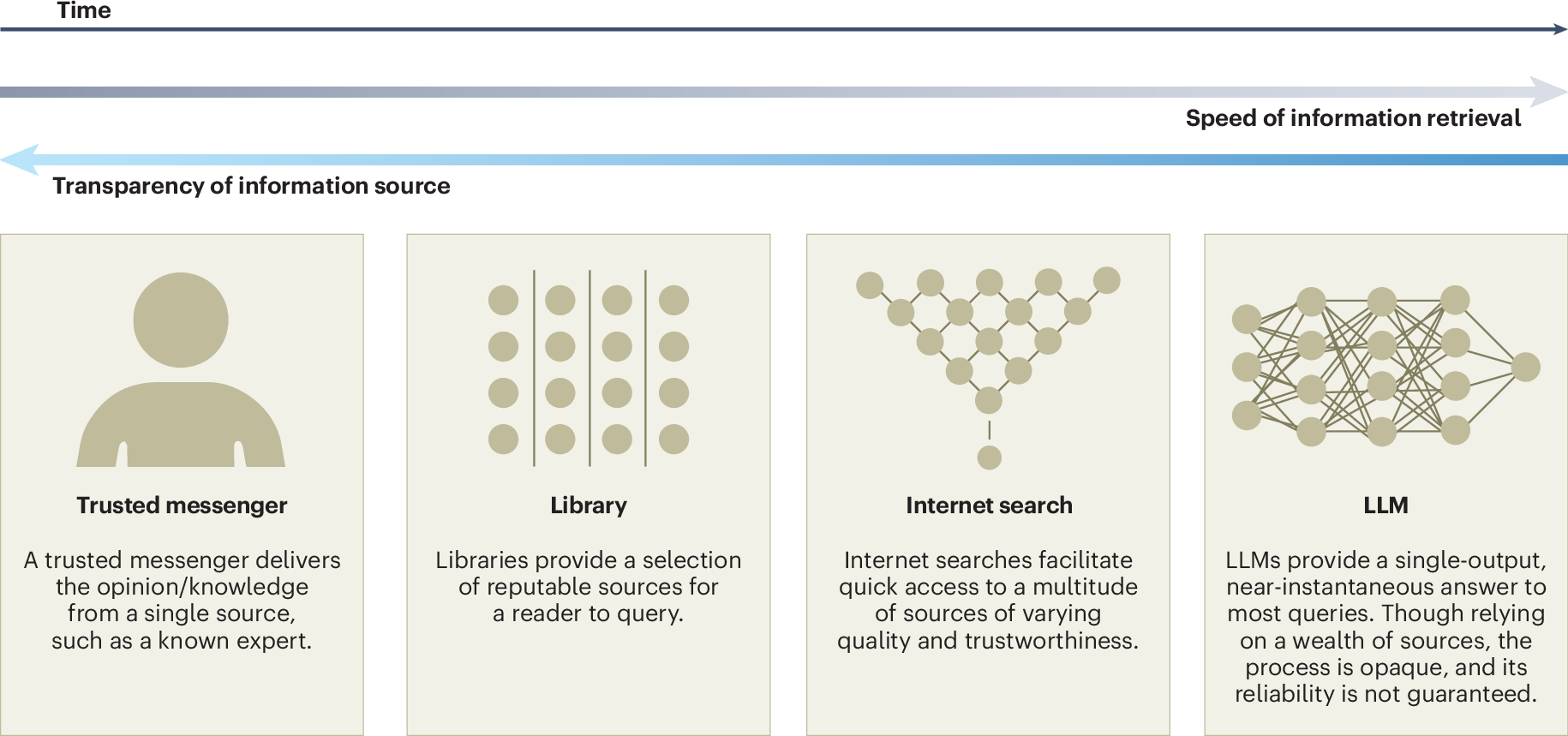
Collective intelligence underpins the success of groups, organizations, markets and societies. Through distributed cognition and coordination, collectives can achieve outcomes that exceed the capabilities of individuals—even experts—resulting in improved accuracy and novel capabilities. Often, collective intelligence is supported by information technology, such as online prediction markets that elicit the ‘wisdom of crowds’, online forums that structure collective deliberation or digital platforms that crowdsource knowledge from the public. Large language models, however, are transforming how information is aggregated, accessed and transmitted online. Here we focus on the unique opportunities and challenges this transformation poses for collective intelligence. We bring together interdisciplinary perspectives from industry and academia to identify potential benefits, risks, policy-relevant considerations and open research questions, culminating in a call for a closer examination of how large language models affect humans’ ability to collectively tackle complex problems.
How large language models can reshape collective intelligence
Collective intelligence underpins the success of groups, organizations, markets and societies. Through distributed cognition and coordination, collectives can achieve outcomes that exceed the capabilities of individuals—even experts—resulting in improved accuracy and novel capabilities. Often, collective intelligence is supported by information technology, such as online prediction markets that elicit the ‘wisdom of crowds’, online forums that structure collective deliberation or digital platforms that crowdsource knowledge from the public. Large language models, however, are transforming how information is aggregated, accessed and transmitted online. Here we focus on the unique opportunities and challenges this transformation poses for collective intelligence. We bring together interdisciplinary perspectives from industry and academia to identify potential benefits, risks, policy-relevant considerations and open research questions, culminating in a call for a closer examination of how large language models affect humans’ ability to collectively tackle complex problems.
Google: Organize the world's information Atmosphere: Let the world's information self-organize

TJ
In some ways, atproto, bluesky, @semble.so, @sill.social, @standard.site and so on are building new indexes for the web. I really hope atproto succeeds and goes fully mainstream. Think of the amazing search engines that can be built on such rich index data. Maybe web3 can actually happen.

Notes on what’s happening to our ability to collectively know things, and a look ahead to what this community is especially well positioned to do to support and revitalize our info ecosystems and the humans inside them.
